Everyone needs care, gives and receives care.
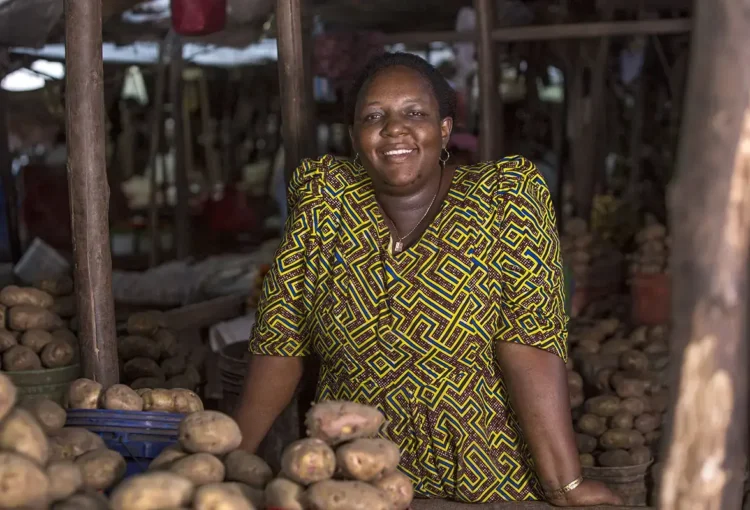
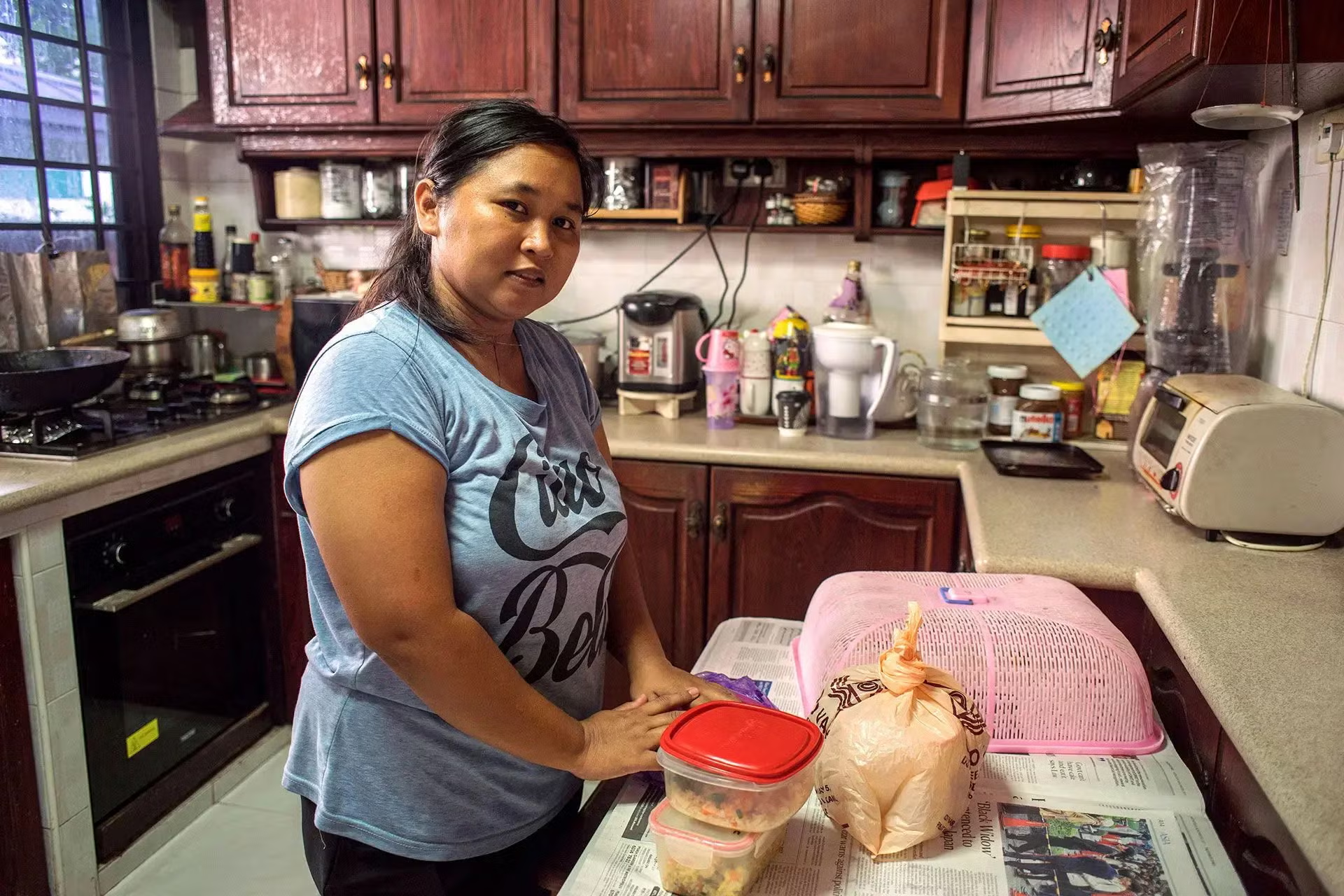
Care work – paid and unpaid – keeps the world running. From the moment we wake up to the time we sleep, care shapes our lives, our economies, and communities. It’s in the meals prepared, the children walked to school, the aging parents supported, the laundry washed and folded, and the countless invisible tasks that make daily life possible. And it contributes to the mental load that caregivers – who are mostly women – bear. Without care work, societies would simply stop functioning.
But here’s the problem: We’ve been looking at care work all wrong.
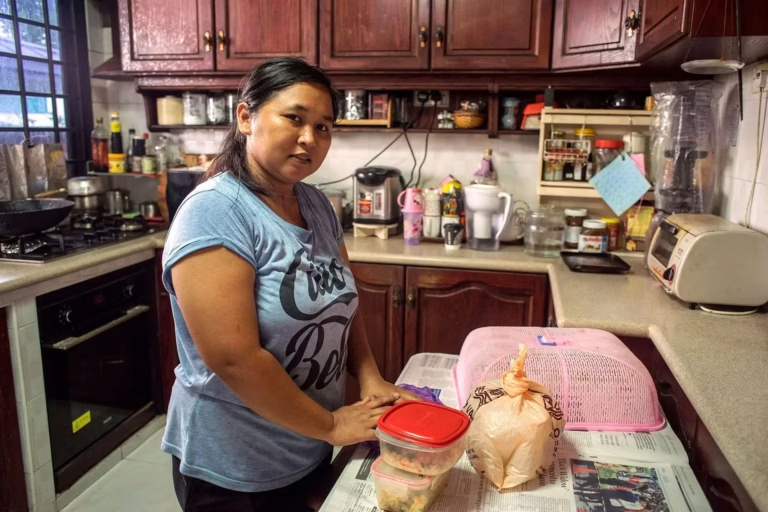
Duty of a carer: Care work is not a women’s issue. It’s everyone’s reality – and responsibility
We’ve all heard it before: Caring is “women’s work.” That outdated belief limits women’s rights and opportunities – and is holding us all back.
Globally, women spend 2.5 times as many hours on unpaid care work as men. Women also hold most paid care jobs – as nannies, domestic workers, carers, nurses, and teachers. But these roles are often informal, low-paying, and lack basic protections like healthcare and paid leave.
The way care work is organised today restricts women’s time to pursue education, access decent paid work, take part in public life, or simply rest. Around 45 per cent of working-age women are outside the labour market because of unpaid care responsibilities, compared to just 5 per cent of men.
We all need care, and we all provide it
Throughout life we all move between giving and receiving care, sometimes doing both at once.
Yet, the unpaid care work that underpins every economy remains largely invisible and undervalued. If unpaid labor were counted, it would exceed 40 per cent of GDP in some countries.
UN Women is transforming care work from undervalued and invisible labour to a public good
Care work is a matter of human rights. Strong care systems are essential to ensuring the dignity, rights, and well-being of caregivers and those receiving care.
Real change starts with seeing care work as essential and skilled work – not as a favor or a woman’s duty, but a public good and human right that deserves recognition, investment, and shared responsibility. The care economy – all care work, paid and unpaid, direct and indirect – is at the core of human development and quality of life.
A care system that works means:
- Recognising care as the foundation of thriving and gender-equal societies.
- Reducing energy-intensive unpaid domestic care work tasks through infrastructure and technology.
- Redistributing responsibilities more fairly between women and men, households and the state, families, communities, and businesses.
- Rewarding the millions of care workers with fair pay, social protection, and decent working conditions.
- Representing care workers and caregivers in policymaking, organisations, and decisions that affect their lives.
- Resourcing care systems with public financing for care policies, services and infrastructure, standards and training.
Closing the care gaps is essential for achieving gender equality
The gender gap that societies around the world now face because of undervaluation and unequal distribution of care work is one of the long-standing barriers to achieving gender equality.
Conversely, investing in care systems delivers real returns: stronger economies, greater gender equality, and more resilient communities.
Ready to reimagine care?
Explore stories, research, and solutions that are building holistic care societies – where care is at the heart of thriving, just economies that work for everyone.
Originally published on UN Women