Fifteen years since UN Women’s Safe Cities and Safe Public Spaces Global Initiative for Women and Girls began, cities around the world are showing how women’s leadership, political will, and practical changes make spaces safer.
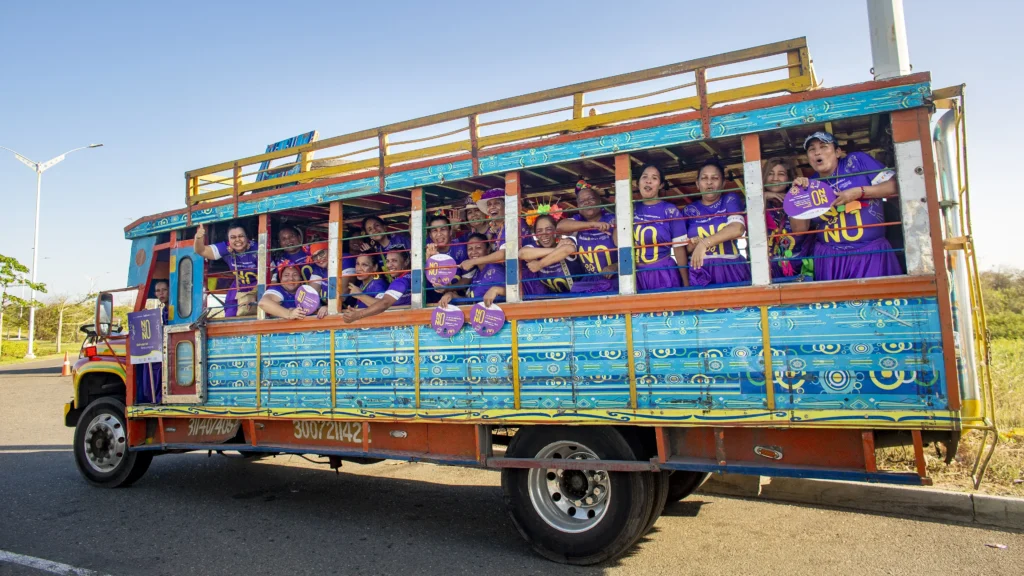
A safe city is not only measured by the quality of its lighting, transport, clean streets, or accessible public services. For women and girls across the globe, safety is often measured in smaller, daily decisions:
Which route feels safest during the day and after dark? Can a woman market vendor sell her produce without fear of sexual violence and intimidation? Can girls walk to and from school without being sexually harassed? Can a woman wait for transport, use a public toilet, study, exercise, meet friends, or take part in public life without always having to calculate the risk of violence?
Fear – and experience – of sexual violence affect whether women and girls can move freely through public spaces, earn an income, stay in school, access services in person or online, and join community life.
That is the starting point of UN Women’s Safe Cities and Safe Public Spaces for Women and Girls Global initiative, which began in 2011, supported by the Spanish Agency for International Development Cooperation, and further securing support from other donor partners such as the European Union, the Republic of Korea, Canada, Australia, New Zealand the Netherlands, GIZ, and Poland.
Fifteen years since its inception, the initiative now spans comprehensive programming in 75 cities in 36 countries, involving partnerships with local and national governments, women’s rights organisations, community groups, businesses, and other partners to prevent and respond to sexual harassment and other forms of violence against women and girls in public spaces.
The lesson from those cities is clear: There is no single blueprint. A safe city is not created by one campaign, one law, one bus route, or one redesign project. It is built when spaces for women and girls’ participation are prioritised and their voices are heard. It is also built when women’s lived experiences shape all types of policies, when public spaces are planned with their recommendations, and when communities challenge the idea that sexual harassment is inevitable.
“We hear many different perspectives from grassroots women leaders and young women about how they are trying to avoid and prevent sexual harassment in [public] spaces. They are just trying to live a life free of violence on streets, online, in and around public transportation, markets, and other public spaces to be able to access and benefit from opportunities and services that cities can provide.” – Maite Rodriguez Blandon, Fundacion Guatemala
Start by listening to women and girls
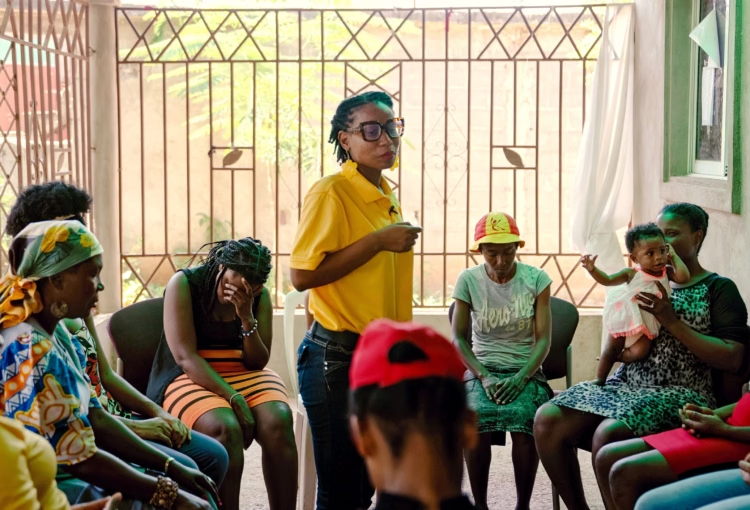
Cities are increasingly working to take the first step: ask women and girls what is happening, what are their needs and concerns, and what are some of their own ideas for overcoming the challenges they experience.
In the Safe Cities for Women and Girls’ approach, participating cities begin by gathering local evidence. This begins with a scoping study including a desk review of available quantitative and qualitative data, focus groups and interviews to capture key local voices. Some cities in these studies may also host women’s exploratory walks. The point is to understand where sexual harassment happens, who is most affected, who are the perpetrators, what makes women feel unsafe, and what changes they want to see.
Know more: Safe Cities and Safe Public Spaces for Women and Girls Global Initiative
In Quito, Ecuador, a scoping study found high levels of sexual harassment and other forms of violence against women and girls in public transport and on local streets. The findings helped shape a programme that treated safety in transport not as a side issue, but as central to women’s rights to move safely through the city.
In Tunis, Tunisia, women’s organisations, municipal leaders, and other partners in the scoping study identified priority areas for action, including safer markets and transport, as well as initiatives with men and boys to prevent violence in the first place.
Local evidence is incredibly powerful: When cities listen to women and involve local partners in the gathering of data, the problem becomes harder to ignore – and the programme becomes locally owned, with more effective solutions put in place.
“If women are in a place where there is no sexual harassment, their empowerment is further strengthened. We shall be able to get involved in decision-making processes, and we shall continue to be empowered socially and economically.” – Ann Wanjiru, Mathare Legal Aid and Human Rights Advocacy (MLAHRA), Kenya, Member, Huairou Commission
Turn political will into action
Listening is only the beginning. A city becomes safer when political will responds to evidence with action.
In practice, that means laws, policies, budgets, municipal plans, reporting systems, infrastructure, and services are gender responsive. It also means connecting the teams that shape everyday city life – policing, urban development, transport, housing, environment, and local economic development – for better coordinated and integrated solutions.
In Madrid, Spain, the Safe City Action Plan has supported such collaborations on industrial and productive spaces – areas that are economically important, but can be difficult or unsafe for women to access because of limited mobility, planning, and service gaps.
Madrid established a Gender Responsive Industrial and Productive Spaces Working Group, bringing together municipal teams on planning, mobility, equality, transport, policing, and emergency services. Its recommendations point to the need for sex and gender-disaggregated data, gender impact studies, participatory methods – and the inclusion of women’s lived experiences in planning decisions.
That kind of coordination is critical. Women’s safety is not a woman-only issue. It cannot sit in one office alone. It must be integrated into the systems that shape city life.
“We need to raise awareness among all community members. We need to assist cities and help them to shift from how they think things are to make decisions based on real data – disaggregated by age, and by sex. We must listen to what women really think of their city and what they report from their perspectives across different settings.” –Zakaria Oulad, Municipal Councillor, City of Agadir, Morocco
Change the spaces women use every day
Some of the most important changes are often those which women can feel in their everyday routines.
In Port Moresby, Papua New Guinea, a scoping study found that more than 90 per cent of women and girls had experienced some form of violence when accessing public transport. In response, and as a special indeterminate measure to ensure safety, the city introduced Meri Seif Buses to improve safe access to transport for women and young people, along with the city’s first bus timetable to help passengers plan trips and reduce waiting times.
The work went beyond the buses themselves. Training for women drivers created employment opportunities while helping female passengers feel safer. Awareness sessions on the buses shared information on gender equality, violence against women, and what to do when violence occurs.
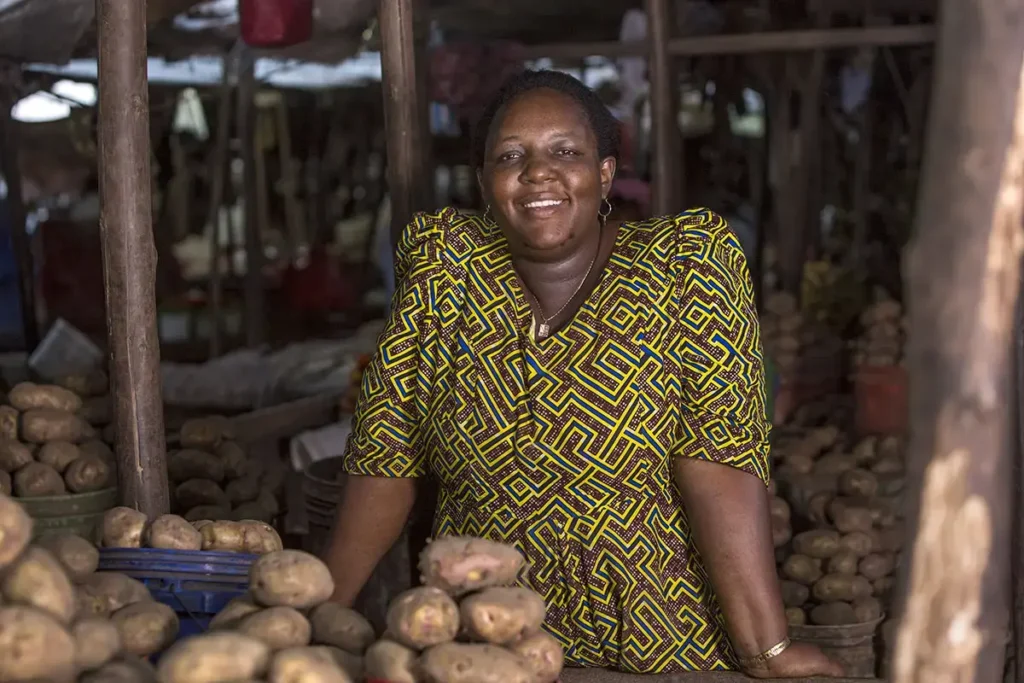
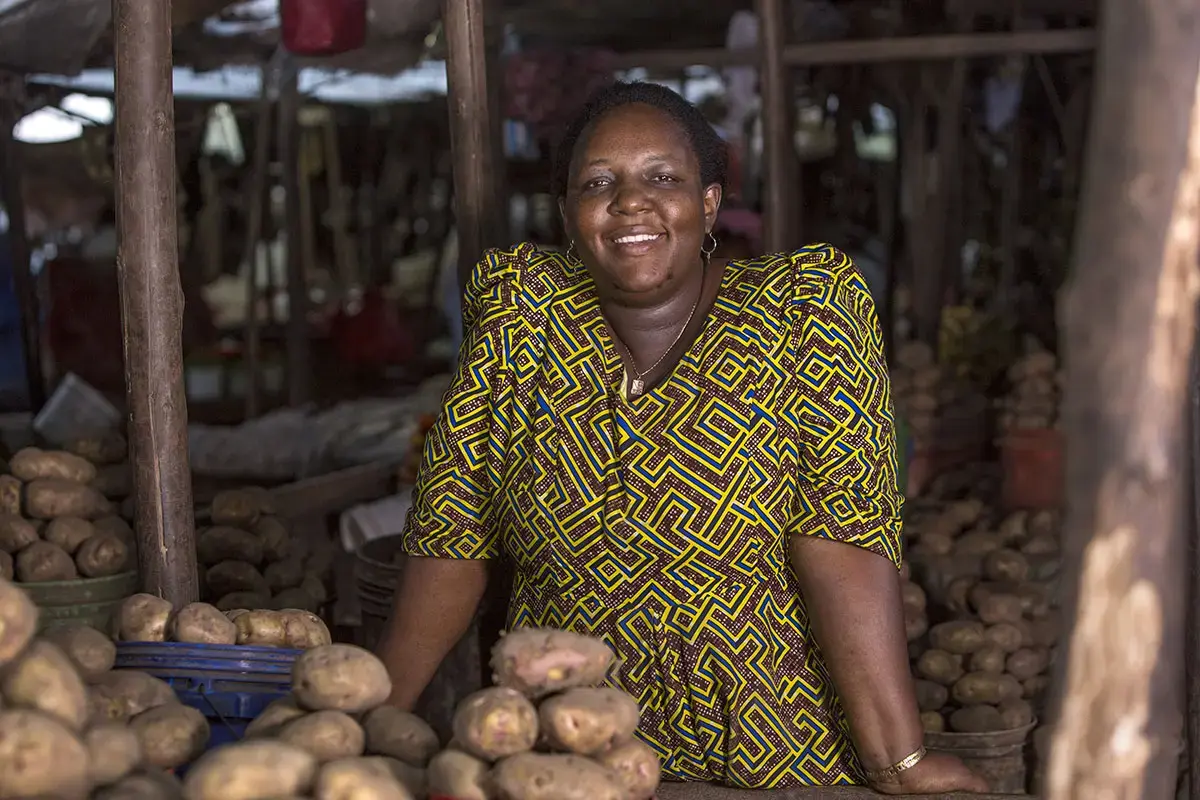
In Msalala, District of Shinyanga Region, Tanzania, the Safe Market Initiative in Segese Market focused on making a public economic space safer and more inclusive: accessible public toilets, hand-washing facilities, a management and maintenance plan, a market bylaw, and a gender-responsive code of conduct. Local women traders also partnered with UN Women as champions to end violence against women and girls, helping to raise awareness and increase reporting, including sexual harassment and sexual extortion in and around the market.
The practices differ because cities differ. But they share the same principle: Women’s safety is not abstract. It is built into the fabric of the city, into its buses, markets, streets, workplaces, schools, toilets, services, and the way people use public space.
Shift the norms that allow sexual harassment to continue
Infrastructure and laws matter. But a city also has to change the attitudes and behaviours and institutional practices that allow harassment to be dismissed, excused, or ignored.
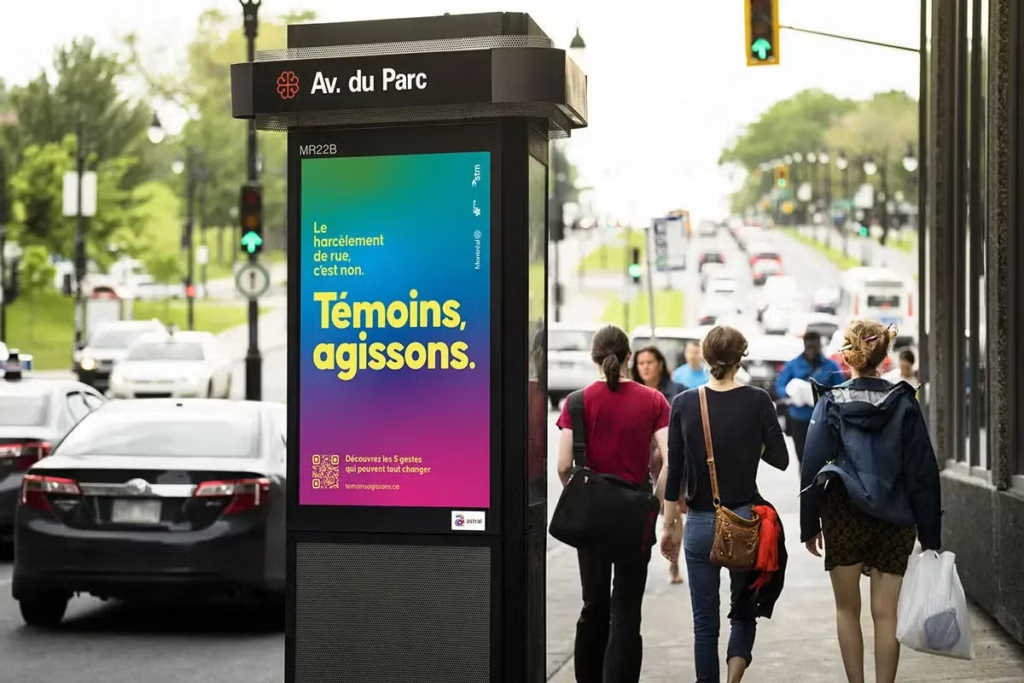
In Montreal, Canada, the local government, police service, and transport authority launched an active-bystanders campaign for the prevention of sexual harassment in public spaces. The campaign gave people clear, practical ways to act if they witnessed harassment: create a distraction, join forces with someone else, call for help, document the incident, and provide support to the victim.
It was displayed across transport spaces, libraries, and other public areas, and supported by a microsite connecting victim-survivors with front-line community resources. The messages were developed with community organisations and women’s rights groups so that they reflected local realities.
In Kericho, Kenya, community dialogues with men created space for conversations about sexual harassment, gender-based violence, and harmful social norms. Men reflected on their own roles and developed community action plans, while younger men and boys used mural design activities to raise awareness of violence and available support services.
Efforts such as these matter because sexual harassment continues when people look away, minimise harms, or treat it as a normal part of urban life. Safe cities’ partnerships challenge that silence.
“We have to change – the institutions, the community, the leaders, everybody has to change and say that sexual harassment is a form of violence, it has great consequences to women and communities, and harassment is not acceptable.” – Maria Munir Yusuf, Founder and Executive Director, Association for Women’s Sanctuary and Development (AWSAD), Ethiopia
Support the right to move without fear
Cities become safer when women and girls are part of shaping the decisions that affect their daily lives. Their experiences need to inform budgets, laws, planning, services, and the design of public spaces – not as an afterthought, but from the start. That work also depends on many actors moving in the same direction: local and regional governments, communities, women’s rights organisations, transport workers, market vendors, teachers, police, municipal staff, and men and boys.
That is why safety cannot be separated from equality and sustainable development. When a woman avoids a bus route, leaves work early, stops going to a market, chooses not to study or work at night, or keeps her daughter home because the city is unsafe, the whole city loses.
Fifteen years of Safe Cities and Safe Public Spaces show that change is possible. Cities can plan and invest differently, with the needs and concerns of women and girls – and men and boys – taken into account.
A city becomes safer when women and girls do not have to adjust their lives to move through it, but rather a city adjusts to their lives and safety, further empowering them to thrive.
Originally published on UN Women