The invisible labour keeping families, workplaces, and societies running – and what we can do about caregiver burnout.
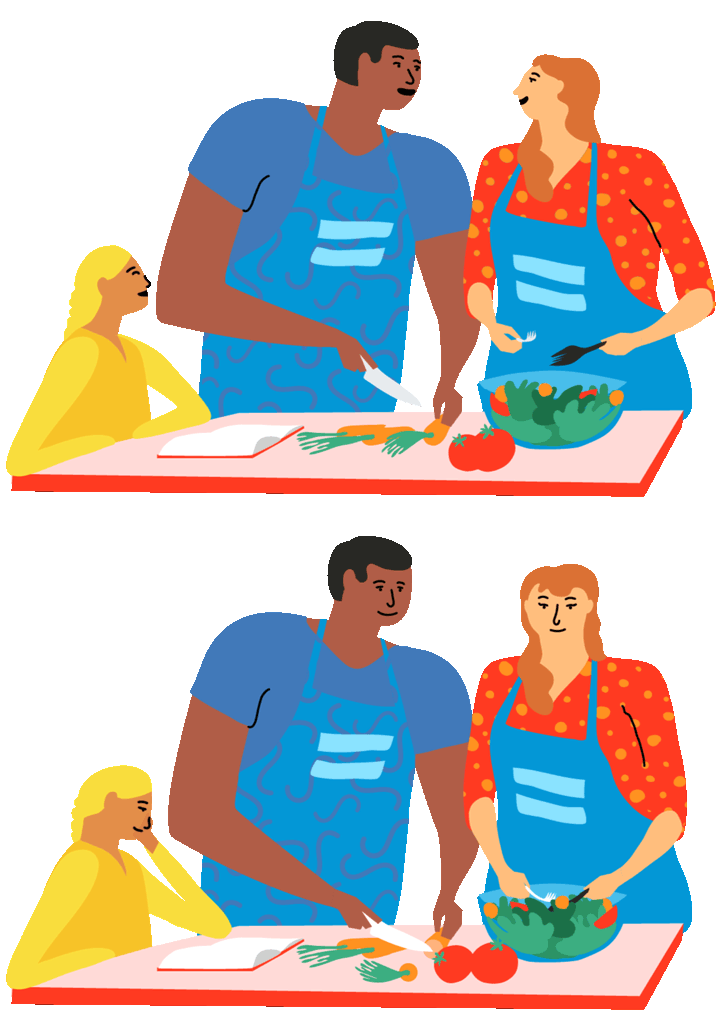
In UN Women’s Hand in Hand “social experiment”, couples in Egypt, Jordan, and Morocco completed timed care tasks like changing diapers and preparing meals, first competing individually, and then working together. Photo: UN Women
You know that interrogating voice in your head – “is there enough food at home”; “are my child’s vaccines up to date”; “who will care for my sick mother while I’m working” – the incessant list of decisions that someone has to make and tasks that someone has to do?
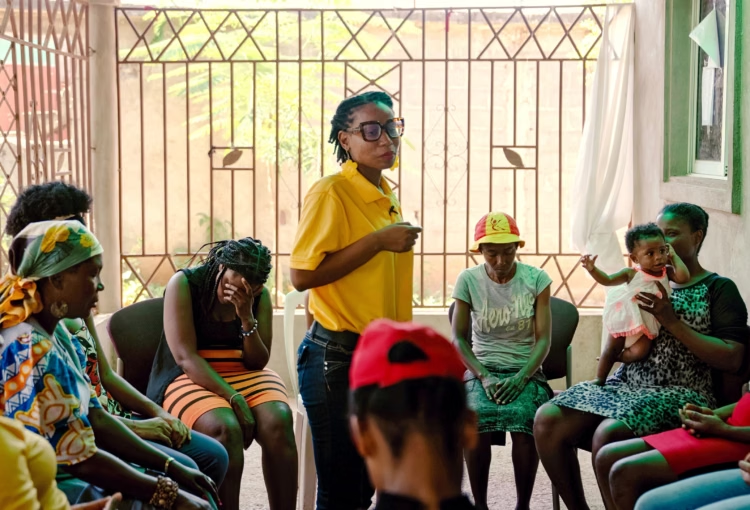
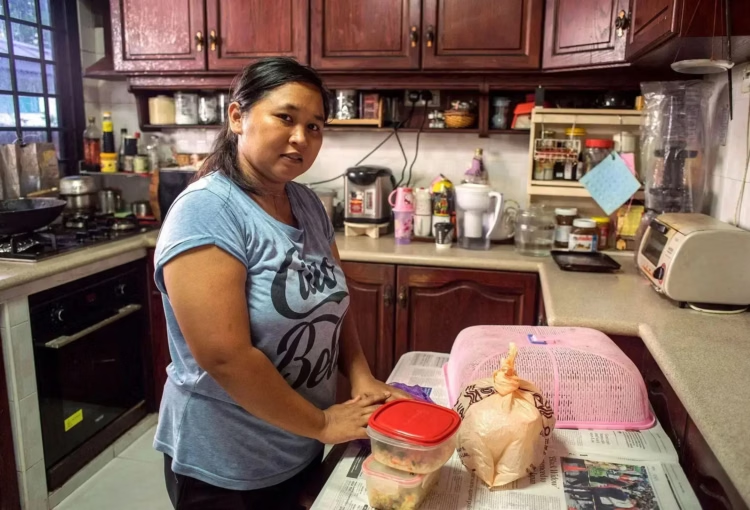
This is the mental load, and in many households, it’s primarily shouldered by women as part of their care responsibilities – the often invisible labour of caring for our families, households, and communities. This labour can feel heavy and overwhelming, or lighter and uncomplicated, depending on how care work is divided in the family, and the support and services available.
UN Women believes we can and must reimagine care work. Carrying this responsibility alone, with little support, rest, or recognition, can lead to caregiver burnout with domino effects across our daily lives. But with awareness and a shift towards shared care responsibilities – backed by more equal and supportive care policies – we can lighten the load.
If unpaid care work were given a monetary value, it would exceed 40 per cent of some countries’ GDPs – in some cases, exceeding manufacturing, commerce, or transportation. Yet societies still take it for granted.
What is the mental load?
The mental load is the invisible mental and emotional labour behind handling life’s never-ending to-do lists, including caring for others, managing a household, and delegating tasks. It’s the energy we spend thinking about and anticipating needs and tasks, organizing them, and following up and ensuring they’ve gotten done.
In the context of our homes and families, the mental load can affect parents, adult children caring for ageing relatives, partners or family members managing households, and people dedicated to the well-being of their local communities.
Think of the person who organises get-togethers at work; who registers their child for school; or who remembers to check on their at-risk neighbours during a heat wave. This type of invisible labour rarely comes with recognition equal to its true value.
Throughout our lives, we all give and receive care. Nepal, February 2025. Photo: UN Women/Srijana Bhatta
Why do women carry more of the mental load?
Within relationships, families, and communities, women still manage the majority of unpaid care and domestic responsibilities – and the mental labour that comes with them.
Why? Because many of us grow up absorbing gender stereotypes about care work and the enduring myth of women’s work: the persistent stereotype that women are naturally more competent and more intuitive carers, cooks, cleaners, and household administrators.
These roles are socially learned, not biologically predetermined.
The mental load gender gap tends to hold true even when women are the primary earners in their relationships. And because women’s responsibilities often mean they must juggle more tasks, they’re seen as better multitaskers. But task switching, as it’s also understood, is mentally and physically draining on everyone.
These expectations also tell men and boys that they’re not suited to take the lead or manage household responsibilities as well as women and girls. Their roles are downgraded to assistants, bystanders, or simply receivers.
In reality, men are equally capable of providing care. Study after study has dispelled long-held assumptions about gender “hard-wiring” and the idea that men aren’t suited to caretaking.
The disparities have ripple effects. In what’s become known as the motherhood penalty, women are more likely to experience lower earnings and less career growth when they become mothers. (Even before then, women of childbearing-age face hiring discrimination from employers who don’t want to support their maternity leave.) In one survey of European countries, the motherhood penalty accounted for 60 per cent of the gender pay gap.
Men, on the other hand, experience a fatherhood bonus and are more likely to receive a wage increase after having children.
During conflicts, climate-related disasters, or economic shocks – when resources and essential services are strained – women and girls absorb even more caregiving responsibilities. Women in fragile and conflict settings spend nearly four times as many hours on unpaid care work as men.
Why is there a mental load gender gap between mothers and fathers?
Since Equimundo, a research group and UN Women partner, began its annual “State of the World’s Fathers” series, it’s been clear: Men value being involved. Nine out of 10 fathers surveyed agree or strongly agree that “most of the time, I feel that caring for children or my loved ones is one of the most enjoyable things in my life” – a figure mirrored by mothers.
But while many fathers say they want to be more hands-on, this desire doesn’t always translate into sharing the mental load or taking on more tasks. And because of gender stereotypes, men may fear stigma for choosing to prioritise childcare responsibilities. They are presented with a false choice between being a caring father and being a good provider.
Many parental leave policies make parenting even more lopsided. In countries where parental leaves are available for both mothers and fathers, on average, mothers are entitled to 24.7 paid weeks, while fathers only have 2.2 paid weeks.
A growing body of research shows just how powerful it is when fathers spend time caring for their children – for both them and their babies. Emotionally engaged fathers report having higher self-esteem, being more socially connected, and are even living longer.
Research shows men benefit from being more emotionally engaged with their families and participating in care work. A family in the Kok Jaiyk valley of Kyrgyzstan, December 2025. Photo: UN Women/Bektur Zhanibekov
What can families and society do to share the mental load?
It’s time to stop setting women up for burnout and start stepping up. While governments and employers have key roles in addressing gender caregiving gaps through policies, services, and shifting social norms, there’s a lot we can do to share the load in our own households and workplaces.
Toss out the gender stereotypes. Catch and question the assumptions you make about whose role it is to provide care, make plans, and manage responsibilities.
Make the invisible work visible. Talk openly about what needs to get done and all that goes into it. Recognize those doing the work, learn from them, and share the load.
Share the care. Whether it’s an elderly relative, a family member with a disability, or a sick child, everyone benefits when there are more people looking out for one another. This includes parenting as a team: After a child is born, a father can do anything a mother can do, with the exception of breastfeeding.
Encourage boys to learn care skills early. Teach them the value of the work that keeps our homes and communities together – and how they can be good caregivers, too. Talk to kids about gender equality and stereotypes.
Plan and discuss needs together. Throughout our lives, we all give and receive care. Don’t assume loved ones will know what you want when you’re on the receiving end. Open and early communication helps ease the stress for everyone.
Advocate for better caregiving policies with your employer. Work through staff councils, unions, senior management or human resources for policies that support caregivers, including parental and family leave policies.
Engage with your local government representatives. Let them know that care services and local and national policies are important to you.
Women in fragile and conflict settings spend nearly four times as many hours on unpaid care work as men. Here, a Ukrainian woman walks with two children to collect water for drinking, cooking, and cleaning, January 2026. In parts of Ukraine, families have been cut off from water, energy, and other essential services because of the war. Photo: UN Women/Olha Ivashchenko
How UN Women programs support transforming care systems
Care work is often treated as a private and individual responsibility, but healthy societies and strong economies depend on public investments in care systems, including through data, laws and policies, services and infrastructure.
Through the Transform Care Global Initiative, UN Women is working to ensure that care work is seen for what it is: a public good that is essential to our families, communities, and economies. That means supporting the rights of those who give and receive care, challenging outdated stereotypes, and working with governments to strengthen care systems.
Sharing the mental load of parenthood: Time-use surveys conducted by UN Women show that mothers take on far more of the parenting and household chores. Our Hand in Hand campaign is a youth-led, stereotype-challenging social experiment, encouraging men and boys to be more involved in care. The result: Women and girls get more of their time back.
Easing eldercare stress: In Bosnia and Herzegovina, UN Women offers a free, professional eldercare training programme for home care aides, recognizing the value of this essential work.
Creating systemic change through policies: In Chile, thousands of people, including Indigenous women and women with disabilities, helped shape new national approaches to care work, with support from UN Women. In Bangladesh and Nepal, UN Women’s Caring Cities initiative helps local leaders understand where care needs are greatest and direct resources to where families need them most.
It certainly does “take a village” to support our families and communities. To address caregiver burnout and mental load – and to stop overtaxing women – “the village” has to fundamentally change how we care, especially how we share responsibilities between women and men, households, communities, governments, and businesses.