Peace is often determined in processes, agreements, and political milestones. But around the world, every day, peace is being built by creating spaces for dialogue, local mediation, challenging harmful practices and norms, supporting survivors, and advocating for justice. Peace is the direct result of these acts of courage and persistence – led mostly by women.
It has been over two decades since the Women, Peace and Security Agenda was adopted through Security Council resolution 1325. Since then, we have seen just how closely linked women’s inclusion, safety, and leadership are to peace and stability. Societies that uphold women’s rights are less likely to experience conflict. And women’s participation strengthens peacebuilding and helps create more lasting peace.
Across the world, women are leading local peacebuilding efforts and strengthening their communities.

In Lebanon, 27-year-old Nour Nasr works as a project coordinator at Hkeeli. There, she oversees exhibitions, school visits, storytelling, and community initiatives in a cultural centre in Beirut dedicated to portraying the history of the city and Lebanon’s 15-year Civil War (1975-1990). Although Nasr did not live through the civil war herself, she grew up hearing about it, as her father was a fighter and spent months imprisoned. The marks of those experiences, she says, remained visible long after the war ended.
But for Nasr, who recently joined the Women Peacebuilders Network in Lebanon (WPNL), something was always missing in the stories she would hear growing up. “I wanted to understand, how did neighbours become enemies”, she explains. “Why is this history missing from our schoolbooks? Why do we inherit memories without learning the full story?” To fulfil her curiosity, Nasr began to document the experiences of former fighters in Lebanon who now advocate for nonviolence and dialogue.
“It was one of the first times I heard people from different backgrounds speak openly about the civil war, regret, violence, and reconciliation. I realised that no single community holds the entire truth.”
Today Nasr creates spaces where people across generations can come together to talk through past experiences – using storytelling, collective dialogue, and exhibitions as her platforms. By bringing together school and university students, she encourages younger generations to reflect on the Lebanese civil war and its lasting impact.
These initiatives offer a chance to reflect on how the past continues to shape Lebanon’s present day. They also provide opportunities for mutual understanding and shared commitment to peaceful coexistence, through discussions and listening.
With the support of the Government of Canada, UN Women Lebanon supports women-led initiatives and activities at Beit Beirut.

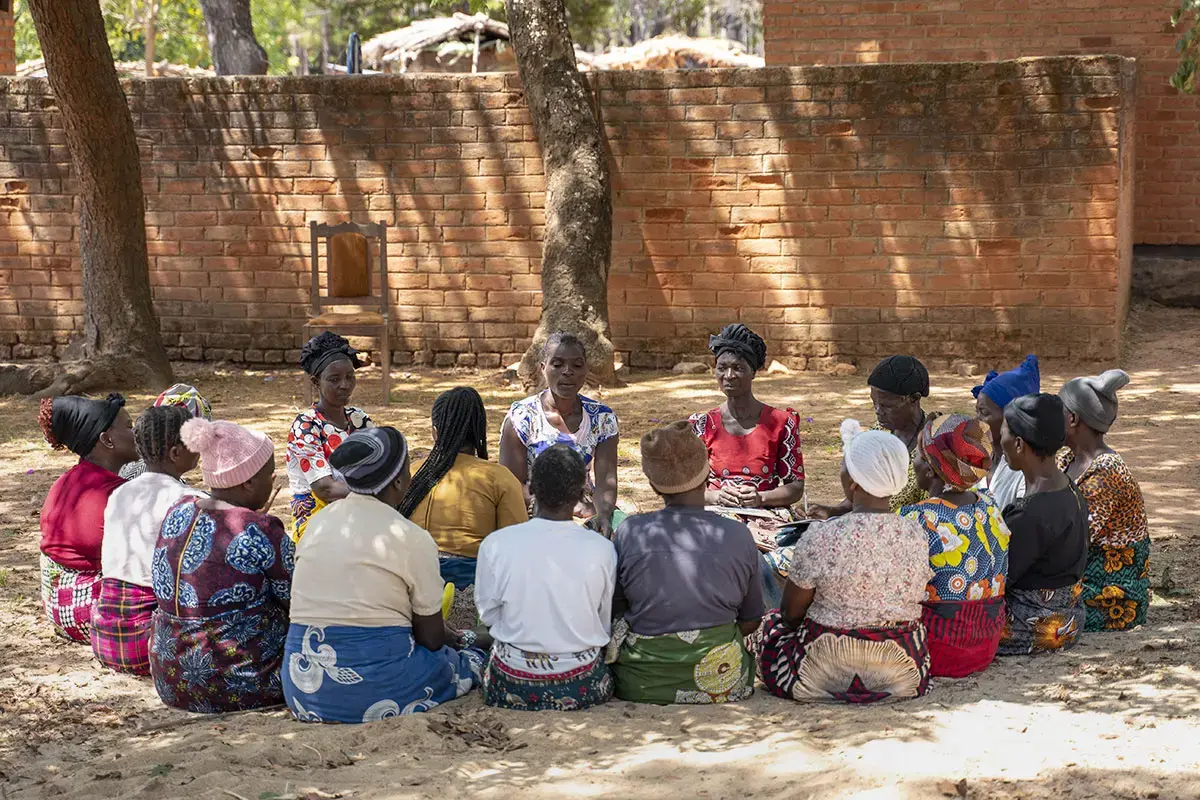
In the Phalombe and Machinga districts in southern Malawi, women peacebuilders are bringing people together in a different way. They are working alongside traditional leaders and community members to challenge harmful practices – from child marriage to gender-based violence and land disputes, all of which put women and girls at risk of serious harm and limit opportunity. They also have a generational and profound impact on a community’s prosperity, peace, and well-being.
Together this group of women show that peacebuilding is also about addressing the inequalities and social norms that drive exclusion. They work through UN Women with the Sustaining Community Women Movement for Peacebuilding and Humanitarian Response project, implemented by Youth Net and Counselling (YONECO), with support from the Women’s Peace and Humanitarian Fund (WPHF).
Prior to this work, women in the Phalombe and Machinga district communities often felt silenced. They were afraid to speak to male chiefs about sensitive issues like intimate partner violence. Decisions were frequently biased, with men favouring men’s perspectives and interests, leaving women and girls without protection or justice. Leadership and peacebuilding was seen as a man’s domain, and for years, women were often sidelined.
“I never thought I could stand in front of a crowd and speak with confidence”, admits Mercy Msolomba from Mizinga in Machinga, one of the 30 women leaders who completed the programme’s training in leadership, conflict analysis, advocacy, negotiation, and public speaking. “Now, I can negotiate, I can mediate, and people listen.”
With the new skills, women peacebuilders began to intervene in cases that previously went unheard. One of them was of a 16‑year‑old girl Amaluwasa* (not her real name), who was pulled out of school and forced into marriage. When Amaluwasa’s case was reported to the women chiefs’ forum by her teacher, the forum visited her home, spoke with her parents, and explained the dangers of early marriage. The marriage was dissolved, and Amaluwasa returned to school.
Mercy Muhowa from Phalombe has resolved nine cases since October 2025, ranging from child abuse to marital disputes, proving just how trusted and respected women leaders are in their communities. The women’s forums also work with the police and social welfare office on more complex cases. In Phalombe, community-led interventions have contributed to the dissolution of 65 child marriages, with 51 girls returning to school.

Women in Colombia are working to pursue another essential dimension of peace: justice.
Colombia’s 2016 Peace Agreement was a historic milestone. It was one of the first peace accords in the world to incorporate a comprehensive gender perspective – reflecting decades of work by women’s organisations and activists who fought to ensure that the differentiated impacts of conflict on women and girls were acknowledged and that survivors of sexual violence could access justice and reparations.
But for survivors of conflict-related sexual violence, participating in justice processes meant exposing themselves once again to security risks, stigma, revictimisation, and emotional distress – at a time when access to psychosocial support, protection, and legal assistance remained limited in many territories.
The women’s and LGBTIQ+ organisations accompanying survivors also faced significant technical, financial, and security constraints in sustaining legal representation, case documentation, and advocacy before Colombia’s Special Jurisdiction for Peace (JEP).
To help address these challenges, UN Women, in partnership with the JEP and with support from the Peacebuilding Fund, launched Tejiendo Dignidad (meaning “Weaving Dignity”). The initiative strengthens women’s and LGBTIQ+ organisations across territories deeply affected by armed conflict, enabling them to provide survivors with legal representation, psychosocial care, protection measures, and advocacy support.
Through the project, survivors are able to participate more safely and meaningfully in transitional justice processes, document cases, seek accreditation before the JEP, contribute to restorative proposals, and ensure their experiences are included.
Among those receiving support is Margot Escobar, a survivor of sexual violence from the Urabá region of Antioquia.
“I always encountered rejection”, says Escobar. “I walked throughout the region searching for support and could never find a helping hand.”
But this changed when Escobar connected with Ruta Pacífica de las Mujeres through Tejiendo Dignidad.
For Escobar, the project has also helped restore her confidence and enabled her to support other women with similar experiences.
“Today I feel that we have an open door toward truth and justice”, she says. “Tejiendo Dignidad gave me strength and hope to keep moving forward, but also to support other women coming after me – women who have suffered the same experiences and who had never been able to tell their truth.”
Investing in local women peacebuilders is a proven strategy for conflict prevention and peacebuilding. Ensuring this work is adequately funded is critical to sustaining peace.
The Women’s Peace and Humanitarian Fund and the UN Peacebuilding Fund, through UN Women, provide critical financing to peacebuilders, reflecting the shared commitment to advancing sustainable peace.