
A health worker checks a child potentially infected with Ebola being carried on the back of a caregiver at the Ebola Treatment Centre of Beni, North-Kivu province, Democratic Republic of Congo, 24 March 2019. Photo: UNICEF/UN0311518/Vincent Tremeau
Ebola is one of the world’s deadliest diseases — around half of those infected will die. The Bundibugyo strain causing the new Ebola outbreak in the Democratic Republic of Congo (DRC) and Uganda has no vaccine or approved treatment. Women and girls make up the majority of confirmed cases – a pattern that has repeated itself since the very first Ebola outbreak in 1976.
In the latest WHO data women accounted for more than 53 per cent of laboratory-confirmed cases in the current outbreak. The reason isn’t biology. It’s caregiving, proximity, and what happens when health systems collapse. This explainer is about that hidden story: what happens to women when Ebola hits, from pregnancy to survival.
What is Ebola and why does it affect women more than men?
Ebola is rare viral disease that causes severe – and often fatal – illness. Around half of those who contract the disease will die.
While women are not more biologically susceptible, women are far more likely than men to be infected with Ebola. The major cause of this is because women all over the world do most of the care giving in families and communities. The disease spreads along the lines of caregiving, domestic labour, front-line health work, and burial practices.
Put simply, when people are sick it is mostly women who look after them — as mothers, sisters, partners, aunts, and daughters caring for the ill at home, or as nurses and cleaners in hospital wards, and birth attendants helping women deliver their babies. Women are also the ones who often care for loved ones in death, preparing their bodies for burial. These responsibilities put women in close physical contact during the infectious stages of the disease.
History has shown how Ebola affected women and girls more in past outbreaks – during the 2018–2019 Ebola outbreak in the Democratic Republic of the Congo (DRC) women and girls accounted for around two thirds of reported cases; in Liberia in 2014, in some communities, women accounted for up to three quarters of Ebola deaths; and 50 years ago in the DRC, women accounted for 56 per cent of those who died.
Early data shows that in the current outbreak in the DRC and Uganda, women and girls account for 53.4 per cent of laboratory-confirmed cases where demographic data is available. Among adolescents, girls account for more than 61 per cent of cases.

How is Ebola transmitted and why are women more likely to be exposed to Ebola?
The virus can get into the human population when people have close contact with the blood, secretions, organs or other bodily fluids of infected animals, such as fruit bats found ill or dead or in the rainforest.
Among people, Ebola is transmitted through direct contact (through broken skin or mucous membranes) with the blood or body fluids of a person who is sick with or has died from the disease. Transmission can also happen through objects or surfaces that have been contaminated with body fluids.
Health and care workers have frequently been infected while treating patients with Ebola disease – this is one of the reasons why women are more likely to be infected than men, as they make up most of the health and care workforce, and are in close contact with patients.
Burial ceremonies – which are predominately the responsibility of women in some cultures – often involve direct contact with the body of a person who has died, which can also contribute to the transmission of Ebola disease – and another reason why women are more likely to be infected.
What are the symptoms of Ebola and are they different for women?
Sudden symptoms can include fever, fatigue, malaise, muscle pain, headache and sore throat, followed by vomiting, diarrhoea, abdominal pain rash, and symptoms of impaired kidney and liver functions.
The World Health Organization points out that despite a perception that bleeding is a common symptom, this is less frequent and can occur later in the disease. Some patients may develop internal and external bleeding, including blood in vomit and faeces, bleeding from the nose, gums and vagina. Bleeding at the sites where needles have punctured the skin can also occur.
Women are not more biologically susceptible, and do not experience symptoms differently from men. However, women experience an increased risk of exposure and pregnant women are more at risk of serious illness.
What happens to pregnant women who contract Ebola?
A woman who contracts Ebola during pregnancy has a near 100-per-cent chance of losing her unborn child. The mother is also at a greater risk of death if she contracts the disease due to the risk of severe bleeding.
But there is another side to the risks that pregnant women face – the increased risk of exposure and the fear associated with it. Pregnant women have more frequent contact with health services. Out of fear, women may miss routine check-ups, or they may stay at home to give birth rather than in a health facility, which means they can miss treatable problems that may arise during pregnancy or during childbirth.
Is there a vaccine?
Unlike some other Ebola strains, Bundibugyo has no vaccine and no approved medicine to fight it.
The best doctors can do right now is treat the symptoms quickly — and that early support can be life-saving.
With no vaccine available, investing in basic healthcare, community education, and women-led organizations that are already leading the response on the ground is critical.
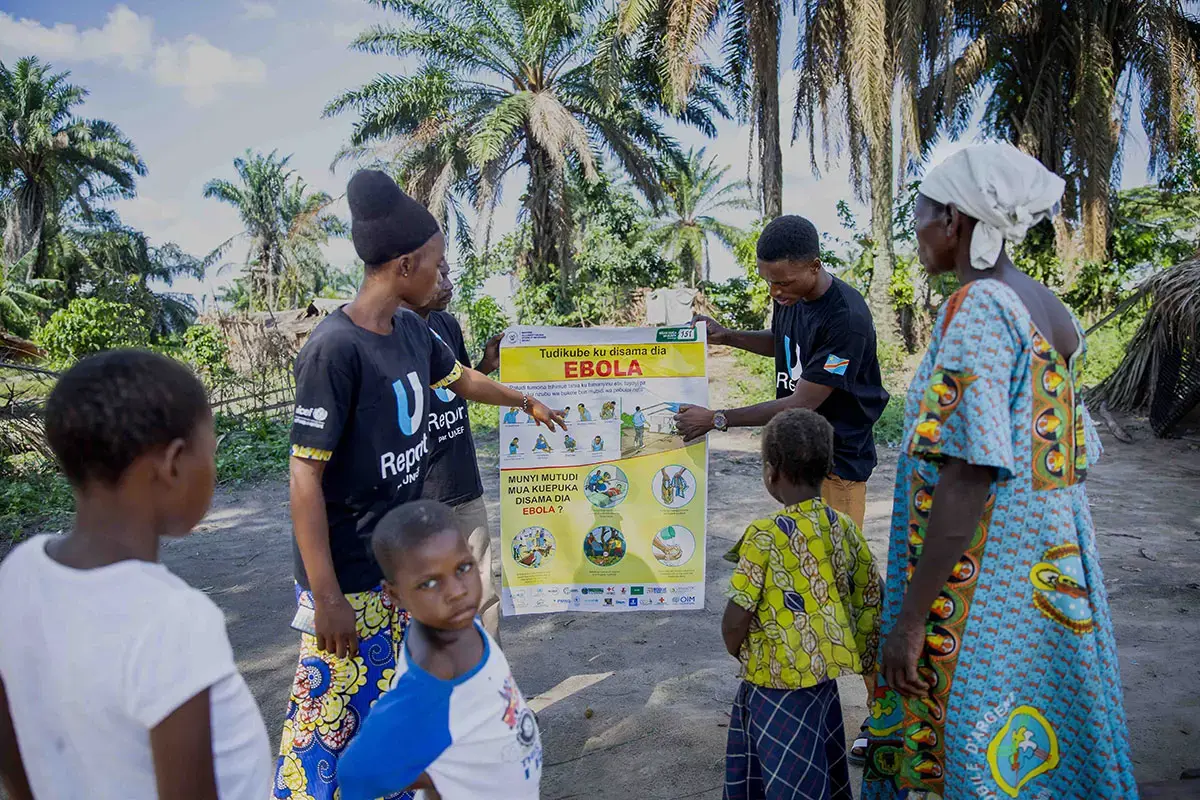
That means making sure health workers — most of whom are women — have the protective equipment they need. It means training and supporting women in their communities to spread accurate information about Ebola: how it spreads, what to do if someone gets sick, where to go for help.
It also means sustained, long-term funding for women-led organisations. These groups are already doing the work — reaching communities that formal health systems often miss, sharing life-saving information, building the trust that gets people through the door of a clinic. But they can’t sustain or grow that work without consistent, flexible funding.
When we invest in healthcare that actually works for women and girls — accessible, trustworthy, community-based — we make health systems stronger for everyone. We catch outbreaks earlier. We prevent more cases. And we build the kind of trust that means people turn to health workers instead of away from them.

Are women and girls more at risk of violence during Ebola outbreak?
Public health emergencies – from Ebola outbreaks to the COVID-19 pandemic – have been associated with an increase in violence against women and girls.
Quarantines can trap women at home with abusers, cut off their access to friends, services, and support networks that they would otherwise turn to.
Massive disease outbreaks also disrupt access to already strained health services, and those experiencing abuse may not be able to seek medical attention they need or report the abuse. These emergencies also increase economic hardship, food insecurity, and increased stress in households, which worsen existing power imbalances and abusive behaviours.
The risk of escalation of abuse against women and girls during disease outbreaks can stay hidden in plain sight. Therefore, any response plan must pay explicit attention to this risk and address it.
Are there any other risks that women and girls face during disease outbreaks?
We know that public health emergencies make existing inequalities worse for women and girls – if they were already valued less, had less equal power in decision-making and less freedom, for example, these unequal power dynamics are often accentuated during crises. In addition to an increased risk of violence, women are more likely to struggle financially due to restrictions limiting their ability to generate income during a disease outbreak like Ebola. This is particularly devastating for market traders who may rely on cross-border trade and women running small businesses.
Women and girls also have more difficulty accessing essential services. Fear, stigma, movement restrictions, and reduced services can prevent women and girls from seeking the care they need. On top of this, health systems are often stretched or disrupted, making it harder to get sexual and reproductive health care.
The current outbreak in the DRC is happening within a massive humanitarian crisis. In Ebola-affected areas, nearly 1.87 million people face acute levels of hunger. Women are the primary caregivers and the main providers of food in many households. They are under increased pressure because of movement restrictions to prevent the spread of the disease, market disruptions, and care responsibilities as family members become sick.
What is UN Women doing to curb the spread of Ebola?
UN Women is on the ground in the DRC – which was already dealing with a severe humanitarian crisis even before the outbreak, and in Uganda, working with local and national governments, the UN system, and women’s organisations to help curb the spread of Ebola. Our humanitarian programming makes sure that public health information, educational materials, and community awareness campaigns specifically target and reach women and girls in affected communities.
We provide funding to women-led civil society organisations who have unique access to women, girls and communities and are trusted. At a time when 90 per cent of women-led organisations are reporting disruptions to their operations due to global funding cuts, this support is life-saving.
We are collecting and advocating for sex-disaggregated data, so that the Ebola response is informed by and responsive to the specific needs of women and girls. Without data on women’s experiences and needs, policies and services are less effective in curbing or preventing a disease.
UN Women is also working with the UN system to deliver a “gender-responsive response” – simply put, this means that UN programmes and plans responding to the current outbreak are taking into account the needs and agency of women and girls, making sure that women are seen, counted, and heard in coordination rooms and decision-making spaces. This includes co-leading the Gender in Humanitarian Action group.