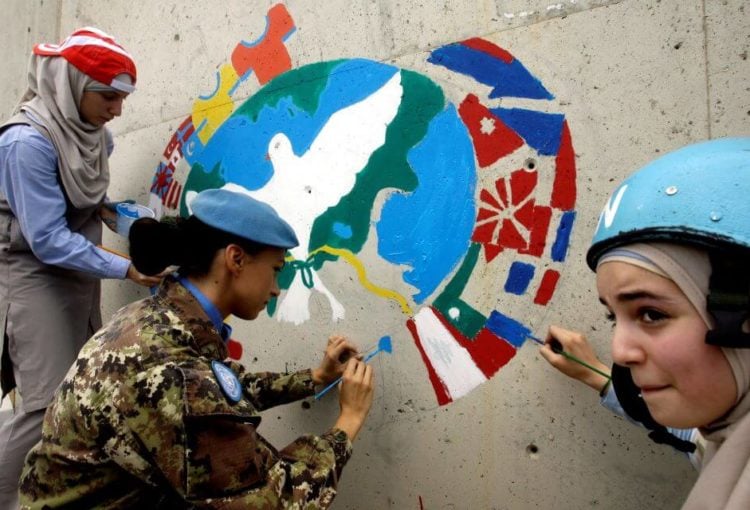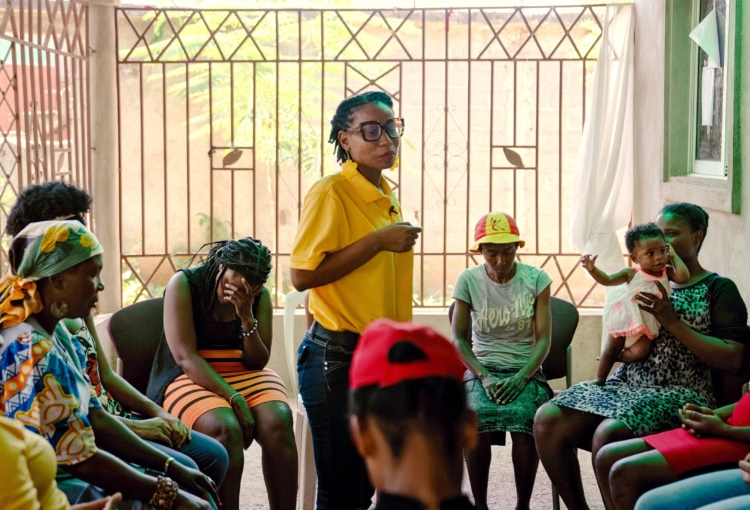
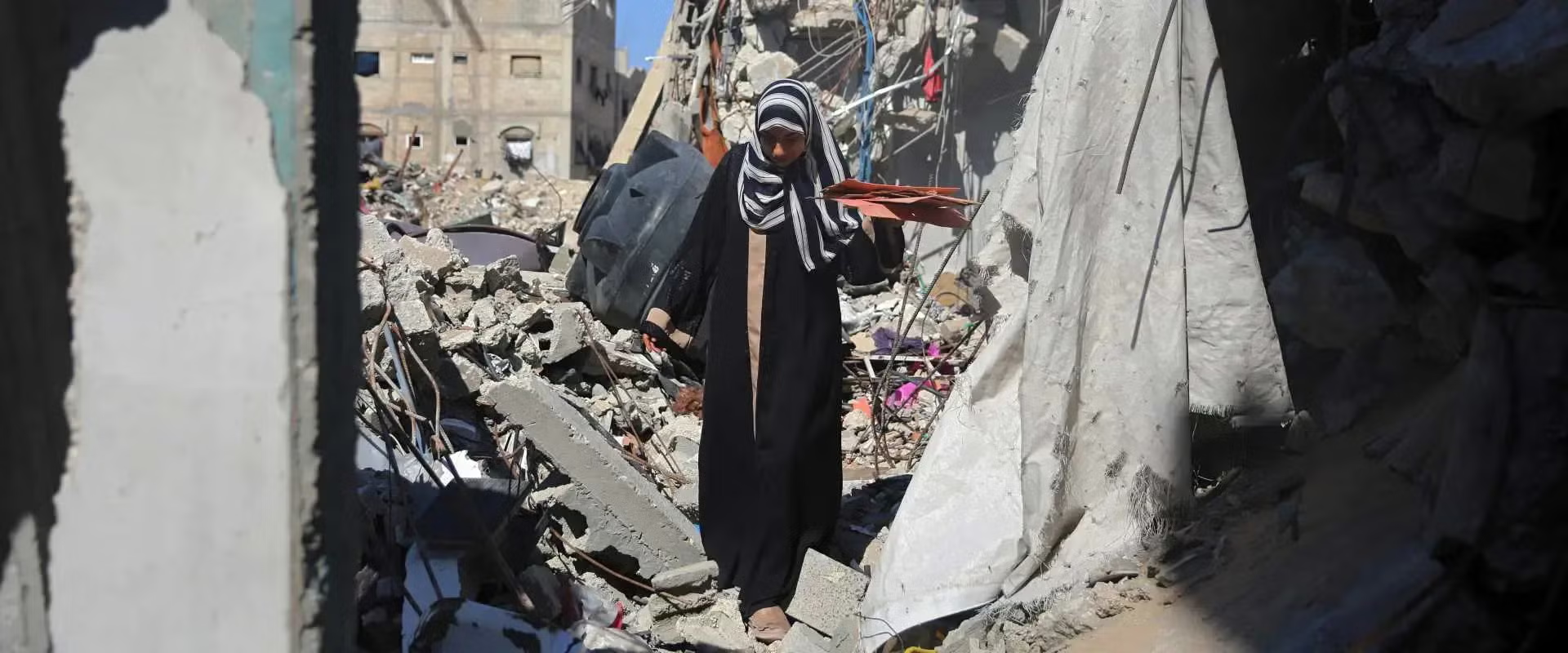
In the 26 years since the United Nations Security Council (UNSC) unanimously adopted resolution 1325 – what’s known as the Women, Peace and Security agenda – evidence of women’s vital role in achieving and maintaining peace around the world continues to grow.
But structural and financial support for women peacebuilders – and life-saving aid for women and girls trapped in conflict – remains woefully inadequate. Instead, conflicts and military spending are on the rise, as is the number of women being killed, violated and displaced by war.
The facts and figures are alarming – and they’re a call to action. Explore the data below.
Global context: rising conflict and militarism impacting more women and girls
- Rising conflict: In 2025, over 185 armed conflicts were recorded worldwide, including 65 state-based conflicts – the highest number since 1946.
- Women exposed to conflict: In 2025, an estimated 756 million women and girls, or 19 per cent of the global female population, lived within 50 kilometres of a deadly conflict event, the highest number and share recorded since the 1990s.
- Civilian deaths in war: In 2025, the United Nations documented more than 37,000 civilian deaths across 20 armed conflicts; one in four of those killed was a woman or girl. While men are still likelier to be killed, the use of long-range explosive weapons in densely populated areas increases the number of casualties of women and girls, especially when airstrikes are directed at residential homes, schools, health facilities, markets, and camps for displaced people.
- Attacks on healthcare infrastructure: In 2025, more than 1,400 attacks on health care were reported across 20 countries experiencing complex humanitarian emergencies, resulting in over 3,100 injuries and deaths. In contexts such as Ukraine (584 attacks), Gaza (467), Myanmar (70), and Sudan (65), repeated attacks on health centres have severely disrupted service delivery, depriving women’s access to essential and life-saving services, including sexual and reproductive health care.
- Increased conflict-related sexual violence: The United Nations verified 9,788 cases of conflict-related sexual violence in 2025, more than doubled compared with the previous year and have almost quadrupled since 2022.
- Women and children displaced: At the end of 2025, an estimated 117.8 million people were forcibly displaced worldwide, or 1 in 70 people, with women and children accounting for approximately 60 per cent.
- Attacks on education and disrupted learning: At least 9,259 attacks on education were recorded in 2024–2025, 50 per cent increase compared with 2022–2023; at least 10,600 students and education personnel were killed or injured.
- Girls’ education under fire: Of the 273 million children and adolescents captured in the global estimate of out-of-school children by UNESCO, 127 million (47 per cent) live in crisis-affected countries. The latest Education Cannot Wait report estimates show that girls account for 51 per cent of out of school children and adolescents.
- In Afghanistan, girls’ education is being systematically restricted. Since September 2021, girls and women have been banned from secondary education beyond Grade 6. Restrictions have also extended to alternative education: educators were reportedly arrested and education centres forcibly closed for providing education to girls above Grade 6. By March 2025, 2.2 million girls had been denied secondary education.
- Food insecurity: Conflict remains the primary driver of acute food insecurity for millions around the world. The 2026 Global Report on Food Crises shows, in 2025, 266 million people across 47 countries and territories experienced high levels of acute food insecurity. Food crises are also accompanied by severe nutrition crises, particularly for women and young children. In 2025, 9.2 million pregnant and breastfeeding women were acutely malnourished, while 35.5 million children under five years of age experienced acute malnutrition.
- Maternal mortality in conflict: In 2023, an estimated 160,000 women died from preventable maternal causes in fragile and conflict-affected settings. A woman giving birth in a conflict-affected country was five times as likely to die of maternity-related causes as a woman in a stable country.
Women in peace processes
- Stronger peace deals with women: Studies show that peace agreements with women signatories have higher rates of implementationand last longer. One recent evaluation on peacebuilding efforts in Mali and Niger’s border zones, for example, found that women’s participation in conflict prevention rose from 5 to 25 per cent between 2020 and 2022, helping resolve more than 100 conflicts about local natural resources.
- Women largely excluded from negotiations: Across 57 peace processes reviewed in 2025, women were represented among negotiating delegations in only 13 processes (23 per cent) and made up an average of 5 per cent of negotiators, down from 7 per cent in 2024. For women mediators, the share stood at 14 per cent, the same as last year.
- UN-led or co-led peace processes: In three processes led or co-led by the United Nations in 2025, women made up an average of 22 per cent of negotiators, and all three United Nations lead mediators were women.
- Gender provisions in peace agreements: Only 10 of 53 peace agreements concluded worldwide in 2025 (19 per cent) included a reference to women, girls, gender or sexual violence, a drop from the year before. None of the 13 ceasefire agreements reached in 2023 included conflict-related sexual violence or other gendered forms of insecurity as prohibited acts.
- New policy initiatives have been launched to accelerate progress on commitments to women’s participation in peace processes. For instance, the UN Secretary-General’s Common Pledge for Women’s Full, Equal and Meaningful Participation in Peace Processes was launched at the UN Security Council’s open debate on women, peace and security in October 2024. As of December 2025, 43 adopters, including Member States, international and regional organizations and other mediating actors, have signed the Pledge, committing to concrete steps to advance women’s participation in all peace processes in which they are involved,
Women’s leadership in conflict and crisis
- Women heads of state: As of 1 September 2026, 30 women serve as Heads of State and/or Government across 28 countries. For every country led by a woman, six are led by men.
- Women lawmakers: In 2026, women held 27 per cent of parliamentary seats globally, compared with 20 per cent in conflict-affected countries.
- Women in local governments: In 2025, at the local level, women account for 36 per cent of elected members in deliberative bodies globally and 11 per cent in conflict-affected countries with available data.
- Quotas expand representation: In conflict-affected countries with legislated quotas, women held 25 per cent of parliamentary seats, compared with 11 per cent in countries without quotas; at the local level, the corresponding shares were 22 and 6 per cent.
- Men dominate diplomatic posts: As of May 2026, men held 83 per cent of Permanent Representative positions in New York, 72 per cent in Geneva and 69 per cent in Vienna.
Women and climate security
- Climate vulnerability and conflict: Out of the 15 countries most vulnerable to climate change, 13 are simultaneously impacted by violent conflict.
- Women overlooked in climate action: An FAO analysis of 4,164 climate actions proposed in the nationally determined contributions and national adaptation plans of 24 countries found that only 6 per cent mention women.
- Violence against women environmental defenders: In 2023-2025, environmental and land defenders accounted for close to three in ten of all the defenders killed or disappeared. Indigenous and minority communities represent two in ten of those killed or disappeared, while one in ten were women.
- The Belém Gender Action Plan for 2026–2034 adopted at COP30 includes for the first time language that strengthens safety, protection mechanisms, and support for women environmental defenders and women engaged in climate action.
Women’s human rights in conflict and crisis
- Over the past decade, verified killings have increased substantially, reaching 673 in 2023—53 per cent higher than in 2015—with women accounting for approximately one in ten victims, moving the world further away from the global target of zero killings.
- A recent survey found that 70 per cent of women human rights defenders, activists, journalists and media workers across the world have experienced online violence in the course of their work, and 24 per cent reported online violence assisted by artificial intelligence.
Gender-based violence in conflict
- Rising conflict-related sexual violence: The UN verified 9,788 cases of conflict-related sexual violence that occurred during 2025, more than doubled compared with the previous year and almost quadrupled compared with 2022. The cases verified by the United Nations are indicative and do not reflect the true scale of the problem.
- Persistent impunity among armed actors: The list of State and non-State parties implicated in patterns of conflict-related sexual violence has now reached 77 armed actors, and two-thirds of them have appeared in the list for multiple years without taking any corrective action.
Women’s access to justice during and after conflict
- Gender-responsive justice services: From 2023 to 2025, the UN Women–UNDP Gender Justice Platform reached more than 1.12 million people across 59 fragile and conflict-affected countries with gender-responsive justice services.
- Women’s role in transitional justice: In 2026, women account for 20 of 36 magistrates (56 per cent) on Colombia’s Special Jurisdiction for Peace and 5 of 13 members (38 per cent) of Syria’s National Commission on Transitional Justice. Women also make up 40 per cent of commissioners on Lebanon’s National Commission for the Missing and Forcibly Disappeared, are women and 4 of 10 members (40 per cent) serving across in Nepal, of the two transitional justice commissions are women.
Women’s social, economic and livelihood security
- Extreme poverty amid conflict: Today, 426.4 million women and girls worldwide (10 per cent of global female population) live in extreme poverty, including 162.9 million (38 per cent) in conflict-affected settings.
- Gender inequalities in social protection coverage are also wider in conflict-affected settings: men are 1.5 times more likely than women to receive at least one benefit compared with 1.09 times globally in 2023.
- Globally, 46.5 per cent of working-age women were employed in 2025, compared to 69.6 per cent of men. In conflict-affected countries, women’s employment was even lower: on average, only 37.0 per cent of working-age women were employed, compared to 65.2 per cent of men, although differences exist across contexts. [Based on UN Women analysis of employment-to-population ratio. ILO Modelled Estimates database (ILOEST), International Labour Organization (ILO), accessed August 2026.]
- In Gaza, 90 per cent of businesses employing women had shut down, sharply constraining women’s access to paid work and income. In Ukraine, employment among internally displaced women surveyed fell from 51 per cent at the beginning of the full-scale invasion to 35 per cent by October 2023. More recently, the 2026 Middle East crisis threatens to deepen these losses: across Iraq, Jordan, Lebanon, the State of Palestine, and Syria, an estimated 34,000–56,000 women’s jobs could be immediately at risk as demand contracts in the private and informal sectors.
- In conflict-affected countries, 79 per cent of employed women are in informal jobs, often without adequate social protection, decent working conditions, labour protections or collective representation. [Based on UN Women analysis of SDG indicator 8.3.1 data from SDG Global Database, accessed August 2026.]
Women in UN missions, peacekeeping and the security sector
- Women leading UN missions: Among heads and deputy heads of United Nations missions, parity was first achieved in 2021 but has decreased to 33 per cent.
- Women in peacekeeping and the security sector: By the end of 2025, most targets set by the United Nations Uniformed Gender Parity Strategy (UGPS) 2018–2028 had been met or exceeded, except on military contingents and staff officers. Women accounted for:
- 36 per cent of justice and corrections personnel (UGPS target 30 per cent)
- 31 per cent of individual police officers (UGPS target 25 per cent)
- 23 per cent of military experts on mission and staff officers (UGPS target 22 per cent)
- 18 per cent of formed police units (UGPS target 15 per cent)
- 8 per cent of military contingents (UGPS target 12 per cent)
- Support for women peacekeepers: Initiatives such as Canada’s Elsie Initiative and the Elsie Initiative Fund for Uniformed Women in Peace Operations (EIF) – a United Nations Trust Fund – are helping to increase the full, equal and meaningful participation of women in peacekeeping roles. The EIF has supported 22 security institutions in 19 troop- and police-contributing countries and three United Nations peacekeeping missions.
Gender and prevention of violent extremism
- Gender and terrorism: In 2015, the UN Security Council recognized the link between gender and terrorism through resolution 2242, calling for the integration of the Women, Peace and Security agenda with efforts to combat terrorism and violent extremism.
- Sexual violence as weapon of war: Terrorist groups, other armed groups and criminal networks use sexual violence as a tactic to incentivize recruitment and gain control over territory and lucrative natural resources.
- Misuse of counter-terrorism laws: Counter-terrorism laws and measures continue to be routinely misusedto target civil society actors – including human rights defenders – as terrorists, and to prosecute them for terrorism-related offences with a view to obstructing their work. Women’s rights organizations and women human rights defenders are particularly affected by such practices.
Disarmament, arms control, and military spending
- Record military expenditure: World military expenditure increased for the 11th consecutive year, reaching almost $2.9 trillion in 2025. Surging military spending stands in direct opposition to Article 26 of the United Nations Charter, which calls for international peace and security with minimal diversion of resources – economic and human – to armaments. It also contradicts the 1995 Beijing Platform for Action (Strategic objective E.2.) which called for a reduction of excessive military expenditures and control of the availability of armaments.
- In the review and appraisal of the implementation of the Beijing Declaration and Platform for Action (E/CN.6/2025/3), only 3 per cent of countries and territories reported taking steps to reduce military expenditure or to control the availability of armaments. Just 1 per cent have reallocated funds from military spending to social and economic spending, including for gender equality and the empowerment of women.
- Disarmament in national action plans: As of 2025, 64 of 117 national action plans on women, peace and security (54.7 per cent) referred to arms control, ammunition management or disarmament, up from 39.3 per cent in 2024. However, deeper analysis shows that references are most often confined to introductory sections rather than the proposed actions.
- The Arms Trade Treaty (ATT)and gender-based violence: The ATT is the first legally binding international agreement to recognize the connection between international arms trade and gender-based violence. Under Article 7 (4) of the treaty, State Parties are required to consider the risk of arms “being used to commit or facilitate serious acts of gender-based violence or serious acts of violence against women and children” when conducting export assessments.
- Reporting under the Programme of Action to Prevent, Combat and Eradicate the Illicit Trade in Small Arms and Light Weaponsshows that the number of States integrating gender considerations in national arms control has consistently increased over time (74 per cent of reporting States in 2024).
Local, national and regional policies on Women, Peace, and Security
- National Action Plans (NAPs) are important tools that help countries implement global commitments on the Women, Peace and Security agenda within domestic politics. These plans show how countries prioritize the agenda and how activities are managed, financed and monitored. Since the first WPS NAP adopted by Denmark in 2005, the number of countries with NAPs has grown to 117 as of May 2026. Eighty per cent of publicly available plans had an indicator-based monitoring framework, while 15 per cent of countries had plans that had lapsed for at least two years. In 2025, five countries adopted one for the first time: Plurinational State of Bolivia, Malaysia, Tanzania, Thailand, and Trinidad and Tobago.
- A growing number of regional organizations have adopted dedicated policies or actions plans on women, peace and security. As of October 2026, 13 regional organizations had action plans in place.
- WPS action plan at the local level can yield strong dividends:
- Philippines – WPS integrated into local planning: The Bangsamoro Autonomous Region in Muslim Mindanao adopted an executive order mandating the integration of WPS programmes into regional ministries’ and agencies’ development plans and budgets.
- Uganda – women’s participation nearly tripled: In Karamoja, women’s representation in district and sub-county peace committees rose from 17 per cent in 2022 to 46 per cent in 2025. Twenty-one districts now have local WPS action plans, with some committing 1 per cent of local budgets to implementation.
- Kenya: By early 2025, 19 action plans on women, peace and security at the county level were in place, alongside observed declines in local conflicts over water and other resources.
- Ukraine – women shaping local recovery: Thirty-four women’s self-help groups are contributing to local recovery, using community gender profiles to develop recommendations taken up by local authorities.
- Kosovo* – 17 municipalities strengthen budgeting: Local WPS plans in 17 municipalities have strengthened gender-responsive budgeting. (*References to Kosovo shall be understood to be in the context of Security Council resolution 1244, 1999)
- Iraq – localized support for displaced women: In the Kurdistan Region of Iraq, localized WPS implementation has focused on harmonizing support services for internally displaced women and returning populations in Sinjar.
- The Women, Peace and Security Focal Points Network marked its 10th anniversary in 2026. As of September 2026, 101 Member States and 11 regional organizations are members, making it the largest Network of its kind on women, peace and security.
- As of September 2026, 19 countries are members of the Feminist Foreign Policy Plus Group.
- The Women, Peace and Security & Humanitarian Action (WPS-HA) Compact had 254 signatories as of September 2026.
Critical gaps in financing for Women, Peace and Security
- Bilateral aid for gender equality: The latest available data on official development assistance (ODA) show that bilateral aid to contexts with high and extreme fragility amounted to $43.5 billion in 2024. Of this, $21.7 billion (50.8 per cent) supported gender equality, but only $2.5 billion (5.8 per cent) had gender equality as its principal objective.
- Historic decline in ODA: Preliminary data indicate that official development assistance from OECD Development Assistance Committee members and associates fell by 23.1 per cent in 2025 to $174.3 billion. OECD projected a further 6.9 per cent decline in DAC countries’ net aid in 2026.
Funding for women’s organizations on the frontlines of conflict and crisis
- Funding for women’s rights organizations: Official development assistance (ODA) supporting women’s rights organizations and movements in contexts of high and extreme fragility fell from $215.4 million in 2023 to $167.9 million in 2024, remaining at 0.4 per cent of total bilateral aid.
- Impact of aid cuts on women’s organizations: A 2026 UN-Women report on the impact of aid cuts on women’s organizations in humanitarian settings finds that 63 per cent reported cutting services in remote and hard-to-reach communities, 45 per cent had less than six months of funding and 77 per cent had lost staff.
- UN direct funding: In 2025, 38 per cent of United Nations entities provided direct funding to local women’s organizations in peace and humanitarian contexts, up from 25 per cent in 2024.
- The United Nations System-Wide Gender Equality Acceleration Plan, launched in 2024, aims to establish a standard that 15 per cent of UN expenditures be dedicated towards gender equality by 2026, with plans in place to reach this target by 2030. The Plan also recommends that all new multi-partner trust funds establish a 40 per cent target for gender equality programming and mobilize USD 300 million for women’s organizationsoperating in conflict and crisis settings.
Multi-partner trust funds financing Women, Peace and Security
- The United Nations Peacebuilding Fund: In 2025, the United Nations Peacebuilding Fund approved $124 million for initiatives in 28 countries, allocating more than 38 per cent ($47 million) to gender equality, down from 43 per cent ($49.9 million) in 2023. This marks the third consecutive year of decline in both the volume and share of funding allocated to gender equality.
- The United Nations Women’s Peace and Humanitarian Fund(WPHF): This is the only global financing mechanism dedicated to supporting local and grassroots women’s organizations in conflict and crisis settings. Since 2016, it has mobilized more than $276 million and supported over 1,800 local women’s organizations and 1,251 women human rights defenders in 49 crisis-affected countries. In 2025, the Women’s Peace and Humanitarian Fund raised $30.4 million for local women’s organizations and activists, down from $65.9 million in 2024.
- The Elsie Initiative Fund for Uniformed Women in Peace Operations(EIF): This innovative funding mechanism aims to increase the safe, equal and meaningful participation of uniformed women in UN peace operations. As of December 2025, the EIF had approved funding for 30 projects covering 29 security institutions across 18 troop- and police‑contributing countries, as well as three United Nations peacekeeping operations.
- Country-based pooled funds (CBPFs) and Central Emergency Response Fund (CERF): In 2025, country-based pooled funds allocated $983.6 million (95 per cent of total funding) and the Central Emergency Response Fund allocated $204 million (75 per cent) to projects contributing to gender equality across age groups.
Women, Peace and Security at the United Nations Security Council (UNSC)
- Since 2000, the UNSC has adopted 10 resolutions that form the foundation of the Women, Peace and Security agenda: 1325 (2000), 1820 (2008), 1888 (2009), 1889 (2009), 1960 (2010), 2106 (2013), 2122 (2013), 2242 (2015), 2467 (2019), and 2493 (2019).
- Gender-related language in UNSC decisions: In 2025, 46 per cent of Security Council decisions referenced gender-related issues, the lowest share since 2009 and below the 65 per cent average for the preceding decade. Among presidential statements, the share fell from 85.7 per cent in 2024 to 12.5 per cent in 2025.
- Women’s voices: The number of Security Council briefings by women from civil society organizations fell from 55 in 2024 to 31 in 2025, the lowest annual total since 2020.
- Women in Council meetings: In 2025, women accounted for 43 per cent of participants in Security Council meetings under rule 39 and 41 per cent of members of panels or groups of experts assisting sanctions committees.
For women and girls caught in war, the threat goes beyond bombs. Cases of conflict-related sexual violence verified by the United Nations nearly quadrupled between 2022 and 2025. War also drives women deeper into poverty and increases their unpaid care work. Around 170 million women and girls live in both conflict zones and extreme poverty, surviving on less than USD 3 a day. They account for almost 40 per cent of all women and girls living in extreme poverty globally. In conflict-affected countries, women and girls spend five times as many hours on unpaid domestic and care work as men and boys, double the global average.
These impacts are compounded by changing warfare and declining respect for international law. The increasing use of drones and long-range weapons in populated areas, including deliberate attacks on schools, markets, and hospitals – central to women’s daily lives – raises further safety concerns. Emerging AI-enabled military technologies add to these risks, particularly for women and girls already facing violence, displacement, and insecurity.
Even amid these challenges, women are working to protect communities and build peace.
“Every day, women around the world are working to end wars and build peace – protecting survivors, keeping communities together, and stopping violence before it starts. Their work is one of the best investments the world can make in peace”, continued the UN Women Executive Director.
Despite these contributions, the report shows that in 2025, women made up only five per cent of negotiators across 57 peace processes worldwide, down from seven per cent the year before.
Women’s exclusion from peace negotiations is compounded by a lack of investment in their work. Global military expenditure hit a record USD 2.9 trillion in 2025. Meanwhile, 40 per cent of women’s organizations in crisis-affected settings expect to shut down temporarily or permanently within the next year because of severe funding shortfalls. Women’s organizations are the backbone of lasting peace. They mediate local tensions, shelter the displaced, support survivors, and hold communities together. Their survival is essential to sustaining that peace.
UN Women calls for the protection of all women and girls and their rights, their meaningful participation in peace and security, and sustained investment in women-led conflict prevention and peacebuilding. We call for international law to be upheld and for an end to impunity.
About the Report
The UN Secretary-General’s report on Women, Peace, and Security is issued annually coinciding with the UN Security Council Open Debate on resolution 1325. Resolution 1325, known as the Women, Peace, and Security Agenda calls for all parties to conflicts to ensure the safety of women and girls, and for women’s full involvement in peace processes.
About UN Women
UN Women exists to advance women’s rights, gender equality, and the empowerment of all women and girls. As the lead UN entity on gender equality, we shift laws, institutions, social behaviours, and services to close the gender gap and build an equal world for all women and girls. We keep the rights of women and girls at the centre of global progress – always, everywhere. Because gender equality is not just what we do. It is who we are.
Originally published by UN Women