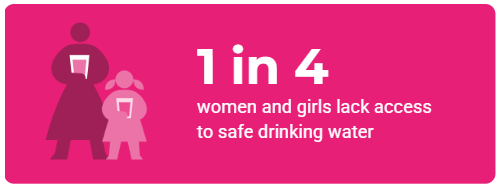
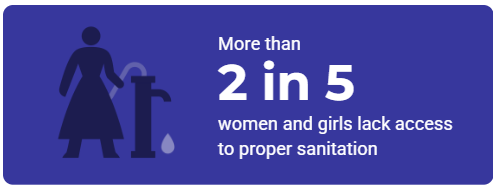
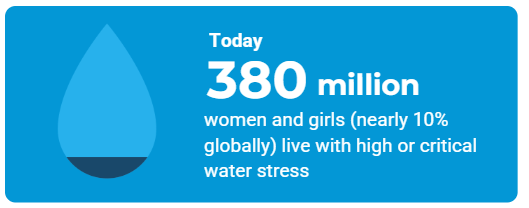
From girls’ education to women’s leadership, learn why safe, clean, and accessible water and sanitation are essential to gender equality.
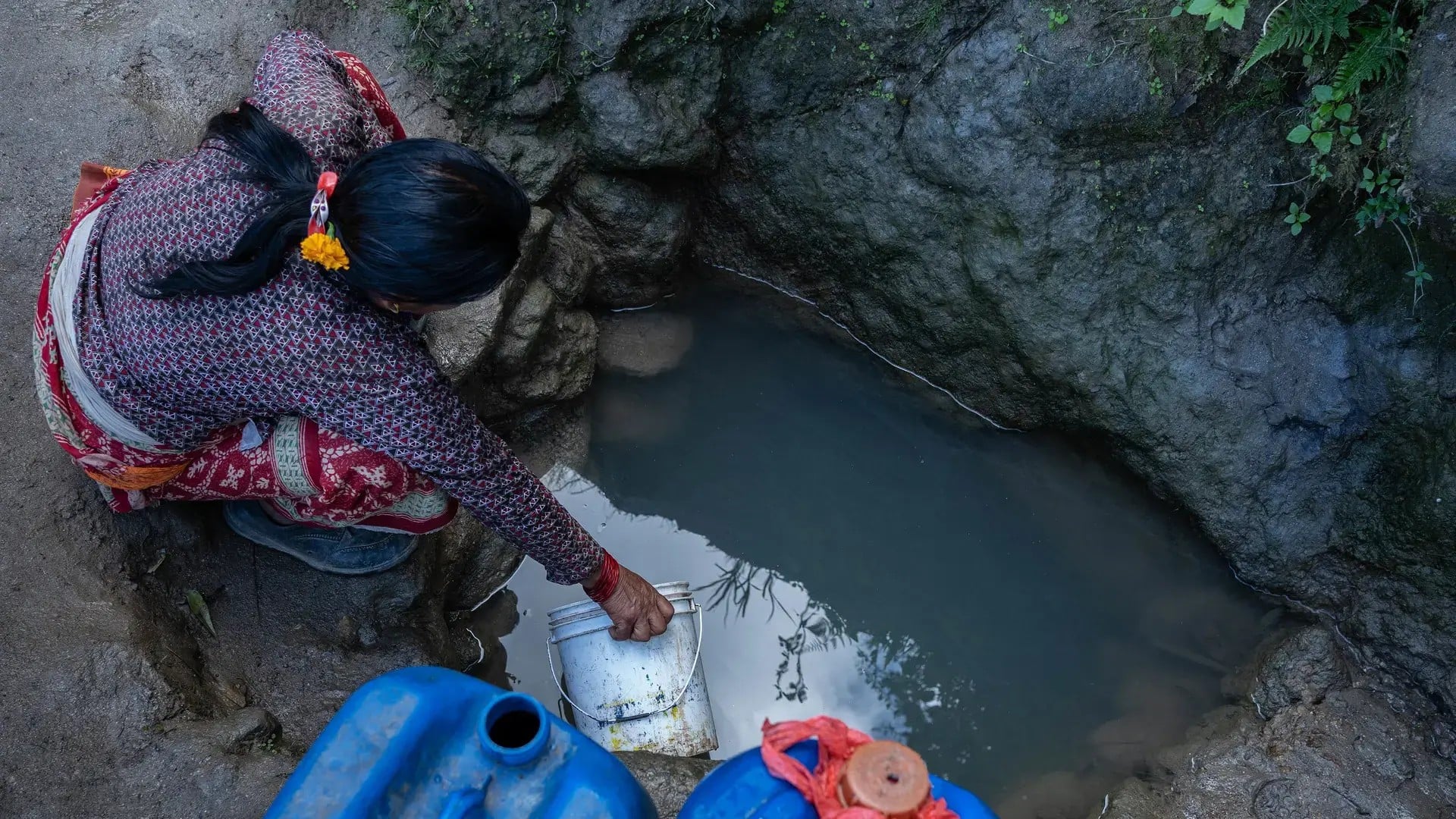
Many women and girls in mountainous rural Nepal gather water from public wells like this one, often requiring long daily treks. They carry the heavy plastic jugs on their heads and shoulders back to their communities. November 2024. Photo: UN Women/Gagan Thapa
How do you use water every day?
You drink, bathe, cook, clean, flush, create, and grow with it. You may get it from a tap, bottle, bucket, river, or well. Water – unpolluted, adequate, and affordable – is essential to the full enjoyment of our lives.
It is a human right and it is fundamental, in obvious and not-so-obvious ways. Access to clean water, as well as sanitation, may influence whether a girl can go to school, if a pregnant woman can deliver a healthy baby, or if a family has enough food to eat.
Water and sanitation – or the lack of them – impact the safety, agency, and time of women and girls all over the world.
Thanks to the tireless efforts of feminist advocates, we understand that water and sanitation are women’s rights issues. They carry the burden of collecting clean water for their families, endure harassment on their journeys to gather water or use public latrines, and face economic and social limitations because of period poverty. These problems persist in both urban and rural settings.
Since the full-scale invasion of Ukraine in 2022, many families in conflict areas have struggled to access water, fuel, and other basic necessities. In this photo, women and children collect water from a public source on a harsh winter day. Photo: UN Women/Olha Ivashchenko
What is SDG 6? The global goal for clean water – and what it’s missing
The international community and local communities further mark its importance with World Water Day (and World Water Week), World Toilet Day, and Menstrual Hygiene Day through conferences, ceremonies, and events.
What does WASH mean?
WASH is an acronym for water, sanitation, and hygiene. That includes water (WA) that is safe, affordable and sufficient to meet people’s needs; sanitation (S) services that dispose of human waste safely; and hygiene (H) practices, like handwashing and menstrual hygiene, that reduce health risks and support people’s comfort and dignity.
But how we officially measure progress on SDG 6 does not include gender-based benchmarks – part of a troubling absence of gender perspectives across WASH policies. Without explicitly addressing the rights and realities that women and girls face daily, access to water will remain deeply unequal.
This is where the work of UN Women and our partners is critical: We ensure women and girls – their needs, rights, and leadership – are not an invisible part of the global water crisis or its solutions.
What the water crisis looks like for women and girls
Intensifying climate change, environmental degradation, and growing demands from agriculture and industry have produced a global water crisis. This water crisis worsens under mismanagement and short-term planning. And it disproportionately impacts women and girls, harming their health, safety, and opportunities.
By improving access to water and sanitation – understanding how it goes hand-in-hand with gender equality – we can drastically improve the lived experiences of women and girls around the world.
Clean water can mean the difference between life and death during childbirth
Every year, around one million mothers and babies die because of unclean births. Mothers in low- and middle-income countries or in conflict zones, where healthcare facilities have fewer resources, are most at risk of infection.
With clean and adequate water and sanitation, many of these deaths could be prevented.
A Palestinian girl carries empty bottles to fill from one of the water stations next to Nasser Hospital in the city of Khan Yunis, south of the Gaza Strip, October 2023. As the war on Gaza continued, access to water became even more strained. Photo: UN Women/Samar Abu Elouf
The responsibility of collecting water still falls mostly on women, particularly those living in rural areas
In seven out of 10 households with no running water, women and girls are responsible for collecting it. Based on 53 countries where data is available, the time spent by women and girls is three times as much as men and boys.
Those hours add up to less time for education, paid work, and rest. In some cases, the journey back and forth to water resources also exposes women and girls to harassment, assault, and exploitation.
Investments in infrastructure are investments in the lives of women and girls. Achieving SDG 6 by 2030 will require $1 trillion in financing per year.
In the Balukhali refugee camp in Cox’s Bazar, many Rohingya women and girls use make-shift toilets like this one, reduce their food and water intake, and restrict their movements during menstruation, all to avoid having to bathe and defecate in the open. Since 2018, UN Women has helped set up Multi-Purpose Women’s Centres, which, among many things, provide a safe space for them to bathe and wash clothes. Photo: UN Women/Allison Joyce
The safety risks women and girls face without proper sanitation
Adequate and dignified sanitation is about having access to facilities where humans can do the most natural things we do, safely and privately. That means working toilets or latrines at home, school, and work; doors that lock; and a way to clean our hands to prevent disease.
For women and girls, who typically need to urinate more often than men and boys, the differences aren’t just anatomical. When they are forced to use inadequate, unsecured, or distant facilities, they risk being exposed to harassment or violence. When there are no public sanitation facilities, women and girls participate less in public life.
And for menstruating or pregnant people, safe facilities are even more critical. This is especially true in places where periods are wrongly stigmatized and menstruating women and girls are shunned by their families or societies. Lack of proper sanitation, lack of understanding, and unaffordable (or unavailable) period products mean that millions live in period poverty, especially in rural areas.
The safety risks women and girls face without proper sanitation
When water and food become scarce, gender inequalities often deepen. Scarcity means that the women – often responsible for gathering and managing water, food, and fuel for their families – must work harder and travel farther.
Worse still, failure to provide can lead to physical violence, perpetuated by intimate partners or relations.
Whether after a disaster, during a conflict, in the everyday lives of people living in poverty, or simply where tradition dictates it, women and girls often eat last, and least.
Gender inequality exists from the very beginning of the food supply chain. Women farmers have less access to land, financing, and information. Care responsibilities may mean they have less time to farm. So even in countries where women represent the majority of agricultural workers, they produce 20 to 30 per cent less than male counterparts. Water scarcity depletes from those already-thin margins.
The Gado Camp is a major refugee settlement in Cameroon. In 2016, there was just one water pump for every 423 refugees. There are constant lines at the water points, and places in line are held by jugs and buckets. Photo: UN Women/Ryan Brown
Water crises can increase violence, child marriage, and displacement
Extreme events like flooding and drought – which are intensified by fossil-fuel-driven climate change and cycles like El Niño and La Niña – are harrowing experiences on their own. These crises deplete water supplies, disrupt services, damage infrastructure, and increase illness, hunger, displacement, and conflict.
Water-related disasters, which are growing more frequent and severe, account for 70 per cent of disaster-related deaths.
And for women and girls, evidence shows that these events increase the risk of violence. Rates of child marriage and forced marriage also rise, as families desperately cope with water scarcity, food insecurity, and poverty.
During the 2022–2023 drought in the Horn of Africa, intimate partner violence and rape reportedly increased by 20 per cent in Somalia. In Ethiopia, child marriage increased nearly fourfold.
In a study on drought in Zimbabwe, Mozambique, and Lesotho, researchers found drastic increases in sexual violence (46 per cent), with adolescent girls most at risk. According to the IPCC, already-scarce water supplies in Southern Africa are expected to decline 30 per cent by 2050.
What does water bankruptcy mean?
The “global water bankruptcy” refers to the current state of our water resources. Many regions are living beyond their means – using up or polluting water resources faster than they can be replenished by the natural water cycle. The terminology is meant to promote long-term thinking, more so than “water stress” or “water crisis.”
The gender data gap leaves water solutions half empty
Data doesn’t just show us the extent of the problems. It lights the path to solutions.
Disaggregated data and gender statistics can show us, in hard numbers, the different impacts on women and men, girls and boys. Properly investing in it is the first step in ensuring no one is left behind in the race to meet SDG 6.
The most effective WASH policies use gender analysis and sex-, age-, and disability-disaggregated data (SADDD) to reflect the diverse experiences of women and girls.
Women marched during an International Women’s Day 2017 event in Burundi, which centred their rights to resources, land, and education. The country is experiencing severe impacts from climate change, and women – many of whom farm, gather water and fuel, and supply food for their families – are particularly impacted. Photo: UN Women Burundi
Women are leading water solutions but often excluded from decision-making
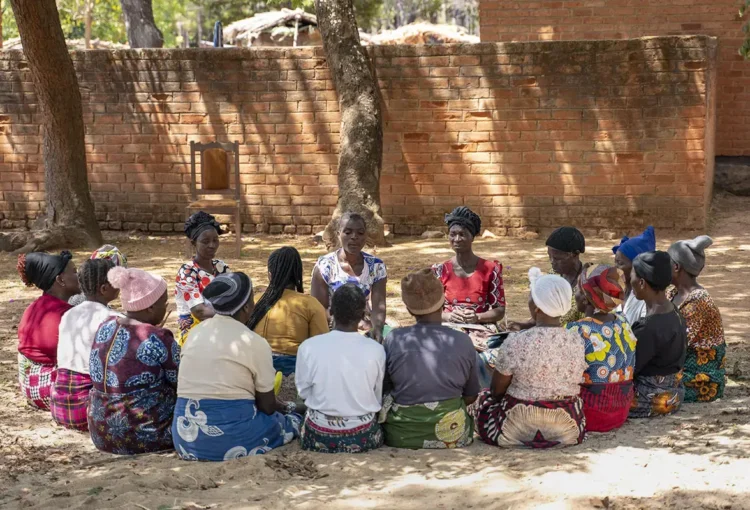
Despite the responsibilities that women and girls carry – sometimes literally – in managing water, their contributions are rarely recognized in the formal spaces where WASH policies are made. Women are largely excluded from community water governance, planning, and leadership roles.
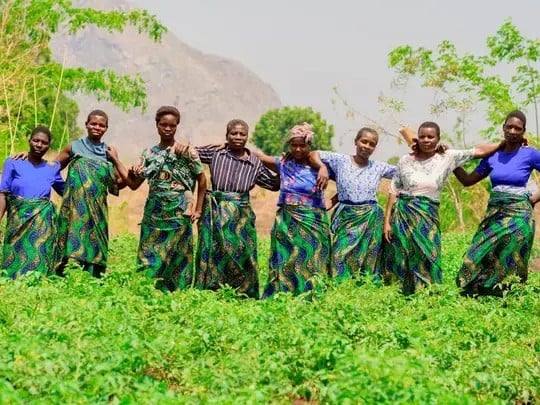
Women and women-led organizations, including human rights advocates and Indigenous water defenders, bring critical experience and perspectives to the management of water. Feminist water governance strengthens water access, sustainability, and equality.
Spotlight on SDG 6: From commodity to common good: A feminist agenda to tackle the world’s water crisis
What real gender-responsive water and sanitation policies look like
UN Women advocates for WASH policies that:
Uphold women’s human rights, especially in conflict and disaster where resources are most scarce.
Promote women’s leadership and their full, equal, and meaningful participation – including in rural and underserved communities – through greater representation in decision-making, training, and financing.
Are built on disaggregated data and gender statistics, so policies reflect the diverse needs of the people they serve.
Recognize and redistribute women and girls’ unpaid care, domestic responsibilities, and community work, including the collection of water.
Invest in water and sanitation infrastructure closer to or within homes to reduce women and girls’ time constraints and drudgery, while ensuring greater safety and privacy.
Educate communities and reduce stigma, especially around menstruation and personal hygiene.
Protect water and use resources sustainably, so that the next generations may inherit a world that is healthier, safer, and more equal.
Gender-responsive climate and environmental action
Towards achieving gender equality and a safer, healthier, more sustainable planet for all.