The event’s message was clear: Achieving gender equality depends on the leadership of every generation.
On the sidelines of the 81st session of the United Nations General Assembly (UNGA81), the UN Women Leaders Network, in partnership with the Government of Iceland, the UN Foundation, and the Council of Women World Leaders, convened a high-level side event bringing together emerging and established women leaders to advance access to leadership and decision-making for women across generations.
The event, “The Power of Intergenerational Leadership”, held on 24 September at Scandinavia House in New York, brought together leaders from politics, academia, civil society, the private sector, and youth groups. The task: to examine how leadership shared across generations can strengthen the rights of women and girls and expand pathways to decision-making.
The discussion took place at a critical moment for the multilateral system, the implementation of the Beijing+30 Action Agenda, the achievement of Sustainable Development Goal 5, and the global gender equality agenda. Despite decades of global commitments, women remain significantly underrepresented in positions of leadership and decision-making. This representational gap reflects a lack of access to the networks, resources, and institutional opportunities that enable women to lead – barriers that compound across generations.
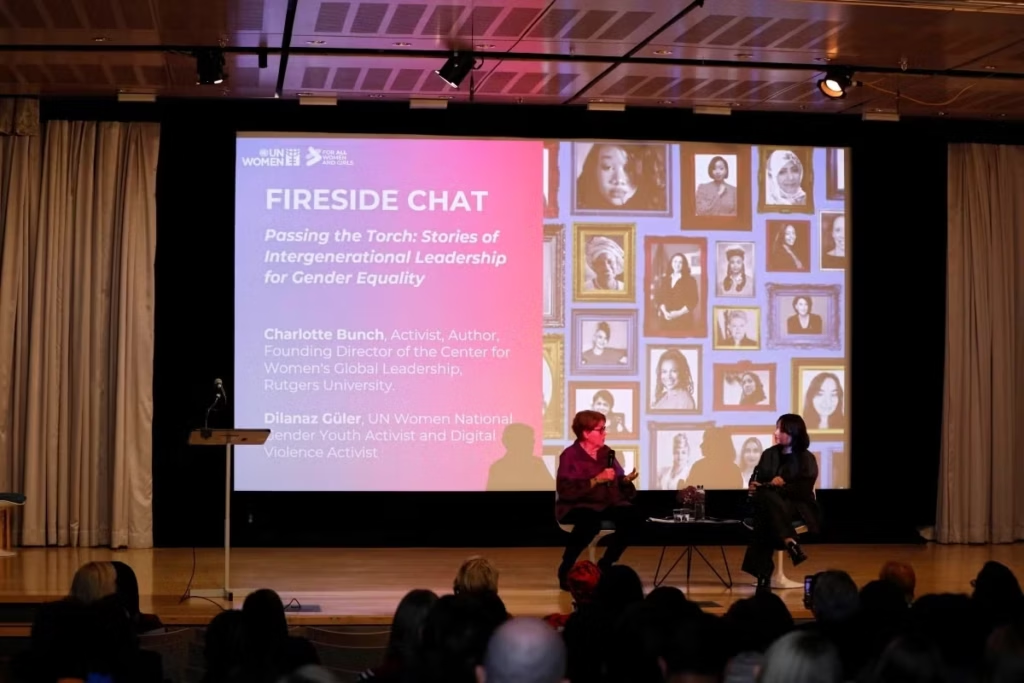
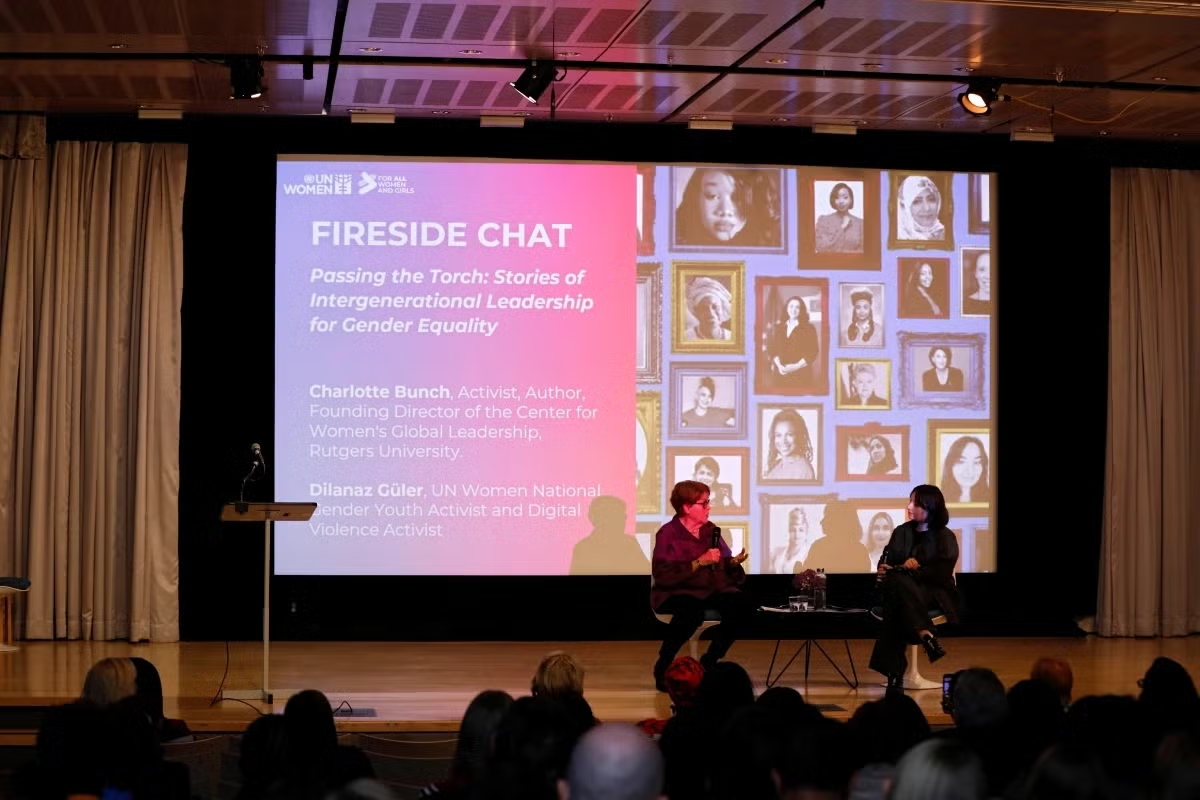
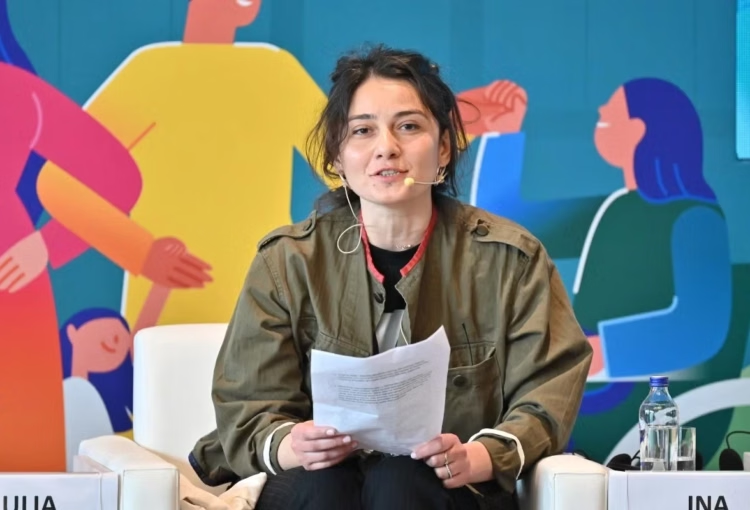
A fireside chat brought together Founding Director of the Rutgers University Center for Women’s Global Leadership Charlotte Bunch with UN Women National Gender Youth Activist Dilanaz Güler.
Their conversation explored the importance of passing the torch to the next generation. “To me, what has changed is that all of you are in this room and we’re all talking about it. There are groups all over the world trying to make a change… That space did not exist before. We had to create that space. And that space is important. But if we don’t share that space with each other across generations, across values, we very soon get isolated”, explained Bunch.
Güler added: “Being in the room also does not necessarily mean you’ll be able to speak in that room. Or if you’re allowed to speak, you won’t be taken seriously.”
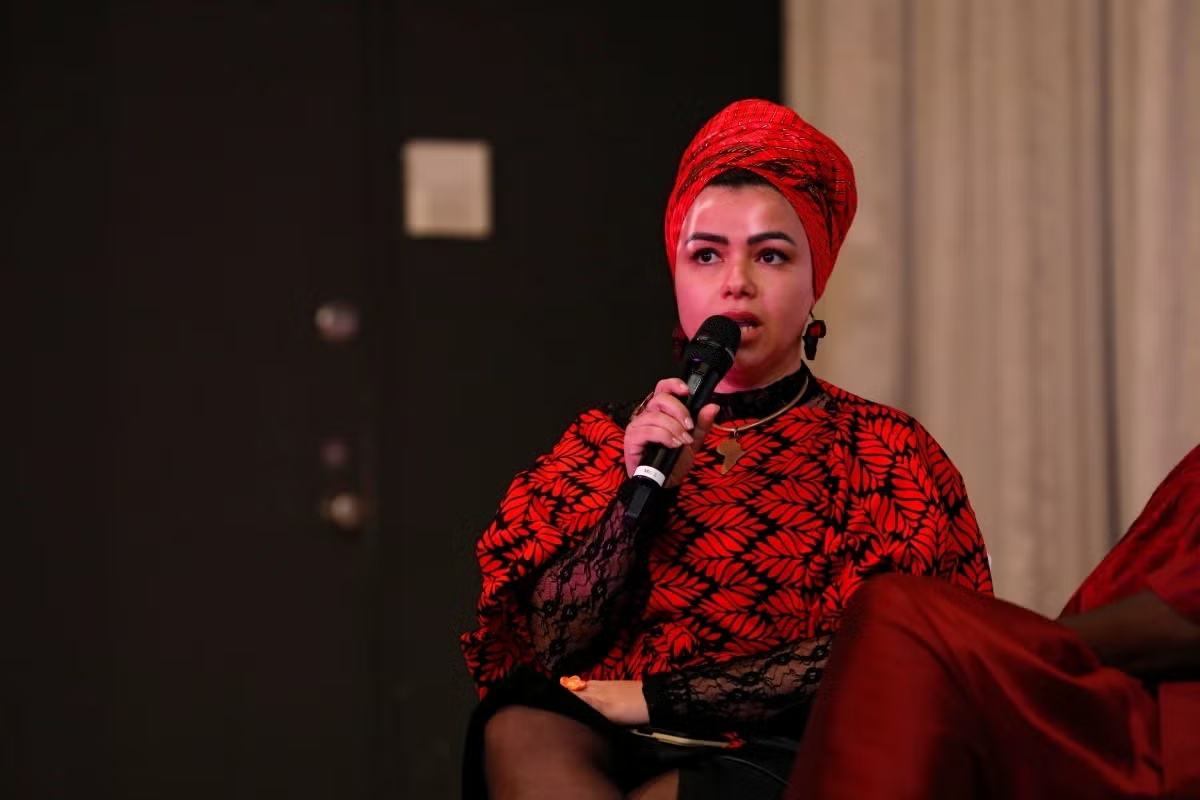
Then followed a panel discussion moderated by Anika Jane Dorothy, Global Programs Delivery Lead, Girls Agency Lab and former member of the Generation Equality Youth Task Force. The panel included Aya Chebbi, Founder of the Nala Feminist Collective and former African Union Special Envoy on Youth; Anino Emuwa, Managing Director of Avandis Consulting and Founder of 100 Women @ Davos; and Tarja Halonen, former President of Finland (2000 to 2012).
“I think we need to show up for each other, not just across generations, but young women showing up for young women”, emphasised Chebbi.
“Because patriarchy lied to us and said we have to compete. Yes, we may compete at the ballot box, but once a young woman is empowered, we have to support her,” she added.
The discussion focused on identifying concrete commitments for expanding women’s access to leadership across regions, sectors and generations.
“Be the first one”, encouraged Halonen. “Whether you are the first woman to be a union lawyer, like I used to be, or the first foreign minister, the first president, the first in Davos or in the African Union, whichever. It’s not very comfortable and I wouldn’t call it nice. But it’s interesting and exciting, and somebody has to be the first one.”
The message was clear: Achieving gender equality depends on the leadership of every generation – and on building the structures and institutions that allow established and emerging leaders to advance it together.
About the UN Women Leaders Network
The UN Women Leaders Network is UN Women’s first permanent network of its kind, uniting a global intergenerational and intersectional group of 75 women leaders advocating for gender-equal participation in leadership and decision-making.
Originally published by UN Women