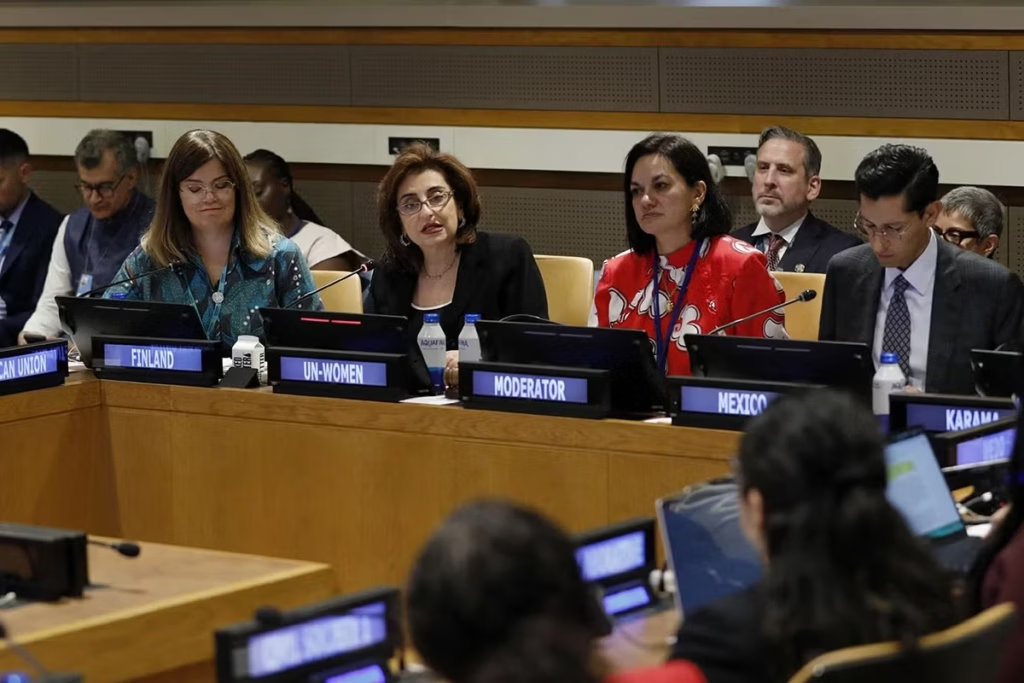
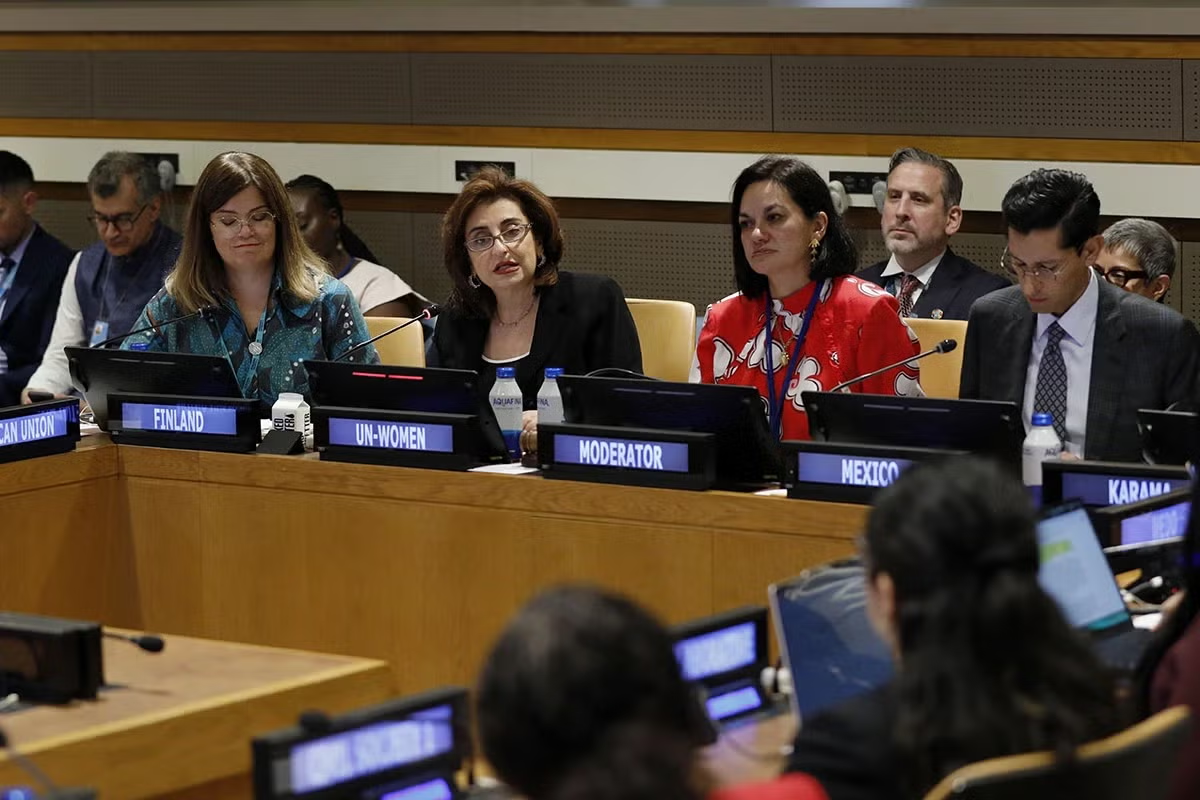
Opening remarks delivered by UN Under-Secretary-General and UN Women Executive Director Sima Bahous at the UNGA 81 side event, “High-level dialogue on reinvigorating feminist multilateralism”, UN headquarters, 25 September 2026.
[As delivered.]
I am very happy to be here and good to see this crowd joining us for this very important event. In my country, we have a saying, “The last meeting is the best meeting”, and as this is my final event during UNGA 81, I hope that proves true today.
It is my great pleasure to welcome all of you to this “High-level dialogue on reinvigorating feminist multilateralism”. I extend my thanks to our co-hosts, His Excellency Roberto Velasco Álvarez, Secretary of Foreign Affairs of Mexico; Her Excellency Laura Rissanen, State Secretary to the Minister of Social Security of Finland; Her Excellency Liberata Mulamula, Special Envoy on Women, Peace and Security to the African Union; Hibaaq Osman, Founder and CEO of Karama; and to all our civil society partners: FEMNET, the Feminist Foreign Policy Collaborative, ARROW, and WEDO, as well as everyone else in this room. Welcome.
As we meet on this final day of UNGA high-level week, we share a deep belief in multilateralism and in the vision of the world set out in the United Nations Charter.
Today, that vision can feel further away than at any time in recent memory. Our multilateral system is under immense strain from dealing with escalating violence, widening social and economic divides, deepening gender disparities, and a climate in crisis. And yet, it is precisely because of these pressures that we must come together to strengthen multilateralism, not retreat from it, and to ensure it delivers for women and girls everywhere.
The United Nations Charter, signed in 1945, rests on a simple but enduring truth: that our greatest challenges cannot be solved by nations acting alone; that our security, prosperity, and dignity are bound together. This week, from the podium of the General Assembly to the corridors of this building, we have heard strong support for that idea, and for a renewed multilateralism.
But, as we all know, words alone will not be enough. For multilateralism to meet the demands of our time, it must evolve. It must share power; it must place women’s leadership and gender equality at its core; it must broaden the voices and issues shaping our common agenda; and it must draw strength from the meaningful participation of civil society. These are the principles of feminist multilateralism.
Women’s organisations and feminist movements have long called on us to walk the talk, to show what feminist multilateralism can mean in practice: to share rather than concentrate power; to make leadership more inclusive and accountable; and to build lasting peace through justice, equality, rights, and solidarity.
This requires us to rethink the very concepts at the heart of multilateralism. Security must not be measured by military strength or geopolitical influence. Nor can peace simply mean the absence of war. Their true measure must be found in people’s lives: in whether women and girls, who make up half of humanity, can live free from violence; whether their rights are protected; whether communities are resilient; and whether people have a meaningful voice in the decisions that shape their lives.
This vision connects the promises of the UN Charter with CEDAW [the Convention on the Elimination of All Forms of Discrimination against Women], the Beijing Declaration and Platform for Action, the Women, Peace and Security agenda, and the 2030 Agenda [for Sustainable Development]. This vision calls for institutions that better reflect the diversity and leadership of the people they serve.
As the United Nations looks to its future, the call for a woman Secretary-General has never been clearer, and we will make it clearer today. After 80 years, the prospect of a Madame Secretary-General would be profoundly significant, and a powerful step toward the feminist multilateralism we are calling for today.
There are three ways in which all of us here can put feminist multilateralism into practice:
- First, by making women’s leadership central to decision-making on peace, security, development, and global governance, including discussions on the opportunities and risks presented by digital technologies.
- Second, by protecting civic space and ensuring the full, equal, and safe participation of civil society in shaping our shared global agenda.
- Third, by sustainably funding women-led and feminist organisations, the movements that turn the global commitments we make in these multilateral spaces into change in communities around the world.
- And fourth, by shifting resources from military spending to investments that sustain peace, development, and gender equality.
Friends, let us turn to the words with which the UN Charter begins, “We the Peoples”. That is where the legitimacy of multilateralism begins and where its future must be rooted: in people, participation, and shared power; in equality, including between women and men. This is the promise of the feminist multilateralism and the work before us today.
And as I close, I would like us to take a moment to recognise this empty chair that is among us here, a stark symbol of the silencing and erasure of Afghan women from public life, and a powerful reminder of our responsibility, that of all of us, to ensure that their voices are heard, their rights defended, and their leadership neither excluded nor forgotten.
Thank you.
Originally published by UN Women