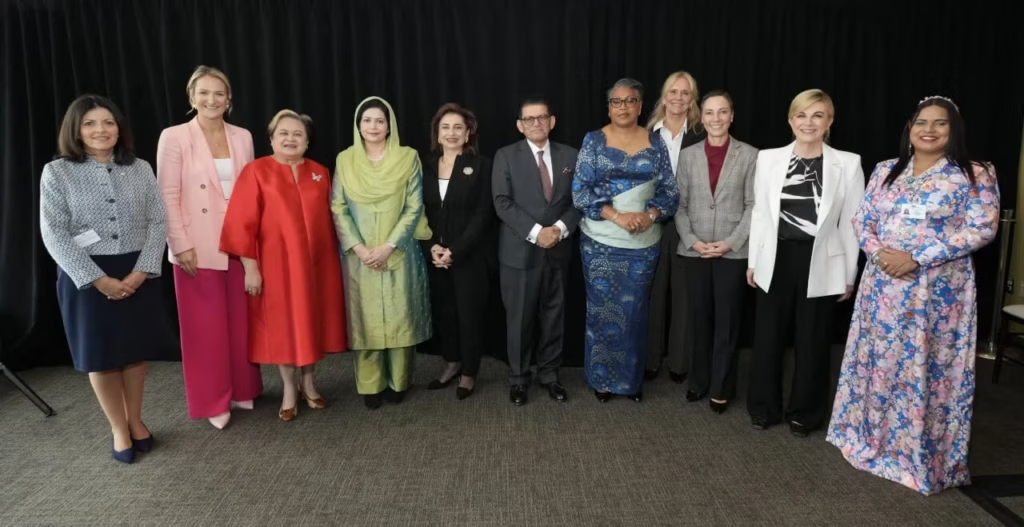
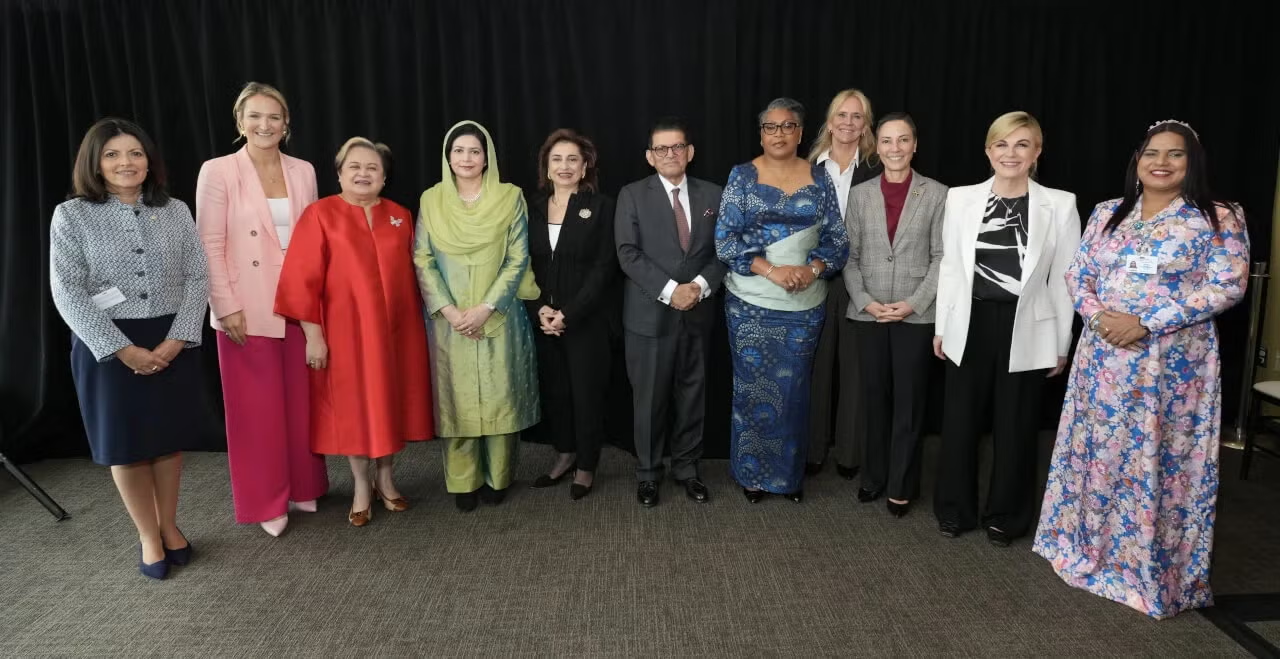
Each of you knows from your own experience. You have broken barriers. You have challenged conventions. You have led nations through crises and transformation. Your leadership brings to life what evidence shows us: when women lead, societies are more inclusive, institutions are stronger, and peace is more sustainable.
This is the central message of the 2026 Gender Snapshot report, which is in front of you now. This snapshot report is done by UN Women and UN DESA, and we will launch it officially later today. It tells us that, when women hold power, decisions change, priorities change, and lives change for the better.
The snapshot report also shows how far the world remains from equal leadership. Quite far.
Today, as was mentioned by His Excellency the President of the General Assembly, only one in seven countries is led by a woman. Women remain largely shut out of decisions on how money is spent, how people are protected, and whose needs come first. Women who seek public office continue to face threats, intimidation and violence.
And after 80 years, this organisation has yet to select a woman Secretary-General. This is not a symbolic gap. It is a loss of talent and experience that the world can no longer afford.
Gender equality is central to every agenda. It is essential to economic growth, to peace and security, climate resilience, technological innovation, and the future of multilateralism and sustainable development.
Today, hard-won gains are under pressure. Women’s rights are challenged. Civic space is shrinking. Women’s organisations face growing pressures with declining resources. And the snapshot that is in front of you is telling us that, at the current pace, it will take us 171 years to reach gender equality.
I don’t think any one of us wants to wait that long. I don’t think any one of us can wait that long. And we really need to continue to work hard on this.
We are not here simply to defend the progress that we have made. We are here to accelerate it, and we know it is possible. So, the magic word between now and 2030 is accelerate, accelerate, accelerate.
This requires leadership, resources, and institutions that are ready to support change and acceleration.
That is the role of UN Women. Across every region, UN Women helps turn global standards into national progress and tangible change in women’s and girls’ lives. Through our distinctive mandate, global commitments have become stronger laws and institutions. More women have entered political leadership. More women have gained economic opportunity. More survivors of violence have accessed protection, justice, and support.
The future is being shaped as we speak today.
Artificial intelligence is transforming our economies and societies. Yet women remain underrepresented in the sectors designing these technologies, while evidence of bias and online harm continues to grow against women and girls.
Technology is not going wait. Women must not simply adapt to the future. They must lead and design technology.
We need women at every table where decisions are made: in governments, in peace negotiations, in financial institutions, in technology governance, in Ministries of Defence, and here at the United Nations.
We cannot deliver on the promise of the 2030 Agenda without gender equality – and women’s leadership; your leadership.
The path forward is clear:
- Uphold women’s equal right to lead.
- Dismantle the barriers that hold women back.
- Make accountability for equality non-negotiable.
- And build institutions that fully reflect the talent of half the population they serve.
- And accelerate and keep moving forward.
My dear leaders, let us be remembered as the generation that kept its promise to women and girls and made equality irreversible.
And, if I may, I hope your deliberations today will bring us closer to the day when a woman finally leads the United Nations, and when we stand behind her, and with her, and next to her to support her for all women and girls of the world.
Thank you.