Author(s)/editor(s) Alena Sakhonchik, Amber Parkes, Ana Maria Tribin Uribe, Natalia Mazoni Silva Martins, and Vanessa Sampaio.
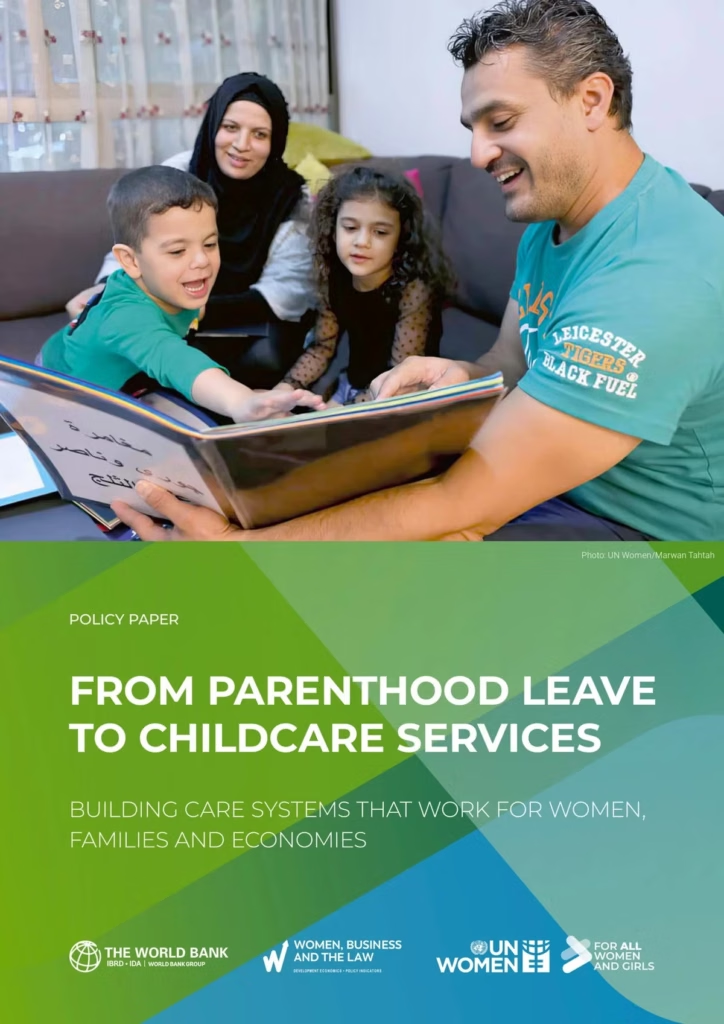
Rising care needs, persistent gender inequalities, and growing labour market pressures make investing in the care economy an urgent policy priority. Drawing on evidence from the World Bank Group’s Women, Business and the Law 2026 report, this joint UN Women and World Bank Group policy paper examines the state of parenthood policies and childcare systems across 190 economies.
It shows that although many countries have strengthened legal frameworks for parenthood policies and childcare services, progress remains uneven and substantial implementation gaps persist. It further shows that limited access to affordable and quality childcare alongside inadequate support for fathers’ caregiving, weak supportive legal frameworks, and insufficient enforcement continue to constrain women’s labour market participation and reinforce unequal caregiving.
Findings underscore that strengthening parenthood policies and childcare services as an integrated continuum of care can help reduce gender gaps, support families, create decent jobs, and generate significant economic returns, with benefits for all of society. The brief provides examples of good practice and identifies recommendations to improve the design, financing, implementation, and enforcement of parenthood policies and expand access to affordable, quality childcare services.