Transforming care through policy, services, urban infrastructure, and shared responsibility in Kathmandu, Nepal
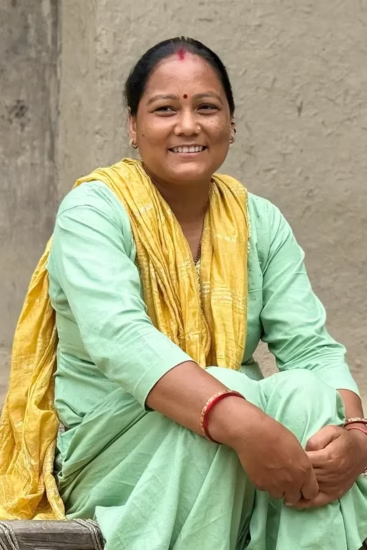
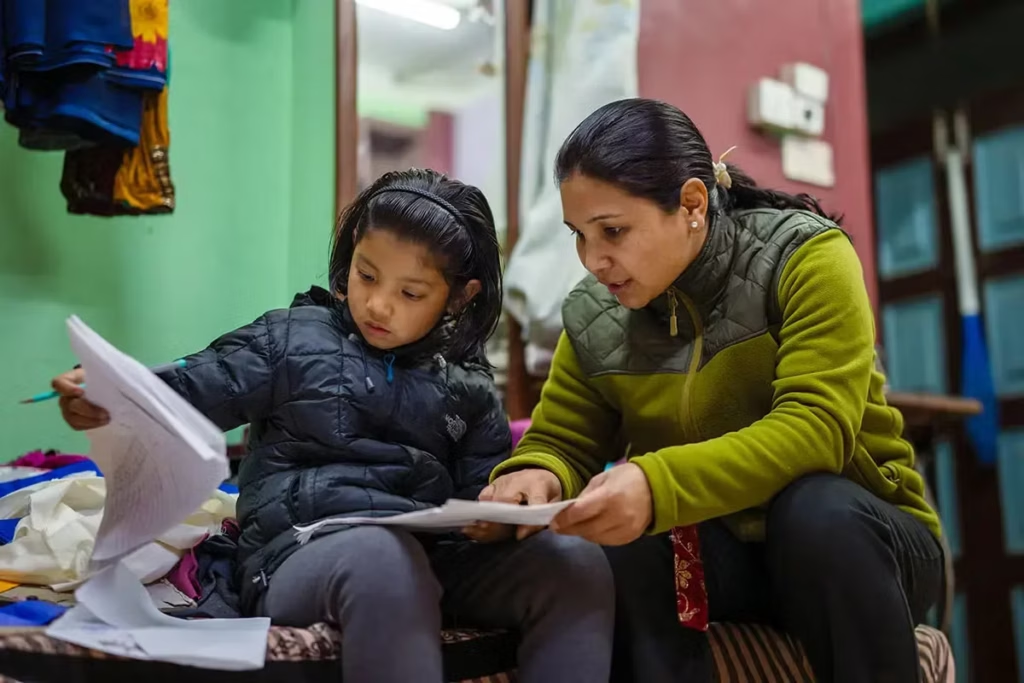
“When I counted my hours, I couldn’t believe it. I was spending 18 hours a day on care work”, said Khagisara Karki from Dailekh, a small rural town in Karnali Province, Nepal. “Just recently, I realised that care work is not a moral obligation of women, it is a responsibility that should be shared among all family members.”
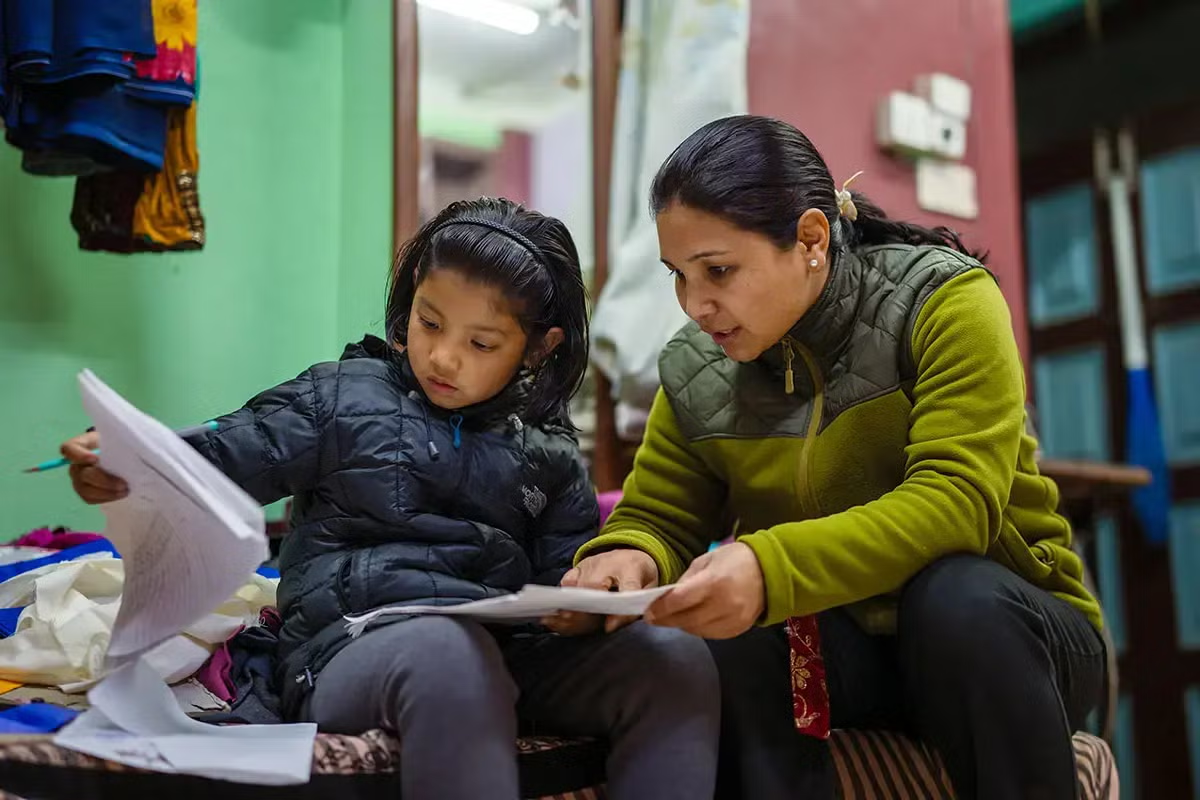
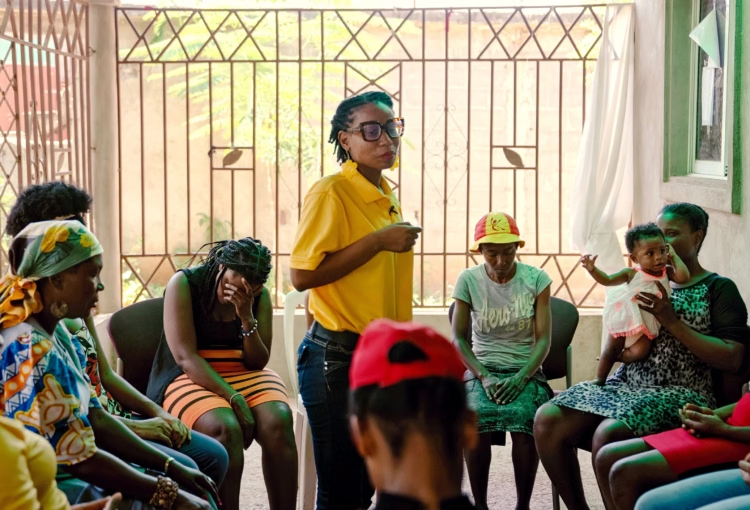
Karki spent 18 hours a day, cooking, cleaning, farming, and taking care of children and older family members. She started thinking differently about care work and her time after participating in a local advocacy and self-help group under the Community Cares Project, led by UN Women and funded by the United Nations and European Union Joint Programme, “Empowered Women Prosperous Nepal”. Other women who attended the self-help group also shared how discussions led by the project with male family members led to more equal sharing of care work in their households.
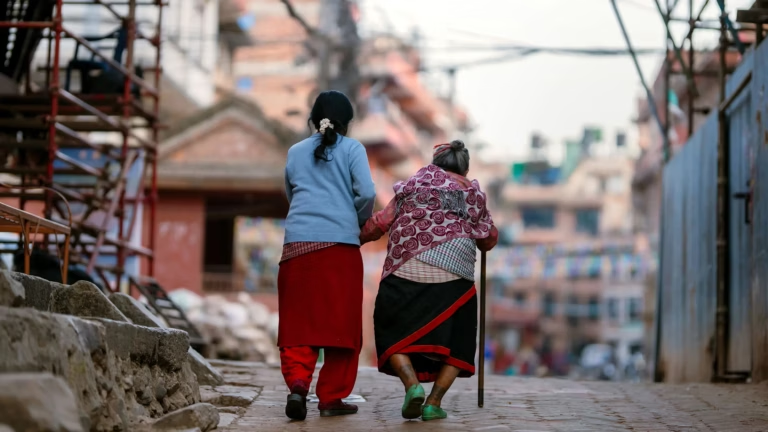
Karki’s story is not an exception. In Nepal, care work begins long before the country wakes, and for millions of women, it never truly ends. This unpaid labour sustains families, communities, and the entire economy. Yet it remains largely invisible and unrecognised.
The weight is growing heavier. As more young men migrate abroad for work and Nepal’s population ages, women are taking on an even greater share of caregiving responsibilities. According to the Nepal Labour Force Survey (2018) in Nepal, women carried out 85 per cent of daily unpaid care work. This is almost six times more than men. The survey also found that nearly 40 per cent of women who are inactive in Nepal’s labour market cite care responsibilities as the primary reason.
How Nepal is piloting the caring cities model – from evidence to action
Changing a city begins with understanding it. Since 2024, UN Women Nepal has been working with Kathmandu Metropolitan City (KMC) to pilot the “Caring Cities” model. Under this project, UN Women compared the demands for childcare, care for older persons, and disability services against where those services existed, through a geospatial mapping in KMC. The mapping provided critical evidence to inform decisions on expanding care services and infrastructure across the city.
The care services mapping was the first step. The research revealed that while many care services existed across the city, the women and families who needed them most were often unaware of where and how to access them.
Building on this evidence, UN Women and KMC convened a series of consultations with municipal officials, care service providers, civil society organisations, and UN agencies to find better ways to deliver care services – for both caregivers, especially women, and the people who receive care. The consultations led to new ways of delivering care – integrated, community-based service hubs where multiple care services are brought together in one place, making it easier to access care.
Change like this doesn’t happen on its own: it needs leadership and commitment. In Kathmandu, one of those voices has been Acting Mayor Sunita Dangol. Time and again, at regional care forums and beyond, she has made the case that care is not a private responsibility but essential community infrastructure – something that deserves public investment, deliberate urban planning, and institutional ownership.
“In Kathmandu, we draw inspiration from our rich cultural heritage, shared courtyards, community gatherings, and intergenerational care. But we also recognize the need to evolve. Kathmandu is committed to becoming a caring city, where every individual feels safe, supported, and valued.”
What is a “Caring City” and how is it shaping Nepal’s national care agenda?
What happens when a country decides to treat care not as a private responsibility, but as a social good and essential infrastructure – something to be valued, shared, and invested in?
This is the idea behind the “Caring Cities” regional initiative led by UN Women, together with municipalities, civil society, and partners across Asia and the Pacific. Currently implemented in Bangladesh, China, Nepal, the Philippines, Thailand, Timor-Leste, and Viet Nam, the initiative aims to help cities build more inclusive urban care systems. It also strengthens care policies, services and financing; promotes gender-responsive urban planning; and supports locally led solutions that improve access to quality care services for everyone and decent work for care workers.
In Nepal, the Caring Cities initiative has spread across the country’s provinces and is now influencing national policies. In partnership with UN Women and the ILO, the National Planning Commission (NPC) applied a UN Women-ILO care services costing and investment tool to inform national discussions on the care economy. Through an inter-ministerial and multistakeholder Care Working Group, the government is now linking the care economy agenda with employment, social protection, and urban development priorities.
Building on this momentum, the National Statistics Office of Nepal is gearing to further strengthen the country’s evidence base on care. As a result, in 2026, Nepal rolled out a national Time Use Survey as part of the Labour Force Survey. By doing this, Nepal is making visible the often-unseen care work that takes place in the household, and identifying where gendered care gaps exist, and where public investments are needed most.
The government is also working to expand social protection coverage – such as leave, health insurance, etc. — for informal sector workers, including care workers who often hold informal and low-paid jobs. With support from the UN System through the Global Accelerator for Jobs and Social Protection for Just Transitions, the government has developed a roadmap that identifies investments in care services as a priority for creating decent and green jobs.
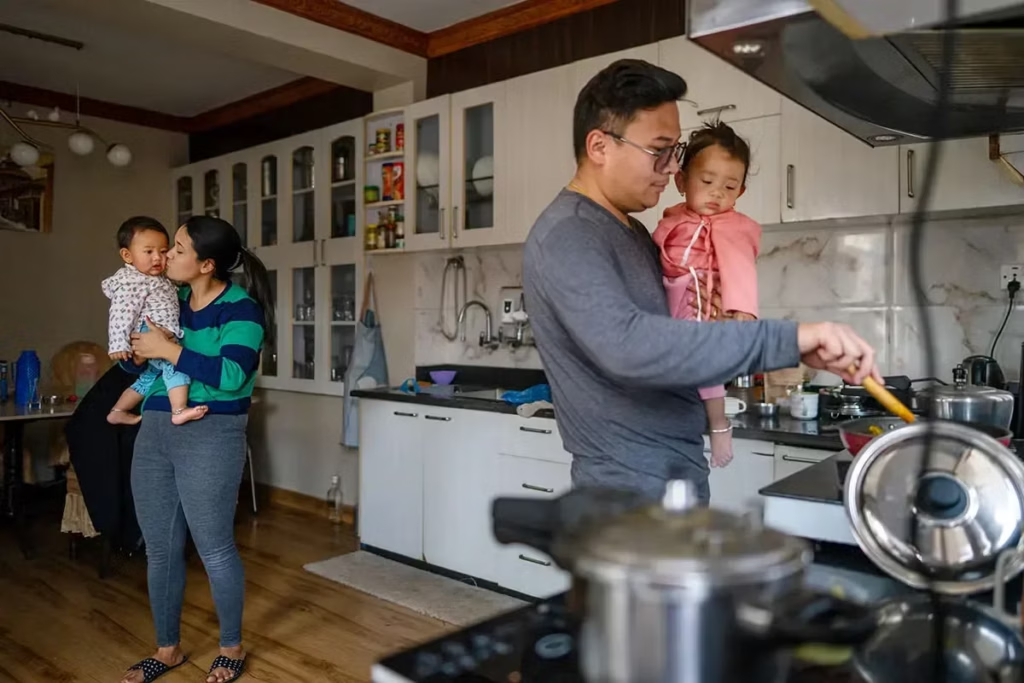
The policy shifts in Nepal are accompanied by efforts to change how people think about care in their everyday lives. A social media campaign and sustained advocacy by UN Women and the ILO through the EU–UN—Government of Nepal Joint Programme Empowered Women, Prosperous Nepal, has worked with communities, local government, businesses and journalists, to bring the discourse on care into homes. The campaign aims to make shared caregiving the norm rather than the exception, because when parents share caregiving and household responsibilities, they also become positive role models for their children, shaping new and equal norms future generations.

When cities invest in care, everyone benefits
Care connects people and it is at the heart of thriving communities. As Nepal builds its national care agenda and reimagines care as essential public infrastructure of a city, a bold new vision is taking shape – one where care isn’t a private responsibility, but a shared and valued one.
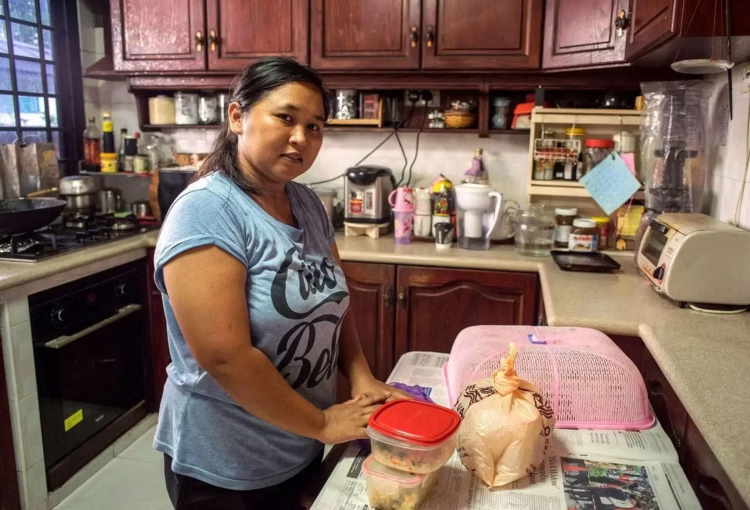
“I was managing a household alone, unable to use my tailoring skills to earn an income because care work consumed every hour I had. After joining the ‘community cares’ initiative, I gained confidence and began talking with my husband about sharing daily responsibilities. After participating in the care orientation and discussions with other men, he realised that I was right and started helping. Now, I have time to earn an income and get support for care work.”
The Caring Cities initiative is part of UN Women’s TransformCare Global Initiative, active in more than 50 countries. Interested in learning more? Visit the UN Women TransformCare page.
Nepal is part of a growing global movement to transform care systems and build cities that work better for women, families, and communities. Beyond the Caring Cities initiative in Asia and the Pacific, UN Women is advancing care-centered solutions through a range of initiatives worldwide. For instance, in partnership with governments, civil society, and local actors, UN Women is supporting cities such as Belém (Brazil), Bogotá (Colombia), Quito (Ecuador), and Panama City (Panama) to advance care policies and community-based models that place care at the heart of urban planning and public service delivery.
Originally published on UN Women