Boys are navigating a barrage of extreme content online. Give them the tools to understand it, question it, and push back.
Young people around the world are spending hours online, scrolling, connecting, learning, gaming, or simply being entertained. In Australia, young people are online for almost six hours a day on average, including close to three hours on social media. In online spaces, many are coming across the manosphere: a network of digital communities and influencers shaping how boys understand confidence, relationships, and what it means to be a man.
Not all online content is harmful. In fact, much of it is designed to feel relatable, entertaining, or even helpful. But look closer, and a different picture emerges – one that promotes negative ideas about women and girls, sells questionable advice on success, and distorts how young people – especially boys and young men – see themselves and others.
For parents and caregivers, this can be difficult to navigate. Where do you step in? What do you say? And how do you keep the conversation open and non-judgmental?
Drawing upon recent research by UN Women and Equimundo, here are some simple ways to start talking.
Access to food, shelter, and health care is a continuous challenge for displaced families in Lebanon right now
What your child might be seeing online
You may have heard the term manosphere already. It refers to a network of online spaces – from social media to forums and influencers – where ideas about masculinity, dating, health, and identity are shared.
These spaces are no longer fringe and some of its most visible figures – including influencers like Andrew Tate – have brought these ideas into the mainstream. Documentaries such as Louis Theroux: Inside the manosphere have also explored how these communities operate and why they appeal to young men. Feminists and activists have warned about the growing influence of toxic masculinity for decades.
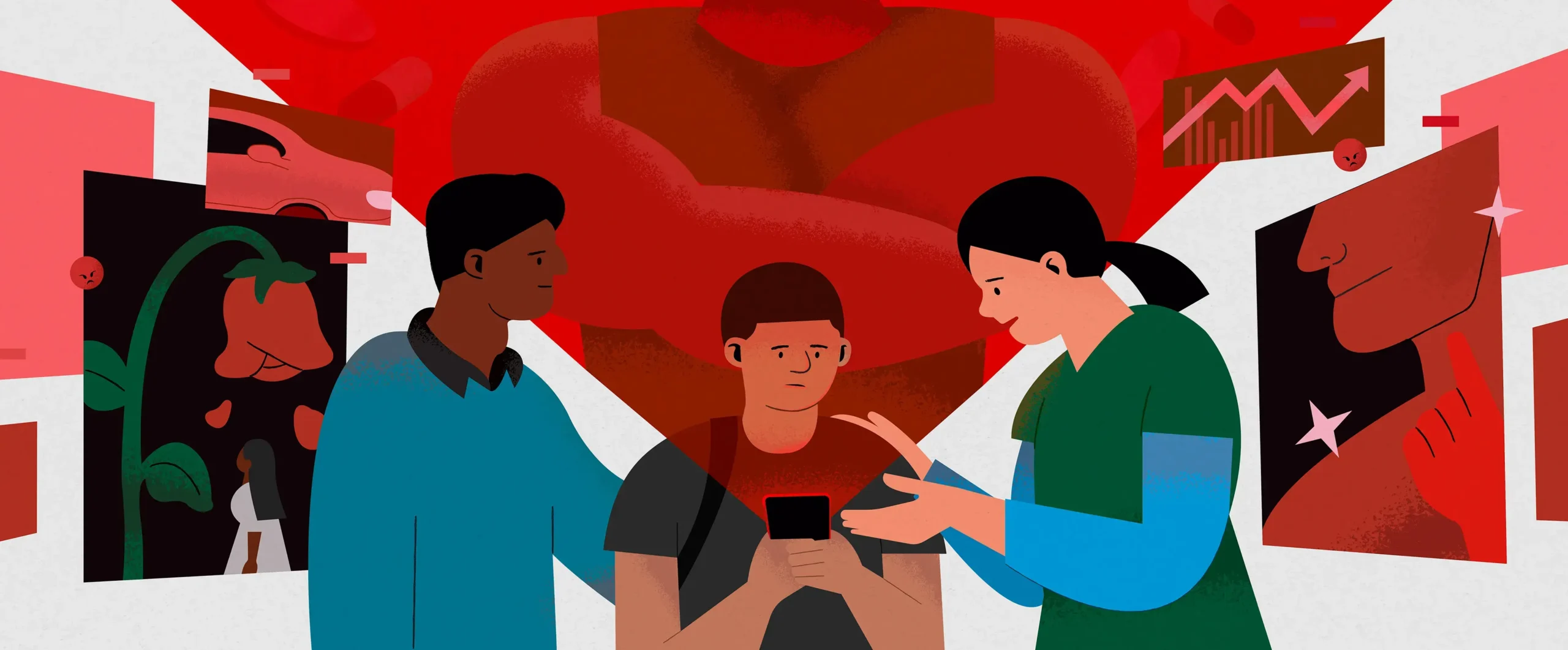
How a typical online journey into the manosphere might unfold
For many young people, scrolling can feel less like a decision and more like being sucked in by the algorithm.
Research shows how quickly platforms start surfacing male supremacist content once a young male user engages with neutral topics. In one study, fake male accounts were targeted with extremist misogynistic content within 23 minutes of scrolling, regardless of previous content choices.
In fact, research from Latin America suggests that platform design matters: platforms driven by algorithmic feeds and influencer content – such as TikTok, Instagram and X – are less favourably associated with well-being among teenagers than communication-focused platforms like WhatsApp.
Step 1: A search for self-improvement
A teenage boy looks up workout routines, confidence tips, or dating tips.
Step 2: The algorithm steps in
The platform recommends videos about “building discipline,” “becoming high value”, “getting respect”, or “looksmaxxing”.
Step 3: The high cost of becoming a “real man”
Content starts framing success around dominance, control, and financial prowess – often tied to paid courses or sponsored trading apps.
Step 4: Rage turns onto women
When success feels out of reach, or boys feel overlooked, disconnected, or rejected, content on these platforms suggests that women, feminism or society are unfairly denying them status, intimacy or success. It encourages men and boys to redirect their frustration toward women and girls, who are portrayed as the problem or something to control.
Step 5: The common enemy builds community
More extreme content is recommended, reinforcing the same messages, normalising violent attitudes towards women, rewarding increasingly provocative and violent ideas.
Experiences vary, and not all boys follow the same path, but online journeys into the manosphere often share common patterns like these.
Did you know?
- American teens in secondary school spend around 8 hours a day online.
- Two-thirds of young men in Australia, UK and US now regularly engage with masculinity influencers online

What to look out for
Manosphere content doesn’t always look extreme. But over time, it can shape how young people think, speak, and behave. Here are some signs to watch for:
1. Changes in behaviour and attitude:
- Withdrawing from friends or family.
- Spending much more time online.
- Becoming secretive about what they watch.
- Seeing relationships as competition or control.
- Resentment towards women and feminism and blaming them for perceived unjust treatment of men and boys.
2. Changes in language:
- Jargon like: “alpha”, “beta”, “red pill”, “high-value man”.
- Framing dating as a game or something to win.
- Dismissive or objectifying language about girls.
- Generalisations about women such as: “women only want…”
If you recognise some of these signs, it doesn’t mean something is wrong, but it may be a moment to understand what’s drawing your child in.
Don’t panic!
Not every joke or phrase is a red flag. Young people often repeat things because they’re trending, sound funny or provocative, or without fully understanding what they mean.
Use these moments as a starting point for a conversation.
Why does the manosphere appeal to boys?
Many boys and young men are trying to make sense of who they are, how they fit in, and what’s expected of them.
Boys engaging with the manosphere may be dealing with rejection or loneliness, looking for confidence, advice or direction, or searching for a sense of belonging or validation. When young people don’t feel heard at school, at home, or in society, they often look for spaces that make them feel seen. Right now, that space is often online.
In the manosphere they can find simple and misleading answers to complicated feelings. But this is where the message can become harmful. In manosphere spaces, personal struggles are reframed as the result of external forces. Frustration and anger are directed outward – often toward women or feminism.
For boys who may not have the space to talk about their feelings or struggle to do so, the manosphere doesn’t just offer advice, it offers a sense of community.
What’s behind manosphere content?
Profit. Some of the most visible voices behind this content are not just sharing opinions, they are building large followings and making money.
Social media platforms reward content that keeps people watching and reacting. Messages that provoke strong emotions, like anger, frustration or outrage, are more likely to be promoted and seen by more people.
When this content performs well, for the influencers creating the content this means more views, more followers, and more income through ads, subscriptions, or courses that followers pay for.
This creates an ecosystem where messages that are simple, extreme, or shift blame onto others spread quickly – even if they are false or harmful.
Influencers in the manosphere profit from this, turning frustration into something that can be monetised. This is where the manosphere starts to look less like a community and more like a money-making scheme that exploits insecurity.
Not all male voices online are the same
A growing number of creators are challenging these narratives by promoting healthier ideas about masculinity, relationships, and emotional well-being. These influencers talk about respect, accountability, mental health, healthy masculinity, and what it means to be confident without putting others down.
This matters because growing evidence suggests that heavy social media use among adolescents is linked to poorer mental well-being, particularly when platforms reward outrage, comparison, or extreme content. At the same time, some young people are also pushing back in their own ways, questioning what they see, disengaging from harmful content, or stepping away from platforms altogether.
Why the effects of the manosphere matter beyond the screen
Research shows that online abuse is closely linked to real-world harm, from controlling behaviour in relationships to intimidation and harassment in schools, workplaces and public life. When these toxic ideas about women are repeated, normalised, and rewarded online, they don’t just stay as words or jokes. They can shape how young people behave, speak, and treat others in their everyday lives.
This can affect young people in different ways:
For boys
- Pressure to be dominant, wealthy, in control.
- Anxiety and low self-worth if they don’t fit that mould.
For girls
- Exposure to messages that reduce their value or objectify them.
- Feeling unsafe or less confident in public and online spaces.
For all young people
- Sexism becomes normalised banter.
- Respect and empathy start to erode.
Did you know?
- Young men who support rigid or harmful ideas of masculinity are 10 times more likely to sexually harass someone.

So, what can parents and caregivers actually do?
If you’re feeling unsure or even worried, you’re not alone. Many parents are navigating this for the first time.
What happens at home matters too. Everyday conversations about respect, fairness, emotions, and healthy relationships can help young people build confidence, empathy, and critical thinking before they encounter harmful content online. Challenging sexist “banter”, modelling respectful relationships, and keeping communication open all make a difference.
1. Start with connection and curiosity, not control
- Instead of shutting things down, ask:
- “What do you like about this person?”
- “Why is this interesting to you?”
A two-way conversation works better than interrogation. If young people feel judged, they are less likely to share what they are really thinking.
2. Help them question what they see
This exercise is about building their critical thinking muscle. Watch something together and ask:
- “What’s the message here?”
- “Do you think that’s true?”
- “Why do you think this has so many views?”
- “What do you think they gain from saying this?”
- “Have you noticed the #spon or #ad in the post, and what do you think that means?”
3. Make space for the conversations they are not having
Strong relationships with adults are the best protection from harmful content. Many boys are taught:
- Don’t show emotion.
- Don’t ask for help.
- Be strong, always.
You can counter this by:
- Talking about rejection, confidence, and friendships.
- Normalising vulnerability.
- Showing that struggle does not equal failure.
4. Offer alternatives, not just warnings
For many, the manosphere is first and foremost a community. Help teenagers find:
- Spaces where they feel they can belong.
- Positive male role models.
- Environments that build confidence without putting others down, such as sports or creative spaces.
Many young people find real support and connection online. The goal is not to remove these spaces, but to help them recognise the difference between a toxic space and a supportive one.
5. Stay calm, even when it’s hard
If a child opens up and is met with anger, fear, or punishment, they are more likely to shut down.
Instead, stay calm, thank them for sharing, and keep the conversation going. You don’t need the perfect response. You just need to keep the door to these conversations open.
6. Remember: Girls are affected too
Some girls are choosing to step back from online spaces, from conversations, and in some cases from dating altogether as misogynistic content increasingly polarises boys and girls.
Girls may withdraw from online spaces, feel less confident, or internalise harmful messages.
What girls need is validation, a safe space to talk, and reassurance of their worth.
Did you know?
Content creators and influencers often:
- Make money from engagement
- Use outrage to get views
- Simplify complex issues to go viral
Helping young people see this can break the spell for them and foster critical thinking.

Gender equality helps everyone.
One of the biggest myths the manosphere spreads is that gender equality harms men. It doesn’t.
Equality creates healthier relationships, families, and societies for everyone.