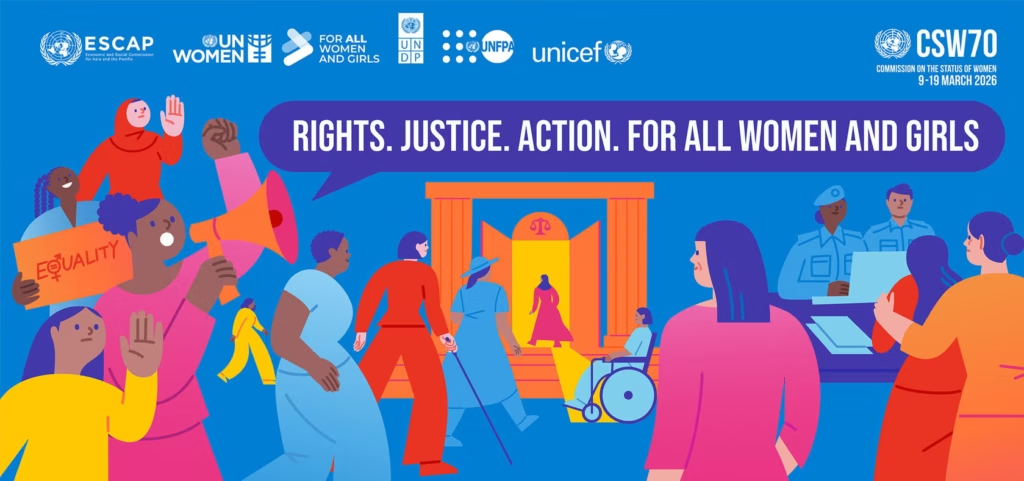
Dialling in from the 70th session of the Commission on the Status of Women (CSW70) in New York, Ambassador for Gender Equality Michelle O’Byrne joins journalist and advocate Tracey Spicer AM to unpack what gender equality looks like in 2026 – and why access to justice for all women and girls has never been more urgent.
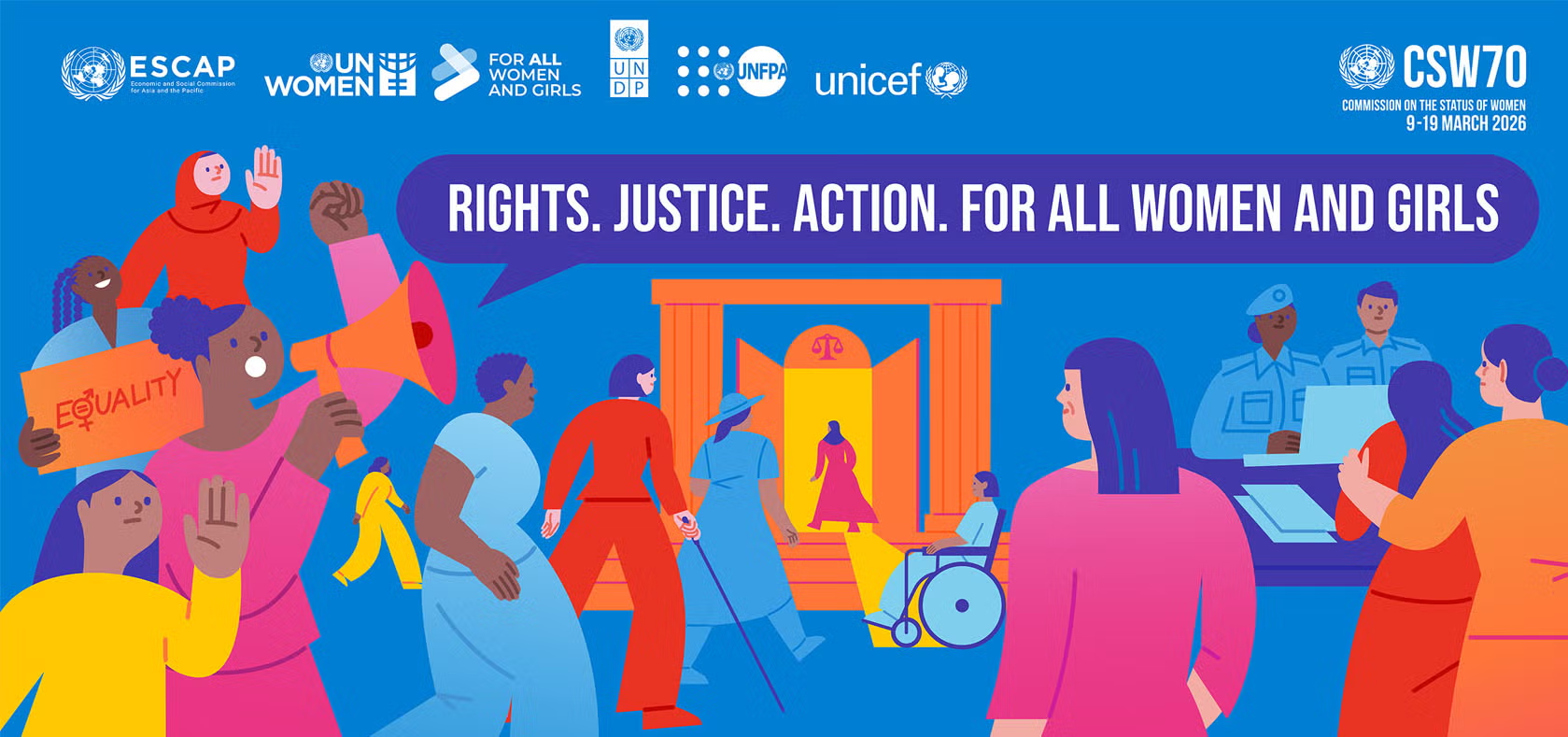
In March 2026, governments, civil society and activists from every region gathered at UN Headquarters in New York for the 70th session of the Commission on the Status of Women (CSW70). This year’s priority theme – ensuring and strengthening access to justice for all women and girls – put a global spotlight on how unequal laws, systems and power structures continue to deny women their rights, safety and voice.
In a new conversation recorded during CSW70, Australia’s Ambassador for Gender Equality, the Hon. Michelle O’Byrne, speaks with award‑winning journalist and social justice advocate Tracey Spicer AM about the realities, challenges and opportunities shaping women’s rights today.
Ambassador O’Byrne reflects that, even amid global backlash, many countries are still looking to Australia as a nation that is holding firm to its values on gender equality. She notes that Australia’s international gender equality strategy is grounded in the understanding that gender equality is one of the strongest predictors of peace and security: when women participate fully in economies and decision‑making, societies are more stable, prosperous and resilient.
The conversation explores the pillars of Australia’s work – from ending sexual and gender‑based violence, including in humanitarian and climate crises, to advancing women’s economic equality and leadership across the Indo‑Pacific. Ambassador O’Byrne emphasises that these efforts must be locally led, with Australia partnering with women’s organisations and grassroots leaders who are already driving change in their own communities. She points to initiatives such as Pacific Women Lead, the Amplify‑Invest‑Research (AIR) fund and the Markets for Change programme as examples of long‑term, community‑driven investments that support women’s safety, livelihoods and leadership.
With CSW70 centred on access to justice, O’Byrne and Spicer also discuss the emerging frontline of technology‑facilitated gender‑based violence. Drawing on Australia’s work and global interest in the eSafety Commissioner’s regulatory model, Ambassador O’Byrne warns that online abuse and threats are silencing women’s voices and pushing them out of public life. She outlines the need for prevention through digital literacy and skills, stronger protections and complaints mechanisms, and systemic change in how tech companies design safer platforms.
The interview also confronts the reality that rates of intimate partner violence remain unacceptably high, in Australia and around the world – including in countries with otherwise strong records on gender equality. Ambassador O’Byrne stresses that if justice is to be meaningful, women must be safe at home, online and in their communities, and they must be able to access services and legal remedies without fear or discrimination.
Looking across the Indo‑Pacific, she highlights both the risks and the opportunities. At a time when some governments are stepping back from commitments to women’s rights, Australia’s continued willingness to speak openly about gender equality – from the Prime Minister and Foreign Minister down – sends an important signal to partners in the region. Yet, she notes, Australia’s role is not to export a one‑size‑fits‑all model, but to listen, adapt funding models and back locally led solutions that reflect each country’s context and women’s own priorities.
Spicer and O’Byrne acknowledge that CSW70 took place at a time of mounting backlash and shrinking civic space, with many women – especially women of colour and women from crisis‑affected countries – unable to travel to New York. They discuss how this exclusion itself raises urgent questions about whose voices are heard in global forums, and whether the silencing of women is incidental or deliberate.
“CSW is a place for women’s voices – and when women’s voices are heard, everyone’s life gets a little bit better.”
Ambassador Michelle O'byrne Tweet
Despite these challenges, Ambassador O’Byrne says she left CSW70 both realistic and hopeful. The erosion of women’s rights in some parts of the world underscores that progress has not yet been fully entrenched – but, she notes, there has never been a time when the fight for gender equality was easy. What inspires her is seeing women step up in moments of pushback: from young leaders like Chanel Contos, to global advocates such as Malala Yousafzai, to grassroots organisers working for safety and justice in their communities.
For Australians watching from home, Ambassador O’Byrne offers a clear takeaway: if we want safer, more prosperous societies – in Australia, across the Indo‑Pacific and globally – we must invest in women and the work women do. CSW70, she says, is one of the few global spaces where women’s voices are centred, and where ideas and solutions can be shared across borders, even in the hardest of times.
Watch the full conversation between Ambassador Michelle O’Byrne and Tracey Spicer AM from CSW70 in New York below.