Aid cuts, employment bans, movement restrictions: The triple threat to Afghan women

Women’s organisations, often the last remaining lifeline for Afghan women and girls, are struggling to survive under the combined pressure of aid cuts, and employment and movement restrictions.

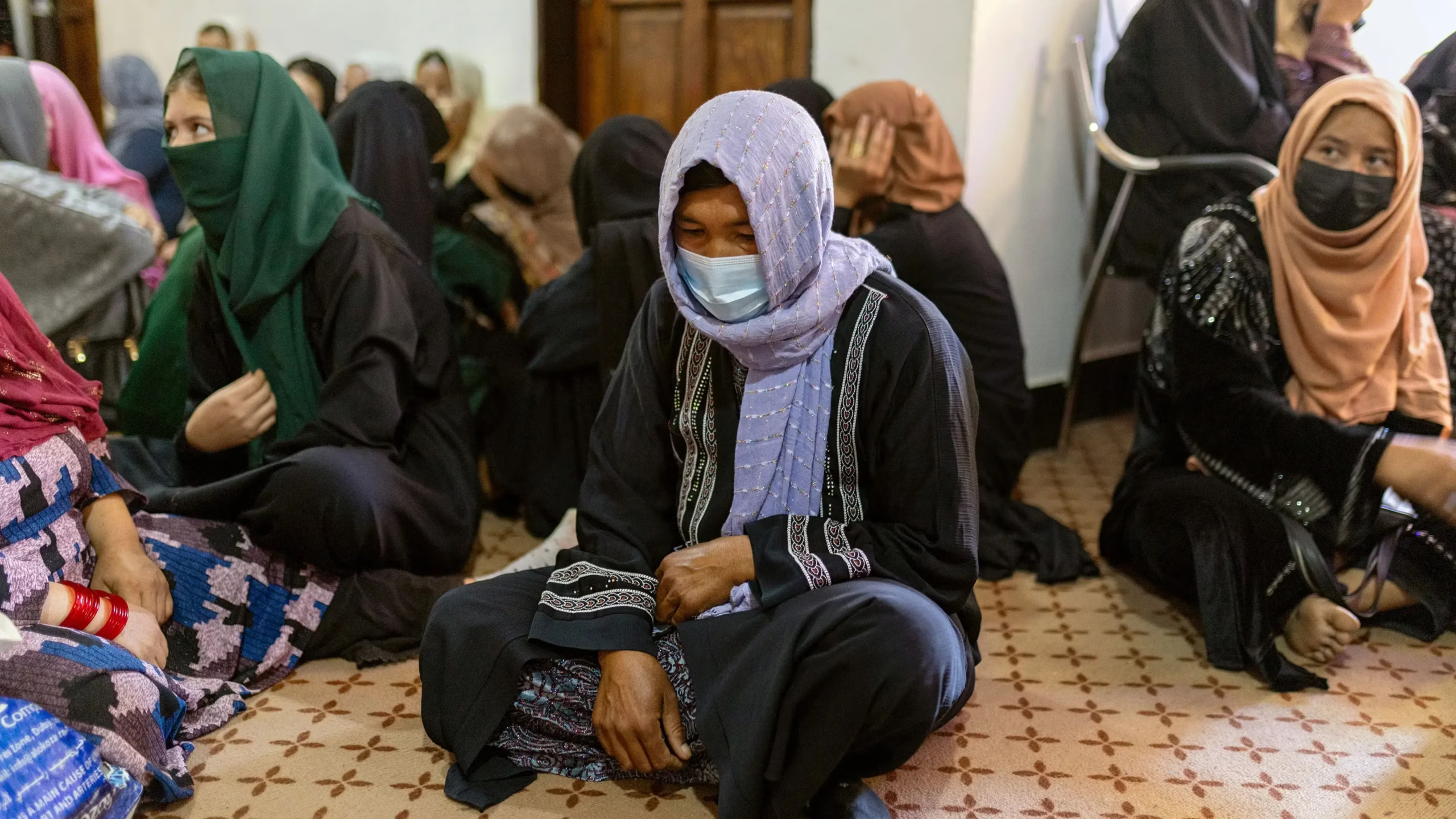
Zahra Rahmaty* (centre) waits to access psychosocial support at a women-led organisation in central Afghanistan supported by UN Women. She has been struggling to raise her five children alone after her husband married a second wife and now provides little financial support. She also completed 45 days of livelihood training through the organisation, learning to make jams, sauces, and potato chips. She hopes to sell her products at the local market to earn an income. Photo: UN Women/Sayed Habib Bidell

Global humanitarian aid cuts are pushing women’s organisations to the edge of collapse, leaving at least one million women and girls without access to critical services since January 2025. Based on a survey of 855 women-led and women’s rights organisations across 52 crisis- and conflict-affected countries, the report finds that demand for services is rising while funding has experienced its steepest recorded decline.

Eighty-four per cent of organisations surveyed have seen increased demand for their services, yet nearly nine in ten can no longer meet current needs. Two in five expect to suspend or permanently close within the next year, while two-thirds report staff working without pay to keep programmes running.

In Afghanistan, women’s organisations are a lifeline

Women’s organisations are one of the last remaining lifelines for women and girls in Afghanistan. But as women have been barred from most aspects of public life, these organisations have had to change how they reach women in the first place. At the same time, due to the restrictions on women’s education, employment and movement, the role of these organisations in providing healthcare, safety, livelihood training, and humanitarian assistance has become even more critical – and necessary.

How dire is the funding crisis in Afghanistan?

  • A UN Women survey of 74 Afghan women’s organisations found that nearly three-quarters experienced funding cuts in 2025.
  • Two-thirds have six months or less of operational funding remaining.
  • Half have received no new funding since 2025 and 92 per cent have lost staff.
  • More than half of the organisations surveyed said they were likely to suspend operations or close entirely within the next year.

The impact is already being felt by Afghan women and girls. Sixty-six per cent say many women and girls who previously relied on their services can no longer access them. Education and income support have already been scaled back by two-thirds of the organisations surveyed, while gender-based violence programmes have been scaled back by 58 per cent.

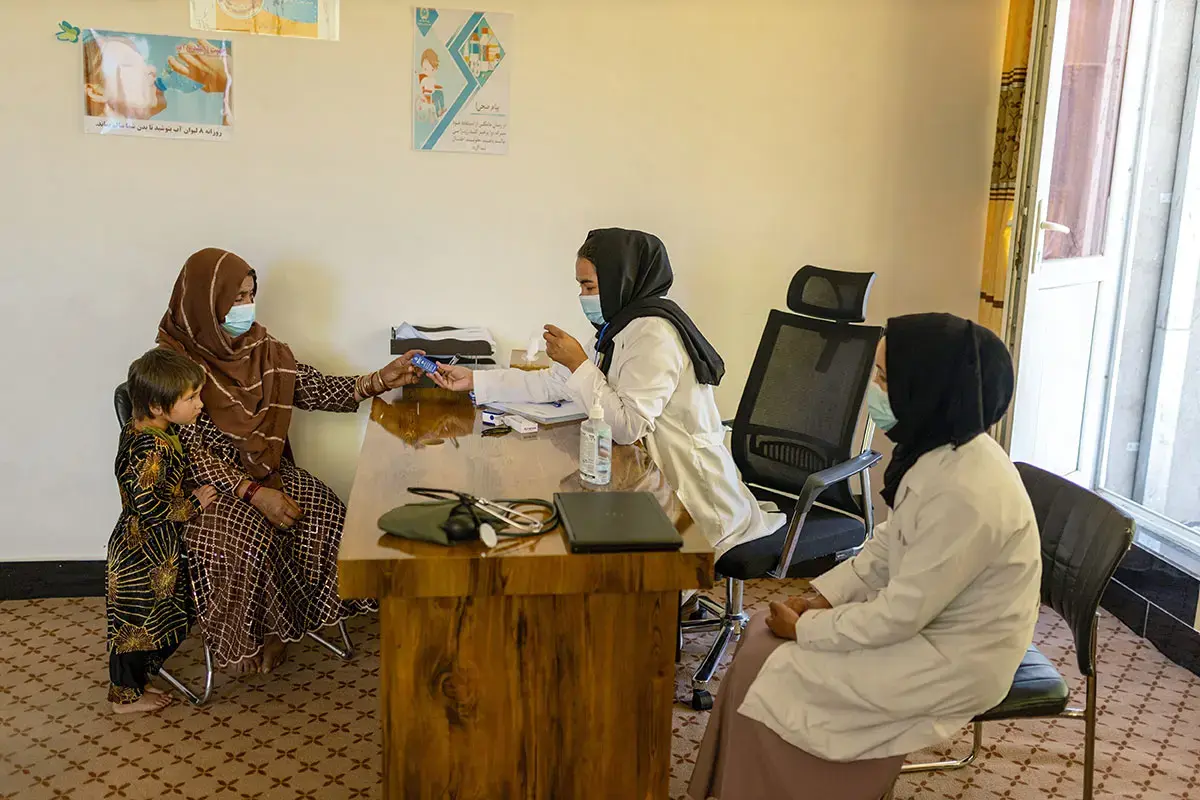
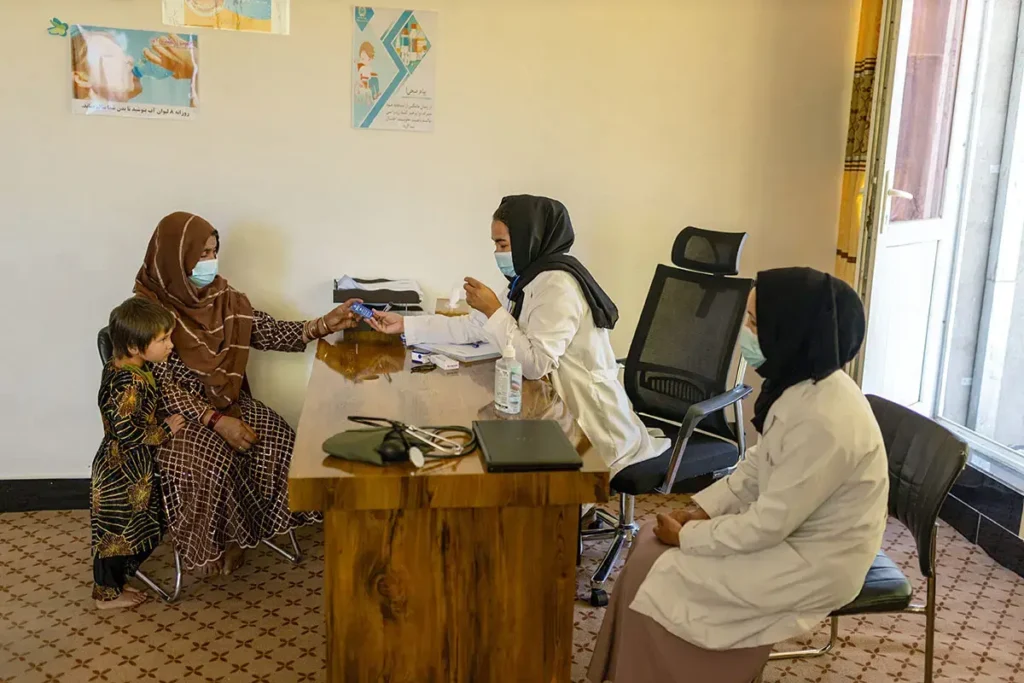
A woman consults with a doctor and pharmacist at a women-led organisation in central Afghanistan which also provides mental health counselling, psychosocial support, and livelihoods training. The organisation, which is supported by UN Women, was forced to reduce staff in 2025 as a result of aid cuts. Further reductions in funding will force it to scale back its medical services. Photo: UN Women/Sayed Habib Bidell

Working on the front lines to provide healthcare, protection and livelihood support for women

In central Afghanistan, one women-led organisation, which is supported by UN Women, provides some of these critical services, including free primary healthcare, psychosocial support and assistance for survivors of violence, and vocational training for women to help them earn an income.

Provincial Coordinator Masoma Haidari* describes the organisation as a place where women can access support that is increasingly difficult to find elsewhere: “On average, more than 300 to 400 women benefit from our services each week. Having centres like this is extremely important, especially for women, as they provide an opportunity to find relief from stress and seek support whenever they need it”, says Haidari.

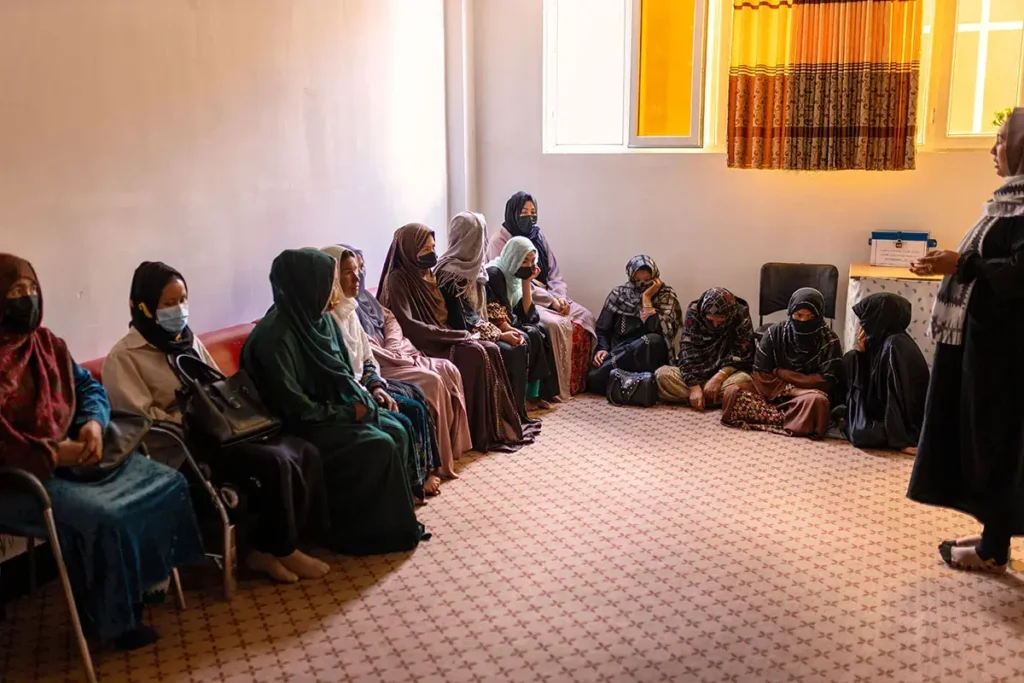
Masoma Haidari* (right), a manager at a women-led organisation in central Afghanistan supported by UN Women, speaks with women seeking access to primary healthcare, mental health counselling, and psychosocial support. Up to 400 women benefit from the centre’s services every week, many of whom would be unable to afford this support elsewhere. Photo: UN Women/Sayed Habib Bidell

Restrictions on women’s rights are increasing mental health needs

Haidari explains how the need for mental health services has grown as restrictions on women’s rights have intensified. She sees how the girls and young women who have been excluded from education and other opportunities are increasingly affected.

“The restrictions on girls’ access to education, including universities, along with many other limitations, have made it difficult for them to focus on their own well-being and future. As a result, many are unable to take care of themselves, both physically and mentally. Their stress levels continue to rise, and a large number of them are experiencing depression.”

For women accessing the organisation’s support, the services can be lifechanging. Zahra Rahmaty* is a mother of five children – including four daughters – living in central Afghanistan. She turned to the local organisation while struggling to support her family after her husband, a university lecturer, married another woman and moved away, leaving Rahmaty caring for their children with limited financial support in an increasingly restrictive environment. She says her husband occasionally brought basic food supplies but never gave the family money, meaning she couldn’t afford to buy fruit and vegetables and other essentials.

“I used to become very distressed. My hands would become stiff, I would collapse and lose control.” – Zahra Rahmaty*

The situation was deeply stressful and Rahmaty started to experience severe mental health challenges. “I used to become very distressed. My hands would become stiff, I would collapse and lose control”, says Rahmaty. “When that happened, it was better if no one tried to call or wake me. If someone did, I would become even more distressed, and it could take me two or three hours to regain consciousness.”

It has been three months since Rahmaty had one of these episodes, which she attributes to the organisation’s support. “The counselling and treatment I received from the doctor [at the women’s organisation] have really helped me, and my condition has improved. Now I feel much better than before.”

Haidari remembers another woman who arrived at the organisation’s mental health programme after experiencing severe distress. “When she first visited us, she had completely lost hope and no longer saw any value in her life. At times, she even spoke about wanting to end her life. After receiving counselling sessions, we referred her to our legal counsellor and our mental health team for further support.”

“We also provided her with healthcare services… Since then, I have seen a remarkable improvement in her condition. She is much happier now, and I often see her smiling. When she returned to our health centre, she said that she felt like a different person compared to when she first came.”

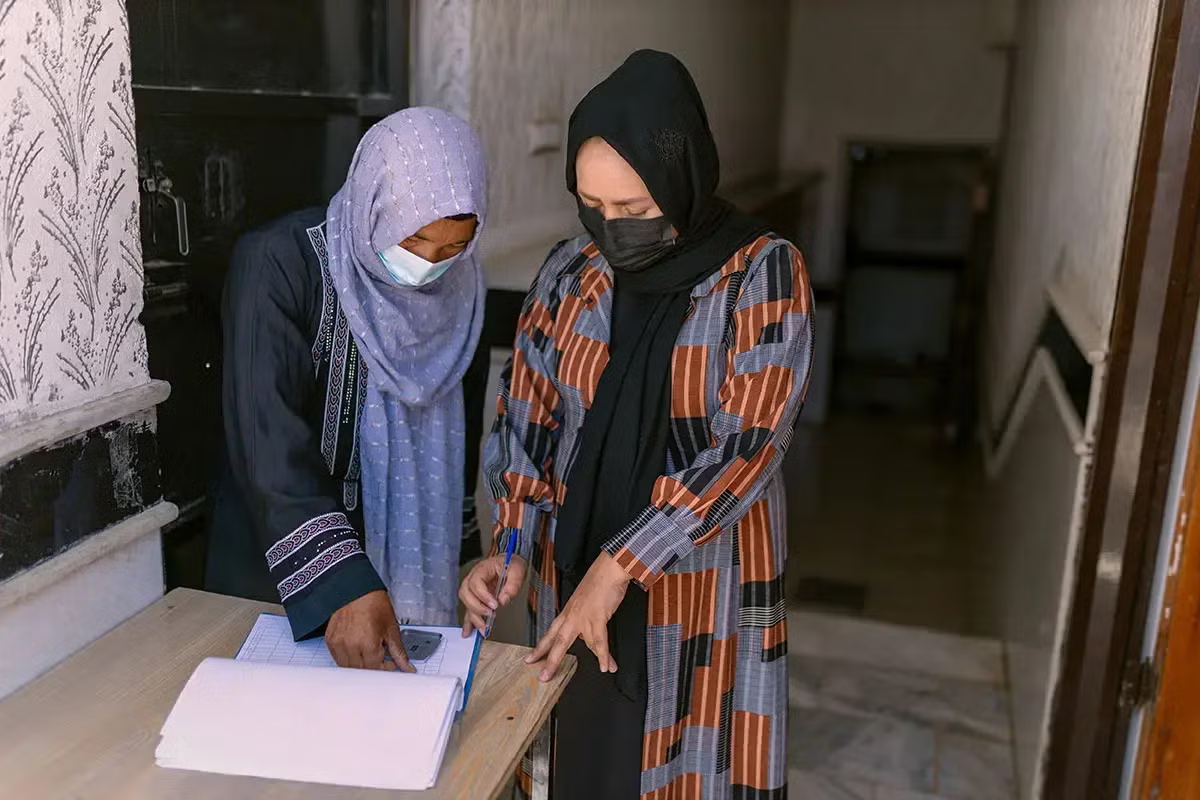
Zahra Rahmaty* (left) arrives at the office of a women-led organisation in central Afghanistan supported by UN Women, accompanied by her teacher (right). She has been receiving psychosocial support and livelihood training, while struggling to raise her children alone and now provides little financial support. Photo: UN Women/Sayed Habib Bidell

Support that helps women earn an income is shrinking

Funding cuts are putting the organisation’s mental health services and other support at risk. Today fewer women can take part in programmes designed to help them build livelihoods – another major source of stress for Afghan women. “In our economic empowerment programmes for women, each project was able to support around 200 to 300 women. Now [after aid cuts] our projects can only reach around 70 to 75 women”, explains Haidari.

For women able to continue accessing livelihood support, the vocational training can be life-changing. Rahmaty explains: “I wasn’t able to support my family because I didn’t know how to do any work. The only thing I knew was how to wash wool.”

Rahmaty enrolled in food processing training and learned how to produce goods that she could sell in local markets. “I learned how to make carrot jam, dried apricot jam, sauces, ketchup, and potato chips. Now I know how to prepare all of these products myself… take them to the market, sell them in small quantities, and earn an income”.

These small and micro enterprises are sometimes the only way for women to feed their families.

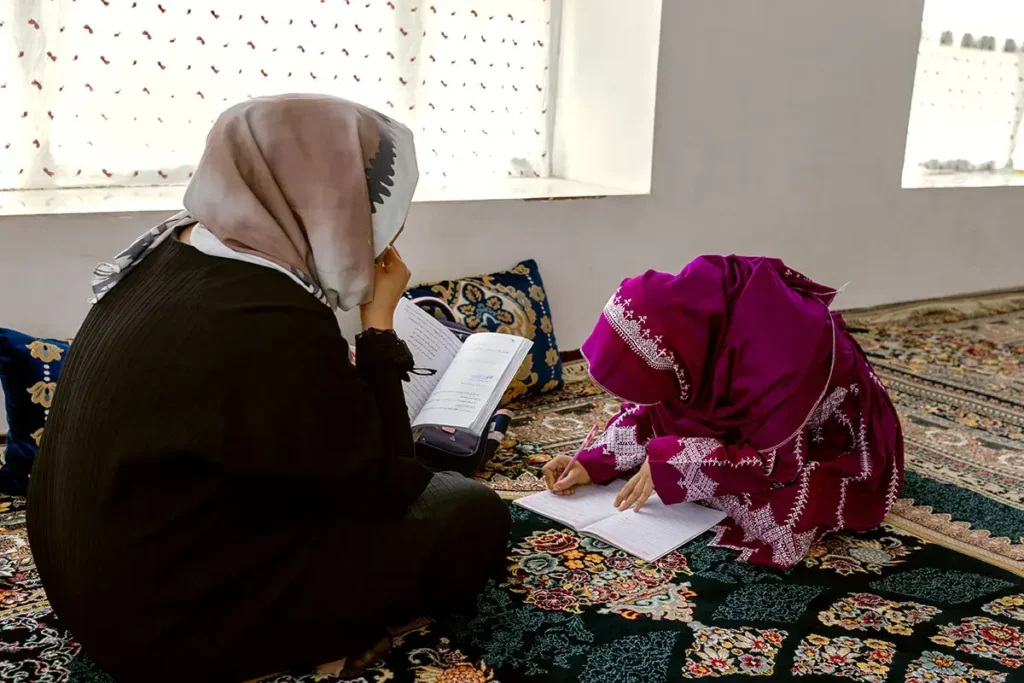
Masoma*, manager at a women-led organisation in central Afghanistan supported by UN Women, returns home at lunchtime to help her daughter with her homework. She worries about the impact that further aid cuts would have on the women who rely on the organisation’s services. Photo: UN Women/Sayed Habib Bidell

The Afghan women who work for women’s organisations also suffer under funding cuts

Cuts to women’s organisations in Afghanistan have also affected the dedicated women staff working for them. “In 2025, our project funding was reduced. As a result, we had to let some of our staff go, which had a direct impact on both our services and the communities we support. As our team becomes smaller, our capacity to deliver services reduces”, explains Haidari, who went for months without being paid.

UN Women warns that the weakening of women’s organisations is occurring at a time of massive humanitarian need and growing restrictions on women’s rights. In Afghanistan, where women’s organisations are often the only actors able to reach women and girls, aid cuts are devastating for women and their families.

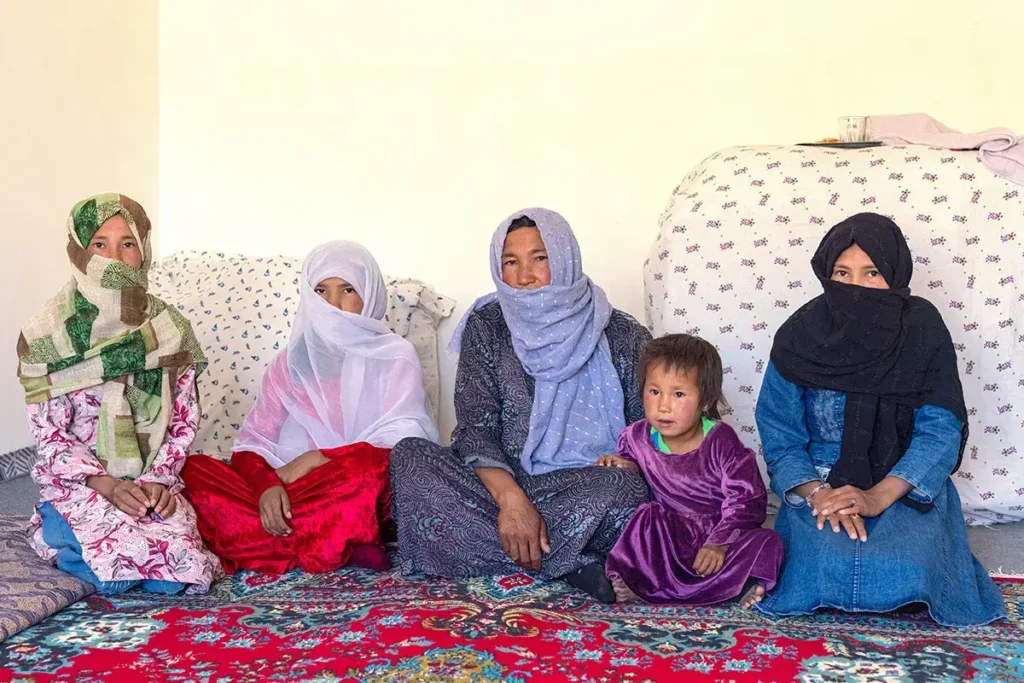
Zahra* (centre), with four of her five children at home in central Afghanistan. Photo: UN Women/Sayed Habib Bidell

What is UN Women doing in Afghanistan

UN Women remains on the ground in Afghanistan, standing with women and girls while working to sustain the grassroots women-led organisations they rely on, with the support of our donors and partners, whose continued investment makes this essential work possible.

Our approach focuses on supporting women-led solutions, including providing funding, capacity building, training, and mentoring through partnerships with women’s organisations.

UN Women provides integrated services for the most marginalised women and girls, including psychosocial support, humanitarian assistance, and livelihood opportunities. This includes expanding support for women entrepreneurs through access to capital, training, and markets, while amplifying Afghan women’s voices in international decision-making spaces and documenting the impact of the ongoing women’s rights crisis in Afghanistan.

Originally published on UN Women

Facebook
Twitter
Email