WPS Focal Points Network brings ministers together at UNGA81 to advance women’s role in global security decision-making

The event, “Delivering on WPS: Consolidating implementation and accountability in a fragmented security landscape”, also marked the Network’s 10th anniversary.

As armed conflicts continue to rise around the world, more than 30 Member States and regional organisations have reaffirmed their commitment to putting women, peace, and security (WPS) priorities at the center of defense and security decision-making.

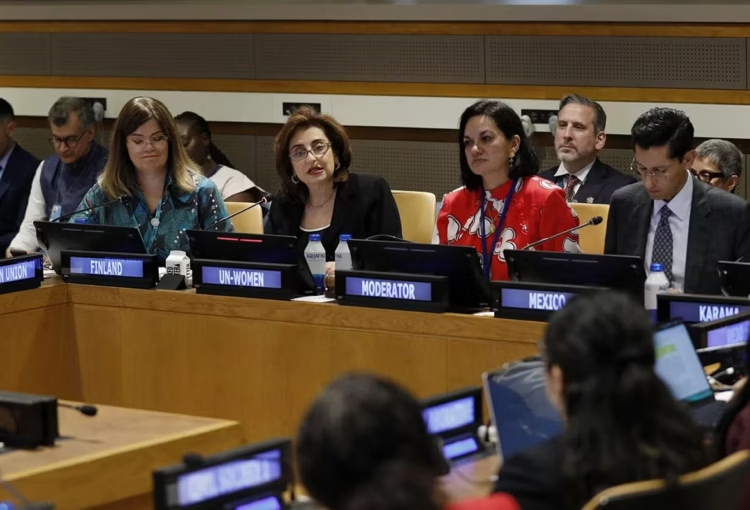
Speakers at the high-level opening session of the event, including Katsuhiko Takahashi, Ambassador Extraordinary and Plenipotentiary for Women, Peace, and Security of Japan (2025 Co-Chair & 2026 Troika member); Sima Bahous, UN Women Executive Director; Ma. Theresa Lazaro, Secretary of Foreign Affairs of the Philippines (2026 Co-Chair); Alessandra Molina, Deputy Director General/Central Director for the United Nations, Human Rights and International Organizations of Italy (2026 Co-Chair); and Mary Akrami, Founder and Director of Afghan Women’s Skills Development Center. Photo: UN Women/Ryan Brown

The statements were made at the WPS Focal Points Network ministerial-level event during the 81st session of the UN General Assembly (UNGA81), “Delivering on WPS: Consolidating implementation and accountability in a fragmented security landscape.” Watch the event recording here.

Convened by Italy and the Philippines, Co-Chairs of the Network, in partnership with UN Women, the event focused on advancing implementation of the Rome Communiqué, adopted at the Network’s Eighth Capital-level Meeting.

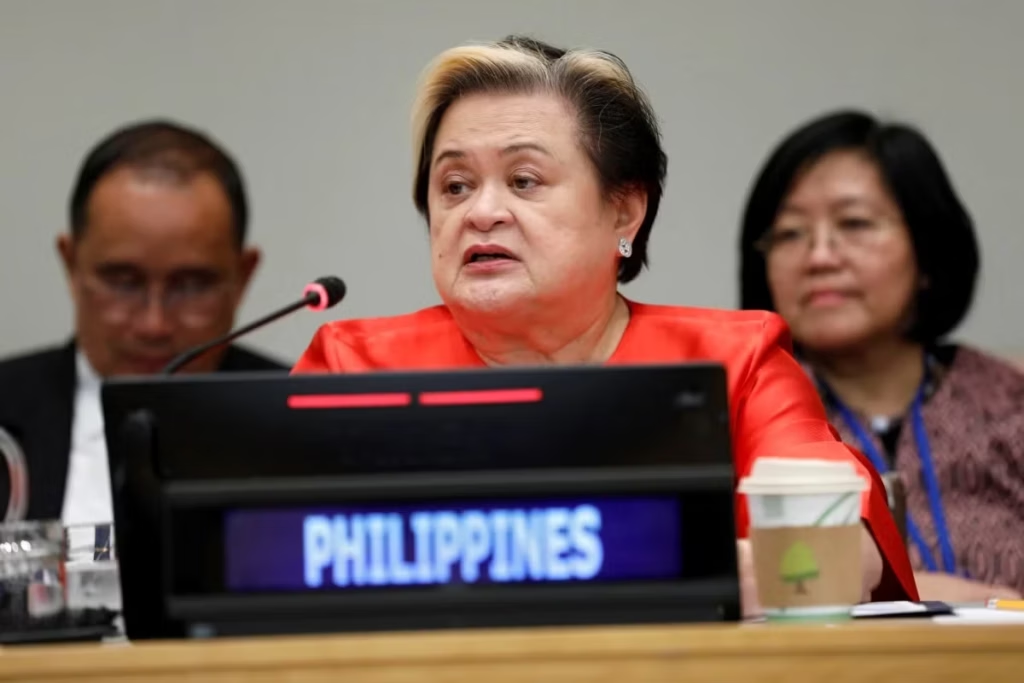
“At a time when multilateralism is under strain, the WPS agenda provides a practical framework for conflict prevention, stronger institutions and sustainable peace,” said Secretary of Foreign Affairs of the Philippines Ma. Theresa Lazaro in her opening remarks.

Secretary of Foreign Affairs of the Philippines Ma. Theresa Lazaro (2026 Co-Chair) delivers her opening remarks. 23 September 2026. Photo: UN Women/Ryan Brown

Governments outlined concrete steps to implement their WPS national action plans, including funding commitments, integrating WPS priorities into mediation, and strengthening protection from sexual violence in conflict. The urgency was underscored by the 2026 Gender Snapshot report, which found that more than 756.1 million women and girls lived within 50 kilometers of at least one armed conflict event in 2025.

Speaking on behalf of women peacebuilders, Mary Akrami, Founder and Director of the Afghan Women’s Skills Development Center, pointed to Afghanistan as a reminder of a fundamental lesson of the WPS agenda: “Women cannot be protected by excluding them from decisions about peace and security. And women cannot meaningfully participate if they are not safe. Protection and participation must go together.”

She called on governments and security decision-makers to move WPS from policy documents into security practice.

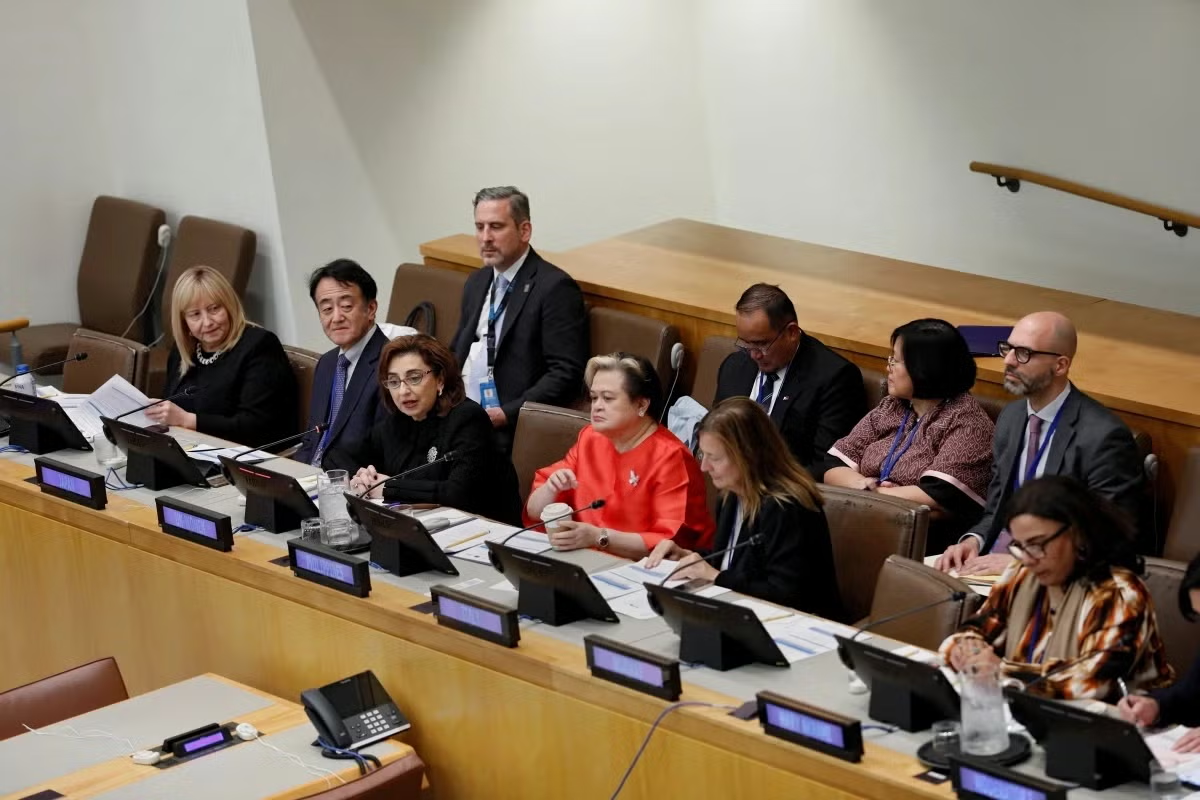
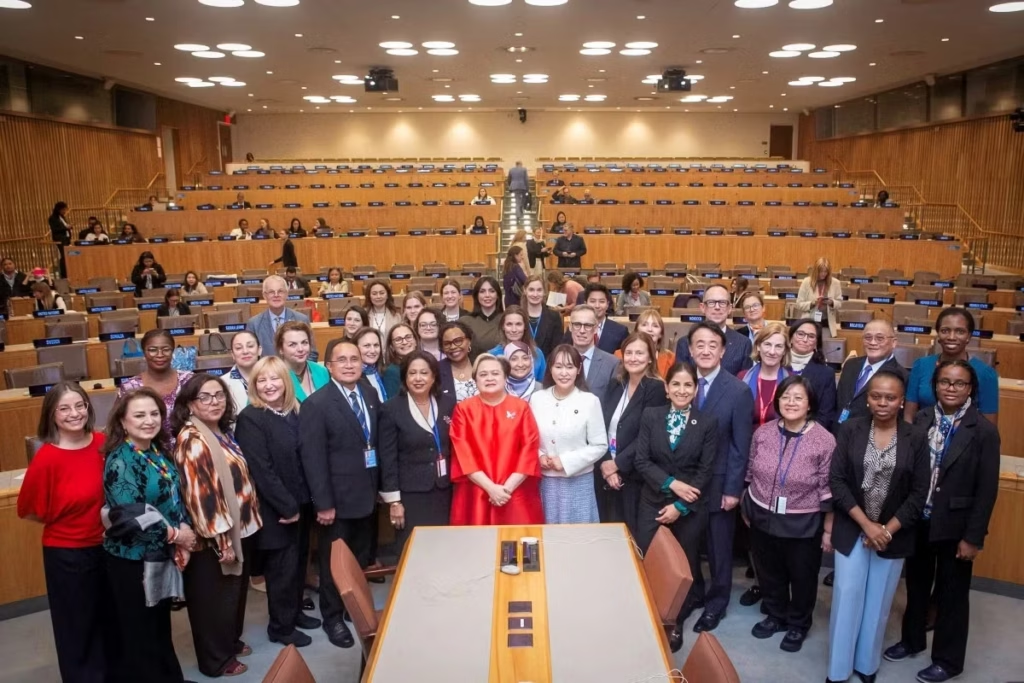
Group photo of the ministerial and high-level speakers and representatives at the event. Photo: UN Women/Babita Patel

National ministers and representatives described how they are responding to this call to action. The European Union is embedding WPS into every strand of its Common Security and Defense Policy. Japan is applying WPS to disaster risk reduction. Italy, Malta, Netherlands, Spain are committing funding to advance WPS. Many others, including the African Union, described efforts to institutionalise WPS in their peace, security, and development operations.

UN Women Executive Director Sima Bahous called for greater financial investment in women, peace and security.

“If we can mobilise resources for war, I do not know why we cannot mobilise resources for peace.” – UN Women Executive Director Sima Bahous

She called for investment in women in peace and security equivalent to at least 0.07 percent of national military spending.

The event also marked the Network’s 10th anniversary. It now includes 101 Member States and 11 regional organisations. Participants noted that over the past decade, the Network has established itself as an important platform for cooperation, peer learning, and accountability.

Undersecretary for Foreign Affairs and International Cooperation of Italy Maria Tripodi thanked Network members for their work with civil society and for their commitments made during the event.

The Network will reconvene in November in Manila to focus on practical approaches to localising peace efforts.

Originally published by UN Women

Facebook
Twitter
Email