The women’s leadership gap that we should all be talking about

Women make up half the population but hold just a fraction of decision-making power. It’s not for lack of leadership skills – but because of gender stereotypes and insufficient affirmative action, equal opportunities, and investment.

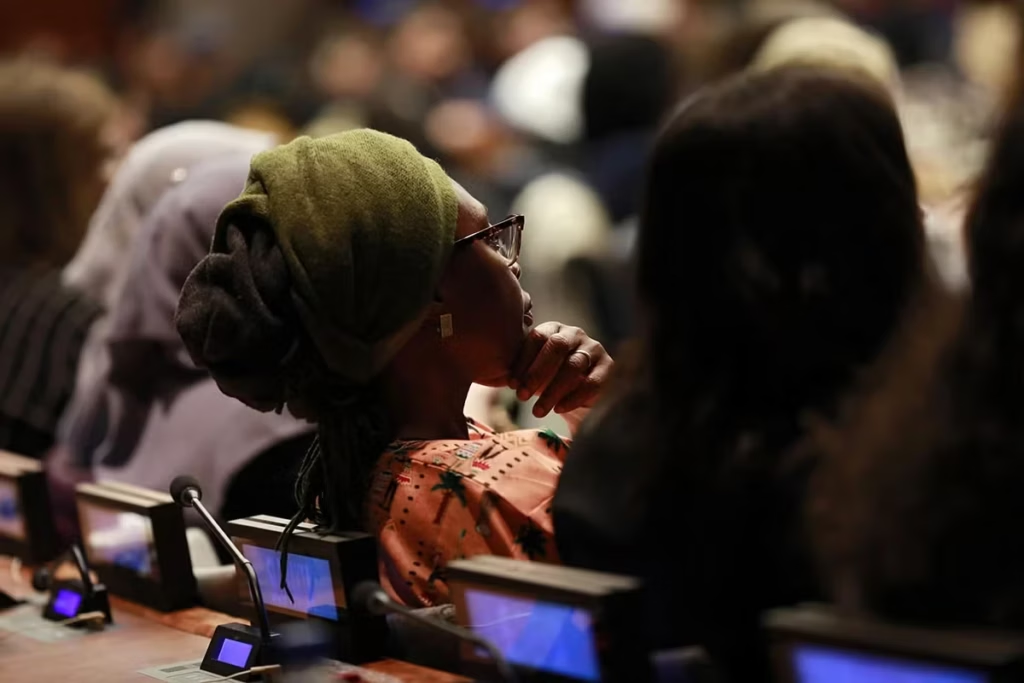
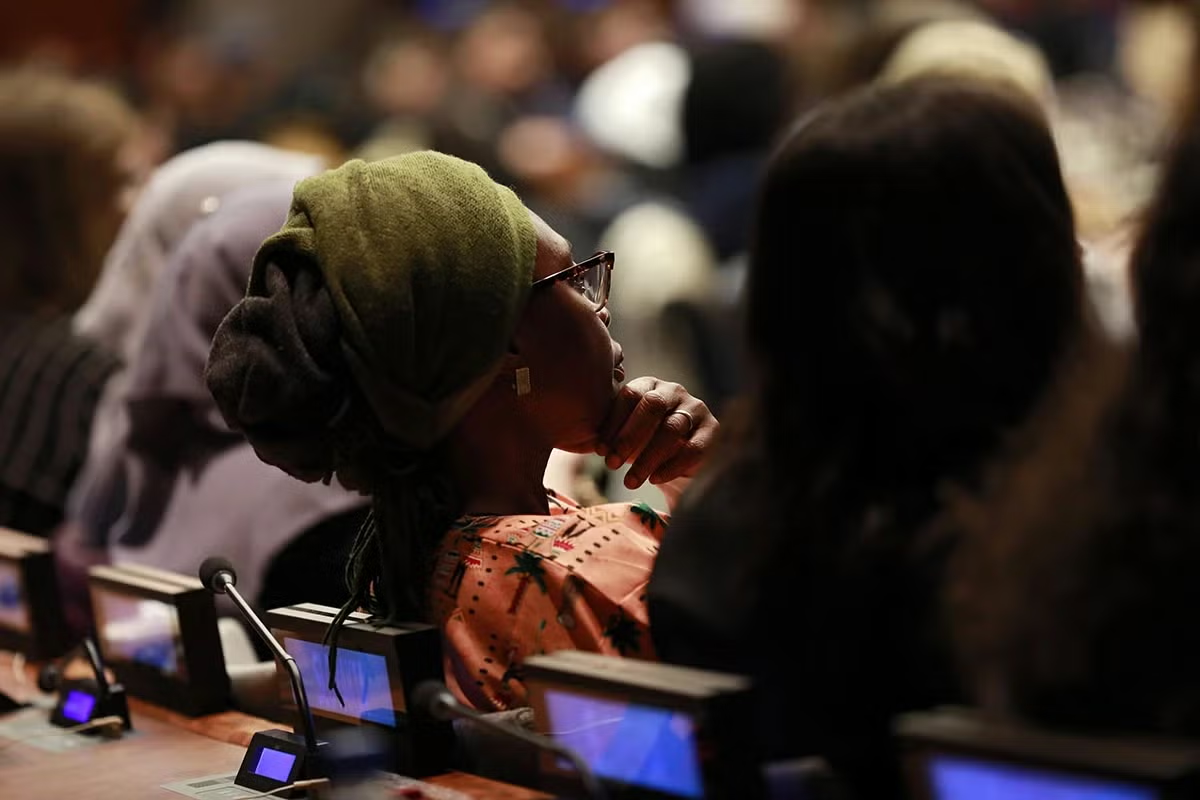
Scene from United Nations Headquarters during the Commission on the Status of Women in 2026. Photo: UN Women/Ryan Brown

Six out of seven countries in the world are led by a man.

At the current rate of change, gender parity in national parliaments will not happen for another 63 years – meaning most of us will not live to see it. “Business as usual” means equal rights and opportunities for women and girls, in all areas of their lives, will not be achieved for another 171 years.

That’s the clear diagnosis of the 2026 Gender Snapshot, produced by UN Women and the UN Department of Economic and Social Affairs (UN DESA). The report is the world’s leading source of data on gender equality and the 2030 Agenda for Sustainable Development, and tracks progress on women’s rights across all 17 Sustainable Development Goals (SDGs).

The gender gap in leadership is not an accident. It’s by design, and the result of unequal laws, stereotypes, and biased rules that were never designed for women to lead and prosper. And it doesn’t just affect the women who don’t get a seat at the table – it affects the health, education, safety, and economic future of everyone around them.

Progress on the Sustainable Development Goals: The gender snapshot 2026

What do we mean by the women’s “leadership gap”?

Women make up half the population but hold a fraction of the power to make decisions that shape everyone’s lives.

Women hold just 27.4 per cent of parliamentary seats globally and 22.4 per cent of national cabinet positions. They comprise only 31 of the world’s 175 chief justices. They’re 5.8 per cent of CEOs at publicly traded companies, despite holding 25.1 per cent of board seats – meaning even when women get in the board room, they’re rarely the ones running the company.

This isn’t a “women’s issue” though – something separate from everyone else’s concerns or something that just affects women. The data show that when women do lead, entire communities benefit.

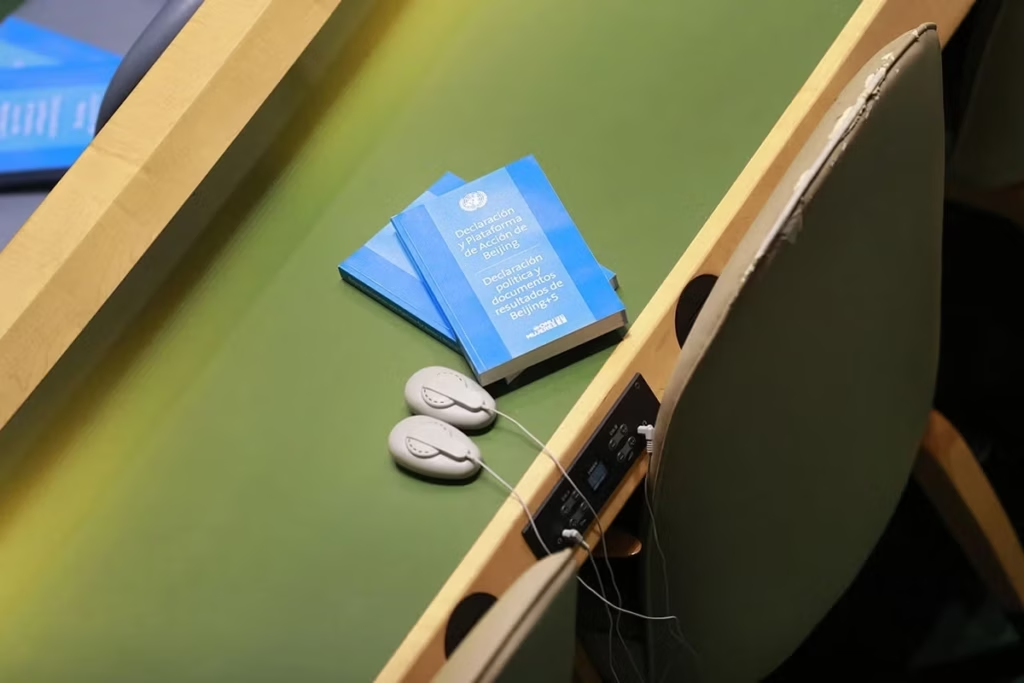
Scene from United Nations Headquarters during the Commission on the Status of Women in 2026. Photo: UN Women/Ryan Brown

Gender quotas and diversity work for all of us

The 2026 Gender Snapshot report shows that, historically, in countries where women hold more than 20 per cent of parliamentary seats, immunisation rates run up to 12 percentage points higher, and more children survive past early childhood than in countries with lower shares in parliament.

This tracks with what women in power tend to prioritise: They raised gender equality as an issue nearly three times as often as men at the UN General Assembly General Debate in 2025. They consistently push harder on care, health, and social protection issues like parental leave, unpaid care work, pension and savings, and workers’ protection and safety.

Rwanda is a case in point: Today, women hold 64 per cent of seats in parliament, and education curricula have been developed in a way that gender equality is embedded across education policies and textbooks. Students across diverse schools demonstrate high awareness of gender equality.

AI-powered online abuse

Artificial intelligence is amplifying violence against women and girls. But we can stop it.

Closing the leadership gap can close the justice gap, combat sexual harassment, and confront gender bias in the public sphere

When women lead, justice systems deliver better. In U.S. cities, electing a woman mayor is linked to a 6 per cent increase in the likelihood of arrests for perpetrators of violence against women, and a 13-point jump in female victims actually reporting crimes.

Globally, women lead successful peace negotiations and rebuild essential services in crisis settings – from Colombia to Democratic Republic of the Congo – even though they remain largely shut out of formal peace processes.

Yet women politicians face outsized risk just for showing up: 76 per cent of women parliamentarians report public intimidation or violence, compared to 68 per cent for men. And the violence they face is distinctly gendered and often sexual.

Scene from United Nations Headquarters during the Commission on the Status of Women in 2026. Photo: UN Women/Ryan Brown

What happens when women run the economy? Good news for the ‘triple bottom line’

Boards with more women are more likely to adopt sustainability practices – cutting emissions, energy use, and water waste. That’s good news for the triple bottom line: planet, people, and prosperity. 

But the numbers show how far there is to go. Representation on paper is not the same as power in the room.

Male board members disproportionately hold greater institutional capital, such as prior roles in large companies and established internal networks. These are structural advantages that shape whose voice carries weight in boardroom decisions, regardless of formal representation.

When representation and decision-making power diverge, a gender power gap emerges: In 71.8 per cent of publicly traded companies globally, women hold less decision-making power than their overall representation. That gender power gap becomes more pronounced as company size increases: While 70 per cent of relatively smaller companies exhibit a negative gender power gap, this rises to 82.8 per cent among bigger companies – suggesting that women face even greater barriers within the largest, most powerful firms.
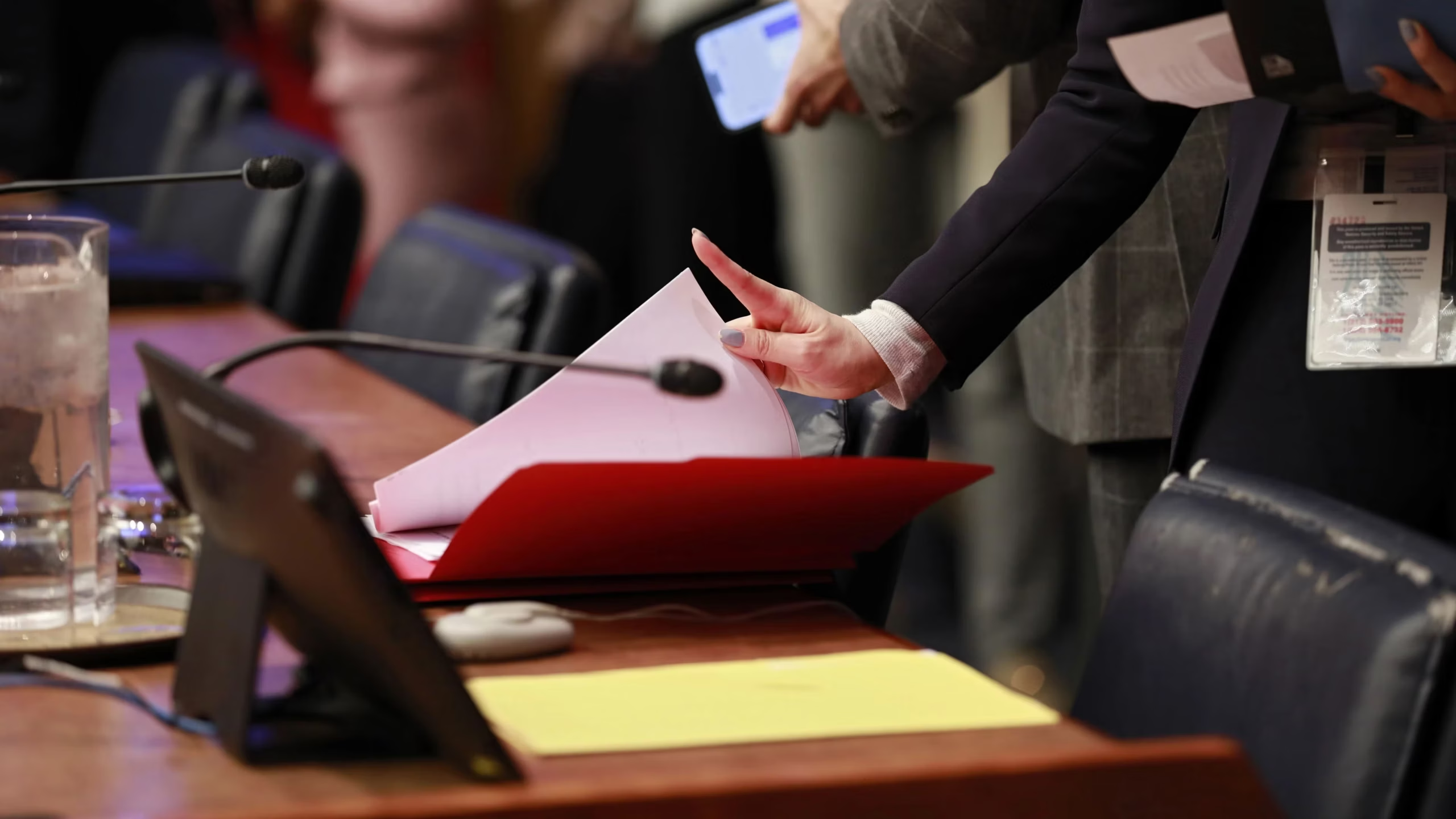
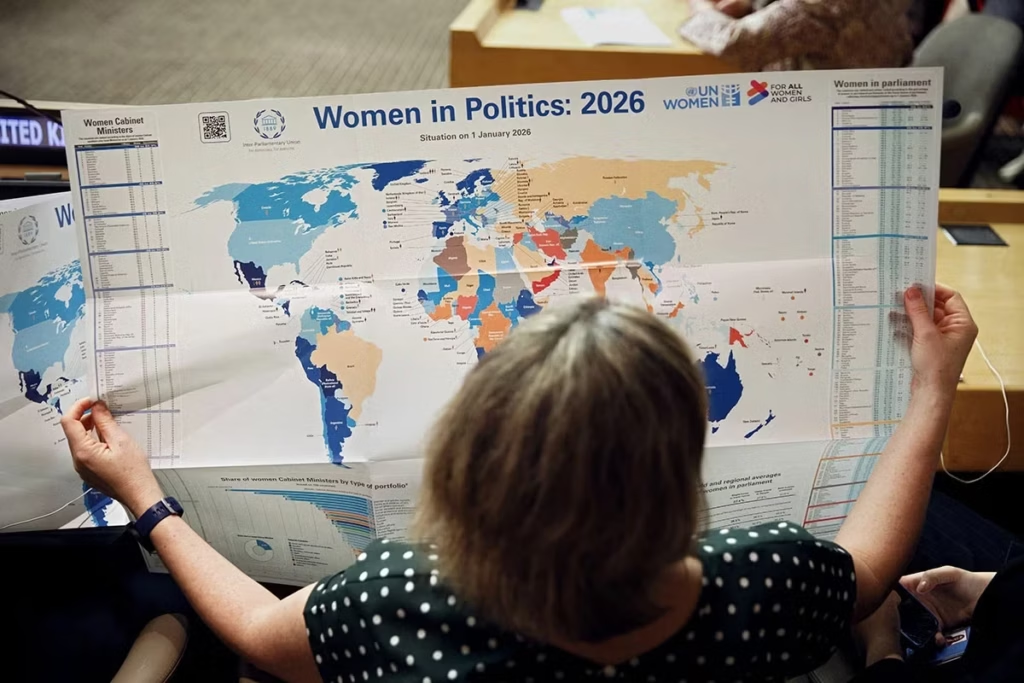
The “Women in politics: 2026” map, prepared by the Inter-Parliamentary Union and UN Women and launched in March 2026. The map presented the latest data on women’s representation in executive positions and national parliaments and highlighted the persistent overrepresentation of men in political decision-making worldwide. Photo: UN Women/Ryan Brown

Why is the women’s leadership gap still this wide?

A combination of forces keep it in place.

  1. Cost. Running for office can cost over 100 times the national average per-capita income in some countries, pricing out women and lower-income candidates before a vote is ever cast.
  2. Eroding institutions, especially gender architecture. One in three government bodies dedicated to gender equality has seen its influence eroded, with nearly a quarter losing budget, in the past two years.
  3. Funding cuts. Aid to women’s rights organisations fell 28 per cent recently – and women’s leadership programmes get just 15 per cent of all gender equality focused official development assistance.
  4. Discriminatory and unequal laws. Some laws are biased from the start. Where laws to promote women’s rights and equality do exist, they often lack implementation.

Globally, women and girls have just 64 per cent of the legal rights of men. Simply put, this means that in every corner of the world, laws still treat women and men differently. These legal gaps decide who is protected, who is believed, who gets justice, and who enjoys impunity.

What is “gender architecture” and why does it matter?

“Gender architecture” refers to the institutions, laws, and mechanisms or machineries a government builds to actually deliver on gender equality. Think: ministries for women’s affairs, gender units inside other departments, or national human rights bodies with a mandate to protect women’s rights. It’s the infrastructure behind the promises.

Right now, that infrastructure is quietly being weakened. Only 87 countries have a ministerial portfolio fully dedicated to gender equality, and a third of existing gender-equality institutions reported that they have lost power in the last two years.

UN Women is the UN’s global lead on gender equality and women’s empowerment, working directly with governments to build and protect this kind of institutional infrastructure. Its Strategic Plan 2026–2029 centres women’s leadership and decision-making as one of its core priorities – turning commitments into laws, budgets, and institutions that hold.

Six actions to close the leadership gap

The 2026 Gender Snapshot report points to real solutions that could be game changers for closing the leadership gap for women, and in turn, make our economies stronger, communities safer, and our families healthier.

  1. Implement real gender quotas, not symbolic ones. When quotas are ambitious and actually implemented, the results speak for themselves. In countries with strong quotas – targeting more than 40 per cent representation of women in politics – women’s representation is 16 percentage points greater in parliaments and 17 points higher in local governments, compared to countries without quotas. 
  2. Lower the cost of running for office. Reform political campaign financing, so class and gender don’t decide who competes.
  3. Strengthen national gender equality institutions and machineries through strong mandates, adequate staffing, and dedicated, steady resources.
  4. Close the legal rights gap with real enforcement, not just laws on paper.
  5. Fund women’s organisations directly. They are the closest to the ground – and the most under-resourced.
  6. Shift gender norms and stereotypes by transforming narratives around women in the public sphere. Build coalitions and provide opportunities, resources, and services to promote women’s leadership.

The bottom line: The data have already proved that when women lead, entire societies gain momentum – economically, politically, and socially. Closing the leadership gap means giving more women the opportunity to lead, shape decisions, and drive progress for all.

The Gender Snapshot 2026

Explore key findings on gender equality across all Sustainable Development Goals (SDGs) with data and visuals on the most pressing issues affecting women and girls globally.

Enter the Spring Raffle